

Recent wildfires in Belize shows how we must work together to revitalize Indigenous knowledge systems and plant the seeds of collaborative climate action.
Articles on Wildfires
Displaying 181 - 200 of 575 articles
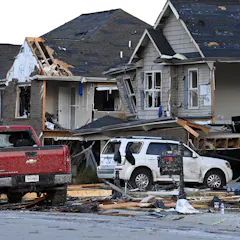
Insurers are raising rates quickly, and it’s not just in California and Florida. They’re often shrinking coverage at the same time.
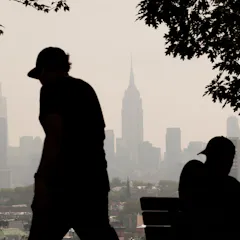
Which is riskier for your health: a few days of very bad PM₂.₅ exposure or many more days of slightly bad exposure? Researchers developed new metrics to provide better answers.
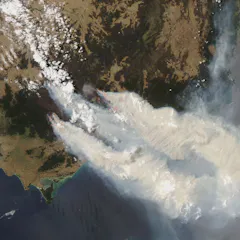
More frequent wildfires, emissions from rocket launches and more satellite debris burning up in the atmosphere all contribute to ozone depletion and could slow the recovery of the ozone layer.
After wildfires in California and Colorado cities, levels of harmful metals in the water jumped. Nature sent up a red flag.

Just like fires can contaminate municipal water systems by melting pipes, farms’ and ranches’ water supply systems are at risk. A first-of-its-kind study after the Maui fires explores the harms.
The worst fires have doubled in frequency and intensity since 2003.

Carbon lost during the 2018 fire season in Sweden could take 40 years to return to trees and soil.
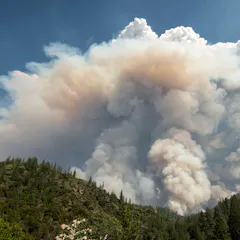
Fire-produced thunderstorms and tornado-like fire whirls are more common than anyone realized, as high-resolution satellite images and data now show.

The Jasper fire reinforces the risks that climate change and related extreme weather events pose to Canada’s world heritage sites.

An unplanned experiment when wildfire smoke rolled through Colorado shows how trees keep some of the smoke out.

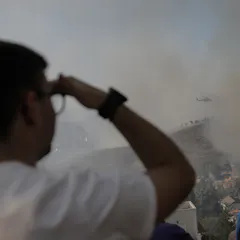
Containing and extinguishing mega blazes like the one that reached Jasper is an all-hands-on-deck affair that draws upon expertise from around the world.

As communities are exposed to wildfire smoke more regularly and over longer durations year after year, it is critical to consider what these changing exposure patterns mean for our long-term health.

Fire events, like the one which has destroyed much of Jasper, will only get worse in a warming world. Canada needs a national wildfire strategy to meet these challenges.
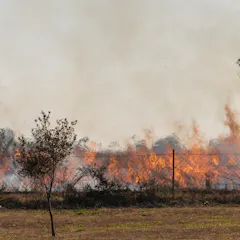
Deadly wildfires claimed the lives of 13 people in South Africa recently. Fires will increase as the climate warms. Landowners must stick to the law and try to prevent fires from starting.
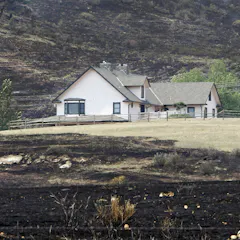
Roofs, windows and siding all affect how vulnerable a home is and how likely it is to survive a wildfire. So does what’s around it in the ‘home ignition zone.’
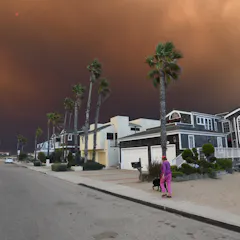
Breathing wildfire smoke can cut years off people’s lives. As fires become more frequent in a warming world, smoke is leading to a public health crisis, harming people far from the flames.

Homeowners insurance is so expensive that some people are going without it.
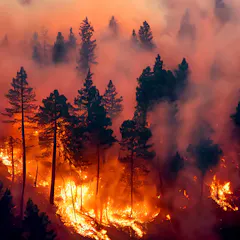
Satellites used satellite sensors to identify the 0.01% ‘most extreme’ fires worldwide.
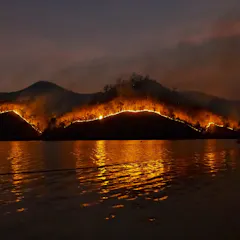
The record-breaking and destructive forest fires of the summer of 2023 made headlines. But how did they affect the millions of lakes in the burned catchment areas?
Top contributors
-

Professor of Pyrogeography and Fire Science, University of Tasmania
-
Associate Professor of Civil Engineering, Boise State University; United Nations University
-
Professor of Civil, Environmental and Ecological Engineering, Purdue University
-
Professor of Geography and Director of the Centre for Wildfire Research, Swansea University
-
Professor of Engineering, University of California, Merced
-
Assistant Professor of Environmental and Radiological Health Sciences, Colorado State University
-
Fellow, Queen's Institute for Energy and Environmental Policy, School of Policy Studies, Queen's University, Ontario
-
Tenured Scientist (IMB-CSIC, Spain) & Honorary Associate Prof. (SU, UK), Swansea University
-
Wildfire Specialist, University of California Cooperative Extension; Adjunct Professor at the Bren School, University of California at Santa Barbara, University of California, Santa Barbara
-
Emeritus Professor of Life Sciences, Arizona State University
-
Professor of Geology and Environmental Geosciences, University of Dayton
-
Professor, Disaster & Emergency Management, Faculty of Liberal Arts & Professional Studies & Director, CIFAL York, York University, Canada
-
Professor of Fire Ecology, University of Montana
-
Research Fellow in Environmental Science, University of Tasmania
-
Reader in Cultural Geography and Communication, University of Westminster