
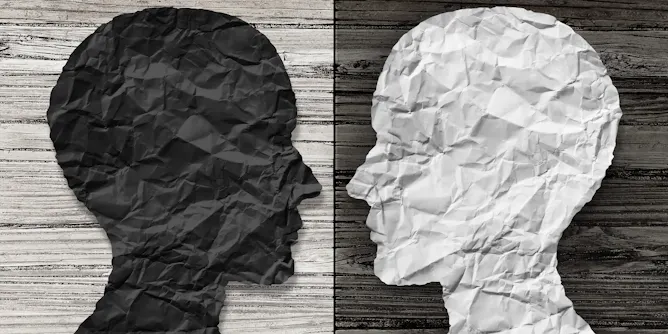
Why do some people reject scientifically accepted ideas? A psychotherapist points to black-and-white thinking as part of the explanation.
Articles on Science communication
Displaying 121 - 140 of 336 articles
On the eve of the March for Science, a marine biologist explains why she’s returning from abroad to speak out for science in the Trump era.
Four scientists talk through the ways they now build outreach into their work as a way to spread their research’s impact – something that wasn’t the norm for past generations of academics.
The March for Science on April 14 and Earth Day on April 22 are likely to generate big crowds demonstrating against Trump administration policies. Here are some issues they’ll be marching about.

Never underestimate a person with dyslexia - the skills and strategies they’ve developed to survive academia can be the right fit for effective communication.

Despite scientists’ initial concerns, federal climate change data sets are still available. But other documents and web pages have changed over the last year.

Despite strong evidence that human activities have altered the climate, not everyone sees the risks. New research explains why some people seem blind to the signs of climate change.

Much like the printing press upset the social order centuries ago, the explosion of information online is challenging the role of scientists in society.

Academics can control the way they engage with people, and communicate – and these are skills that get better with practice.

Twenty years ago, a Texas court decided Winfrey hadn’t defamed the state’s cattle industry. At the time, local media struggled to explain the science at stake in the case.

Starting February 14, the Science Meets Parliament event brings clear benefits - but there’s a case to be made for an ongoing effort in “Science Listens, Engages, and Collaborates with the Public.”
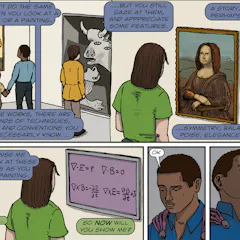
You might not think much about science topics as part of your everyday life. But science – like art, music, religion – is part of our culture, and scientists can help it reclaim its rightful place.
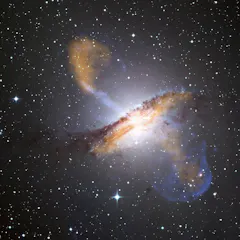
In the age of ‘fake news’ it’s more important than ever to make sure that what’s being published is the truth – especially when it comes to reporting research and science.
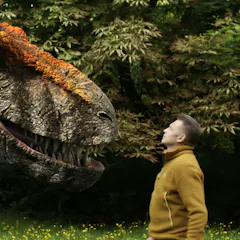
A consultant on Chris Packham’s latest dinosaur show about Tyrannosaurus Rex explains how they kept it entertaining but accurate.
A few tips and tricks on how to make the best use of your one minute chance to get your message across.

President Trump’s first year was a rough one for scientists and others who value truth and expertise. Many rallied to the cause, while others used research to make the case for the value of science.

The combination of knowledge and communication, along with a few other fundamental conditions such as liberty and respect , leads to social, cultural and technological development.
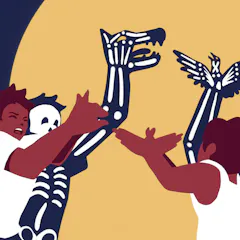
X-rays are like light rays, but they can pass through more stuff. Some of the x-ray’s energy is blocked by bone, which is why you can see bones so clearly on x-ray scans.

It might feel like rocket science, but scientists need to get better at explaining things to people outside academia.
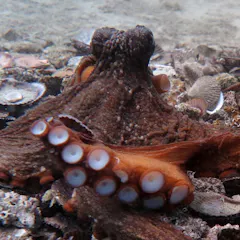
Intentional actions by usually solitary octopuses improve a sandy site, allowing group living in ‘Octlantis’. But the buzz around the site grew quickly, creating some interesting interpretations.
Top contributors
-

Associate Professor (hon) at the Centre for Public Awareness of Science, Australian National University
-
Senior Lecturer, Australian National Centre for the Public Awareness of Science, Australian National University
-
Science Communication Researcher, Stellenbosch University
-
Senior Research Fellow, Melbourne School of Psychological Sciences, The University of Melbourne
-
Professor of Public Relations, Michigan State University
-
Senior Lecturer in Philosophy and Education; Curriculum Director, UQ Critical Thinking Project, The University of Queensland
-
Science communicator and communication consultant to Questacon, and alumni, CSIRO
-
Professor, Australian National University
-
Chair, The Conversation Media Group
-
Professor and UNESCO Chair-holder, Australian National University
-
Associate Professor of Health Law, Policy and Management, Boston University
-
Laureate Professor of Mathematics, University of Newcastle
-
Campus Visitor / Director of Econnect Communication, Australian National University
-
Associate Professor, Interim Pro Vice Chancellor Learning and Teaching, Australian National University
-
PhD; Lawrence Berkeley Laboratory (retired) and Research Fellow, University of California, Davis