
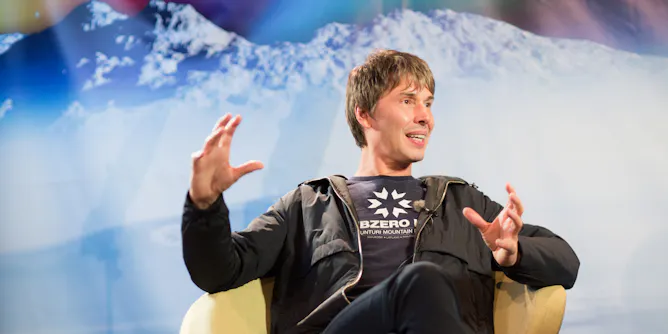
Packed venues, rock star status. What makes some scientists so damned marketable?
Articles on Science communication
Displaying 141 - 160 of 336 articles
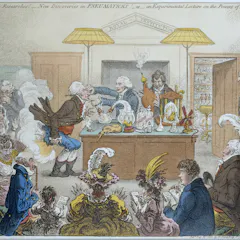
Sir Humphry Davy was the Professor Brian Cox of the 1800s.

Scientists who engage with the public may have goals about influencing policy or behavior. But they also need to think about the short-term objectives that will help get them there.

Promising scientific consensus is a perilous principle on which to found meaningful engagement between experts and the public.

He’s back! Any mention of the killer robots debate brings images of the Terminator film. But science fiction can be a useful tool to get people interested in the real issues in science.

Most Australians value science. But we do have some hesitations about the pace of scientific advances, and we’re not sure if scientists are prestigious or not.
Rational arguments and myth busting often won’t help you change the mind of a conspiracy theorist. But there are other ways.
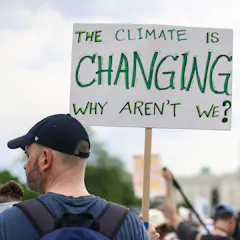
Why is it so hard to reach consensus about how to slow climate change? Multiple time lags get in the way: some make it hard to convey the risk, while others prolong the search for solutions.
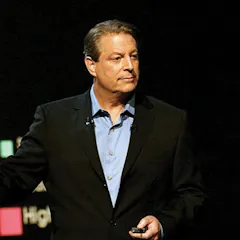
Eleven years after its release, An Inconvenient Truth, the iconic climate documentary, has spawned a sequel. But did the original do more harm than good by polarizing Americans on climate change?

Science papers are supposed to be communication tools - and yet hardly anyone can understand them, even other scientists.

Taking inspiration from the spread of world religions, Quentin Atkinson and Shaun Hendy argue scientists need to do more to signal commitment to ideas they want to spread.

Science provides a useful way to explore and understand the natural world. But it also has a richness, diversity and creativity that is often overlooked.
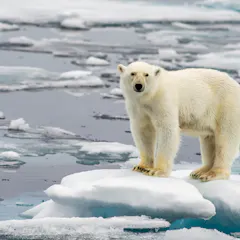
An experiment in getting people to care about climate change uses slick videos, charismatic scientists and calls to action.

One of our academic authors recently commented that The Conversation has become “very mainstream in what it’s publishing”. It was a loaded comment, considering people increasingly distrust “the MSM”, sometimes…

Research is not just about producing papers.

Reports of facts’ death have been greatly exaggerated. Effective communication jettisons the false dilemma in favor of a more holistic view of how people take in new information on contentious topics.

Millions of Americans believe brown cows produce chocolate milk? The way the media reported this factoid raises questions about science literacy – but different ones than you may think.
The number of specialist science journalists in Australia has dropped from around 35 to less than five over the period 2005-2017.

Does science have an answer to science denial? Just as being vaccinated protects you from a later full-blown infection, a bit of misinformation explained could help ward off other cases down the road.

Scientists need funding to do their work. But a new study finds turning to industry partners taints perceptions of university research, and including other kinds of partners doesn’t really help.
Top contributors
-

Associate Professor (hon) at the Centre for Public Awareness of Science, Australian National University
-
Senior Lecturer, Australian National Centre for the Public Awareness of Science, Australian National University
-
Science Communication Researcher, Stellenbosch University
-
Senior Research Fellow, Melbourne School of Psychological Sciences, The University of Melbourne
-
Professor of Public Relations, Michigan State University
-
Senior Lecturer in Philosophy and Education; Curriculum Director, UQ Critical Thinking Project, The University of Queensland
-
Science communicator and communication consultant to Questacon, and alumni, CSIRO
-
Professor, Australian National University
-
Chair, The Conversation Media Group
-
Professor and UNESCO Chair-holder, Australian National University
-
Associate Professor of Health Law, Policy and Management, Boston University
-
Laureate Professor of Mathematics, University of Newcastle
-
Campus Visitor / Director of Econnect Communication, Australian National University
-
Associate Professor, Interim Pro Vice Chancellor Learning and Teaching, Australian National University
-
PhD; Lawrence Berkeley Laboratory (retired) and Research Fellow, University of California, Davis