
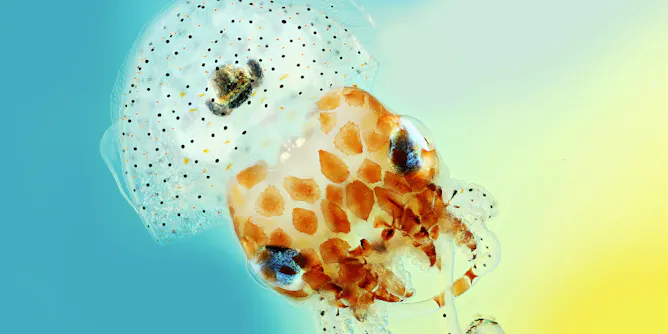
A better understanding of science among ordinary people validates the vast amounts of public funds spent on scientific research.
Articles on Science communication
Displaying 161 - 180 of 336 articles
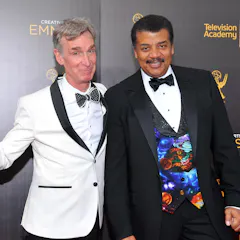
Popular programming that focuses on science tends to not actually be all that popular. Bringing in new audiences who aren’t already up to speed on science topics is a challenge.

If you’ve only ever paired the idea of ‘rhetoric’ with ‘empty,’ think again. Rhetoricians of science have concrete techniques to share with researchers to help them communicate their scientific work.

The research community tends to assume advocacy doesn’t mix with objectivity. One study suggests there’s room for scientists to make real-world recommendations without compromising their trusted status.
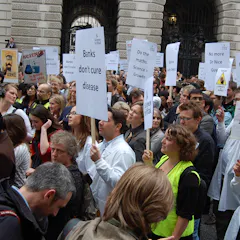
From mistrust in experts to fake news, it has never been more important for scientists to talk directly to the public.
Is there an art - or a science - to figuring out what stories will soar from the lab to the front page?

If you make science entertaining then people are prepared to pay attention.
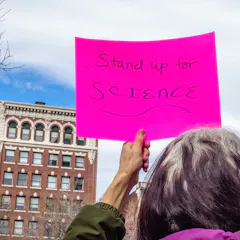
If those Marching for Science muddle their message, it may backfire on them. So here are some tips to help make sure the message is heard loud and clear by the right audience.

Whilst most parents do vaccinate, health professionals often find it difficult to talk with those who are hesitant or decline. A new resource provides information and communication support.

March for Science rallies will take place in cities around Australia on Saturday 22 April. A volunteer organiser explains why he and others are participating.

Are we in a race against climate change? Or is it a war? How does thinking of the past or the future affect your support for the science? Researchers are learning how metaphors and context matter.

Health reporting requires asking the right questions and doing quality research. But specialist skills are also handy, especially when it comes to knowing the language and processes of science.

Informing people about genetically modified food means more than dumping more facts on them.
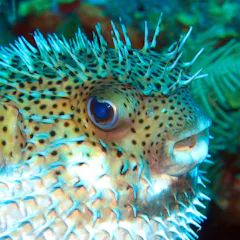
Laser-like focus on a tiny, unimportant detail can mean you miss the gorilla in the room – a tactic climate change deniers use to cast doubt on the science.

The Conversation asked eight authors from across its sections to tell us about their favourite podcasts – and why you should tune in.

Research comes with risk and uncertainty so getting the right message across to the people who matter can be a challenge for scientists. A new plan out today hopes to change that.
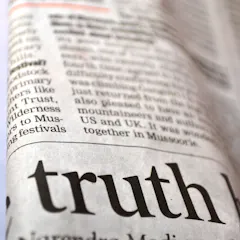
There’s never been greater need for the study of what we don’t know, and why we’re not supposed to know it.

Quirks of human psychology can pose problems for science communicators trying to cover controversial topics. Recognizing what cognitive science knows about how we deal with new information could help.

Now that we’re in a post-truth world, a timely report from the National Academies of Sciences, Engineering and Medicine highlights evidence for what works and what doesn’t when talking about science.
Changes to the ABC’s science show Catalyst follow recent criticism of some of its journalism. But will the new format still give a voice to Australian science, or will some issues lose out?
Top contributors
-

Associate Professor (hon) at the Centre for Public Awareness of Science, Australian National University
-
Senior Lecturer, Australian National Centre for the Public Awareness of Science, Australian National University
-
Science Communication Researcher, Stellenbosch University
-
Senior Research Fellow, Melbourne School of Psychological Sciences, The University of Melbourne
-
Professor of Public Relations, Michigan State University
-
Senior Lecturer in Philosophy and Education; Curriculum Director, UQ Critical Thinking Project, The University of Queensland
-
Science communicator and communication consultant to Questacon, and alumni, CSIRO
-
Professor, Australian National University
-
Chair, The Conversation Media Group
-
Professor and UNESCO Chair-holder, Australian National University
-
Associate Professor of Health Law, Policy and Management, Boston University
-
Laureate Professor of Mathematics, University of Newcastle
-
Campus Visitor / Director of Econnect Communication, Australian National University
-
Associate Professor, Interim Pro Vice Chancellor Learning and Teaching, Australian National University
-
PhD; Lawrence Berkeley Laboratory (retired) and Research Fellow, University of California, Davis