
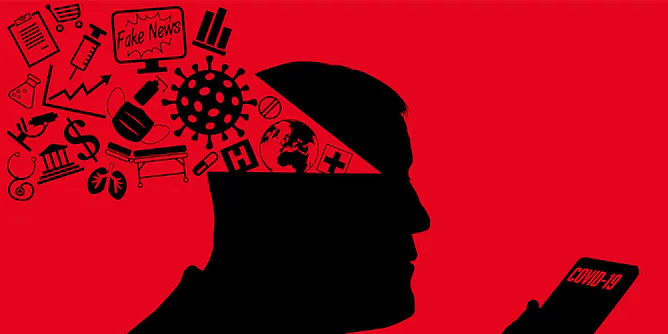
Anti-vaccine activists are using the side effect reporting system to spread fear and misinformation about the COVID-19 vaccines. But the database could also be used as a gauge for public concerns.
Articles on Science communication
Displaying 61 - 80 of 336 articles
With climate action more crucial than ever, the IPCC needs to communicate clearly and strongly to as many people as possible. So how is it going so far?

When the media pits academics against each other in an attempt to represent “both sides of the argument”, no one wins.

Nearly a quarter of survey participants were still hesitant about getting vaccinated. Some were not even open to persuasion. Communication campaigns must be tailored to the fears of sub-populations.

Scientists enjoyed informing, exciting and inspiring the public.

Before new policy can be based on evidence, decision-makers need to understand the relevant research. Intermediaries between scientists and policymakers translate information and build relationships.

A greater understanding of interconnectedness created by river maps could influence people to become more engaged with conserving river systems.

Understanding numbers in the news or social media can empower you to figure out risks and make good choices. Here’s what to look out for to make sure you aren’t misled by COVID-19 coverage.

During the pandemic, clear and reliable health communication can literally be a life-and-death issue. Researchers who focus on the science of science communication highlight strategies that work.
Scicomm is a hashtag, and there are many programs that claim to teach scientists how to be better communicators. But it’s hard to show exactly what they’re accomplishing.

Whenever you hear about a new bit of science news, these suggestions will help you assess whether it’s more fact or fiction.
In recent years, a growing body of academic research has emerged that outlines how emojis can be used in all forms of communication.

All cultures have communicated their knowledge in diverse and marvellous ways throughout time. Failing to see the significance of this is racist and lazy.

Budget cuts and outsourcing content have affected the amount and quality of science journalism. Scientists should learn to communicate their own findings directly and clearly to the public.

Think beyond facts to make your argument.
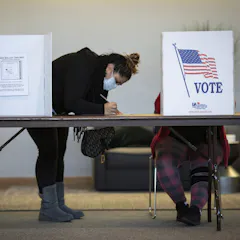
When the scientific establishment gets involved in partisan politics, surveys suggest, there are unintended consequences – especially for conservatives.

Science communication succeeds when it takes community knowledge seriously, works with other belief systems, and expects researchers to contribute to society.

Research shows how failing to engage the public can lead scientists’ work to be inaccurately reported and interpreted.
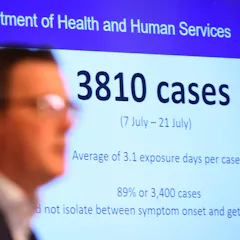
The COVID-19 pandemic has highlighted how much modern societies are governed by statistics. Despite their objective appearance, these numbers gain their strength from very human relationships.

A survey of over a thousand scientists reveals that their goal when communicating about their work is to help the rest of us make evidence-based decisions that draw on scientific findings.
Top contributors
-

Associate Professor (hon) at the Centre for Public Awareness of Science, Australian National University
-
Senior Lecturer, Australian National Centre for the Public Awareness of Science, Australian National University
-
Science Communication Researcher, Stellenbosch University
-
Senior Research Fellow, Melbourne School of Psychological Sciences, The University of Melbourne
-
Professor of Public Relations, Michigan State University
-
Senior Lecturer in Philosophy and Education; Curriculum Director, UQ Critical Thinking Project, The University of Queensland
-
Science communicator and communication consultant to Questacon, and alumni, CSIRO
-
Professor, Australian National University
-
Chair, The Conversation Media Group
-
Professor and UNESCO Chair-holder, Australian National University
-
Associate Professor of Health Law, Policy and Management, Boston University
-
Laureate Professor of Mathematics, University of Newcastle
-
Campus Visitor / Director of Econnect Communication, Australian National University
-
Associate Professor, Interim Pro Vice Chancellor Learning and Teaching, Australian National University
-
PhD; Lawrence Berkeley Laboratory (retired) and Research Fellow, University of California, Davis