

Each study adds a piece to the puzzle of scientific knowledge. But any one study on its own doesn’t tell you all that much.
Articles on Science literacy
Displaying 1 - 20 of 33 articles
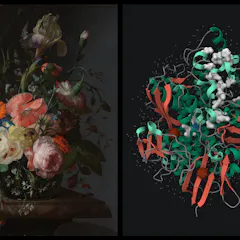
This process of looking and asking questions about what you are looking at is needed at all levels of science, and science students can learn through arts-inspired visual analysis.

Knowing exactly why experts disagree can help us navigate uncertainty – and make better decisions.
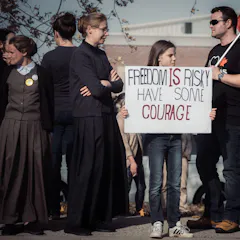
To adequately prepare for the next pandemic, we need to understand where people’s spirituality and science scepticism overlap – and why.

Canadian scientists have made significant contributions during the pandemic response, including vital roles in developing COVID-19 vaccines. But underfunding puts the future of science in Canada at risk.

College science classes often fall short of helping students see connections across subjects. Can a new approach make a difference?

A whole-school approach to literacy is far more effective for students, but few Australian schools have practical plans for building literacy across all subject areas.
Scicomm is a hashtag, and there are many programs that claim to teach scientists how to be better communicators. But it’s hard to show exactly what they’re accomplishing.
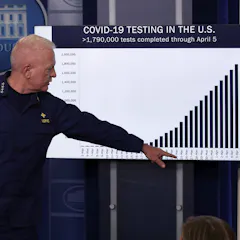
Visualizations can help you understand data better – but they can also confuse or mislead. Here, some tips on what to watch out for.
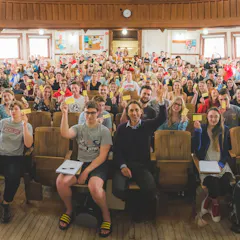
A science researcher’s work gets twisted by a conservative news site; he considers this his wake-up call to educate as many students as possible about the importance of science to our world.
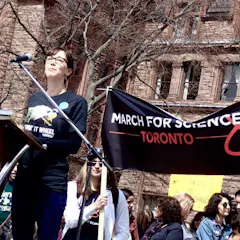
Four scientists talk through the ways they now build outreach into their work as a way to spread their research’s impact – something that wasn’t the norm for past generations of academics.
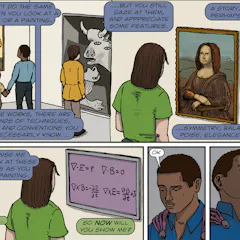
You might not think much about science topics as part of your everyday life. But science – like art, music, religion – is part of our culture, and scientists can help it reclaim its rightful place.

Scientists who engage with the public may have goals about influencing policy or behavior. But they also need to think about the short-term objectives that will help get them there.

Reports of facts’ death have been greatly exaggerated. Effective communication jettisons the false dilemma in favor of a more holistic view of how people take in new information on contentious topics.

Millions of Americans believe brown cows produce chocolate milk? The way the media reported this factoid raises questions about science literacy – but different ones than you may think.

Does science have an answer to science denial? Just as being vaccinated protects you from a later full-blown infection, a bit of misinformation explained could help ward off other cases down the road.
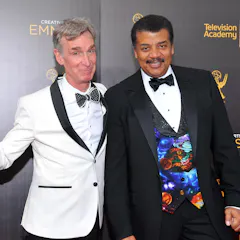
Popular programming that focuses on science tends to not actually be all that popular. Bringing in new audiences who aren’t already up to speed on science topics is a challenge.
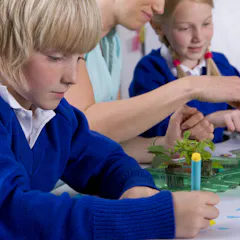
What is the point of science knowledge if you are not likely to use it once you leave school?

Are we in a race against climate change? Or is it a war? How does thinking of the past or the future affect your support for the science? Researchers are learning how metaphors and context matter.
Now that we’re in a post-truth world, a timely report from the National Academies of Sciences, Engineering and Medicine highlights evidence for what works and what doesn’t when talking about science.
Top contributors
-

Associate Professor of Advertising and Public Relations, The University of Texas at Austin
-
Professor of Advanced Technology Transitions, Arizona State University
-
Professor of Public Relations, Michigan State University
-
Senior Research Fellow, Melbourne School of Psychological Sciences, The University of Melbourne
-
Professor of Life Sciences Communication, University of Wisconsin-Madison
-
Assistant Professor of Religion, James Madison University
-
Assistant Professor of Marketing, University of Oregon
-
Ph.D. Candidate in Cognitive Science, University of California, San Diego
-
Assistant Professor of Public Relations, Northern Illinois University
-
Visiting Fellow, Australian National University
-
Professor of Social Psychology in Society, University of Cambridge
-
Honorary Associate, School of Physics, University of Sydney
-
Director of the Division of Cancer Biology and Tissue Engineering at the School of Dental Medicine, Tufts University
-
Director Emerita of the Alan Alda Center for Communicating Science, Stony Brook University (The State University of New York)
-
Professor of Physics and Astronomy, USC Dornsife College of Letters, Arts and Sciences