

The early days of science writing were largely confined to men, with women treated to texts labelled “for the ladies”. Things have changed, but more needs to be done.
Articles on Science communication
Displaying 101 - 120 of 336 articles

When it comes to environmental activism, optimism is key.
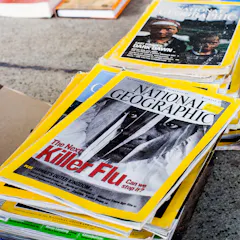
Science is a part of everyday life. Science journalists can do more to connect science to the public.
Researchers found that aggressive messaging and framing current events as a ‘war on science’ had different effects on how liberals and conservatives felt about scientists’ credibility.
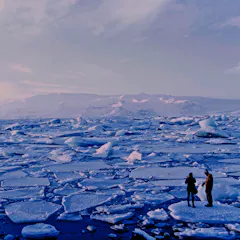
We must recognize the complexity of perspectives on climate change if we want to confront it.

Jodie Whittaker finally takes over as the first woman to play the Doctor in the long-running TV series. But that’s not all that’s new as the show make a welcome return to our screens.
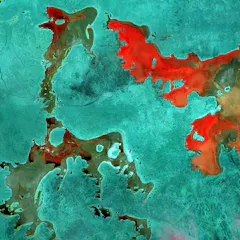
The Open Air project features satellite data interpreted and coloured to produce beautiful, surreal images of Australian landforms.
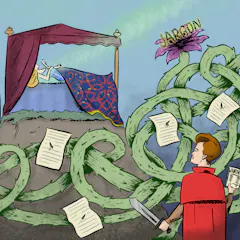
Scientific ideas can get lost in forests of words that lack structure and overuse complex language. Just like Sleeping Beauty, they need rescuing.
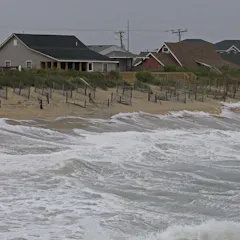
Don’t believe the skeptics or the conspiracy theorists: Weather forecasters can’t slant hurricane warnings to make political points.
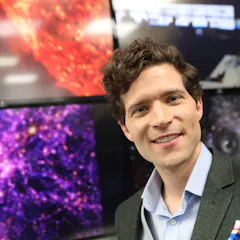
The 2018 Australian Museum Eureka Prize winners include astrophysicist and science communicator Alan Duffy and the citizen science app QuestaGame.
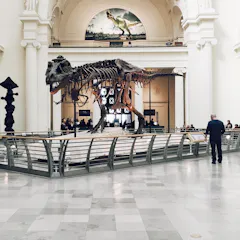
The scientific community always wants more cash to fund research. A new study examines whether more concrete knowledge of science or more general interest in it is likelier to loosen the pursestrings.

If you already write for The Conversation, thank you! But less than 30% of story pitches to our Science and Technology section come from women.
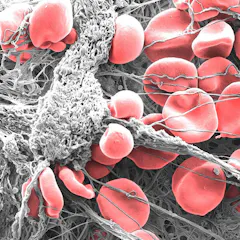
Images taken out of a research context and shared with the public offer a way to connect scientists with the broader world – and vice versa. These photos are stunning examples.
There are many reasons why scientists collaborating with artists makes sense, now more than ever.

Vaccines have long been considered safe, but many people still believe they are not. A new study shows that people who think they know more than medical experts are more likely to believe that vaccine are not safe.
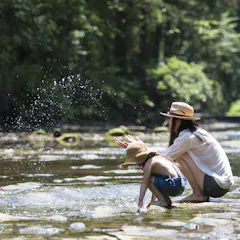
Life in the human herd is complex, and we are unavoidably inter-dependent when it comes to our health. Population health science looks at the things that cause ill-health in the first place.
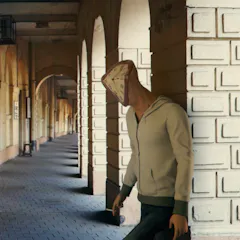
What does time really mean? What if you could play with time? And what if we lived in a world without fungi? Some of the questions posed by filmmakers exploring the world of science.
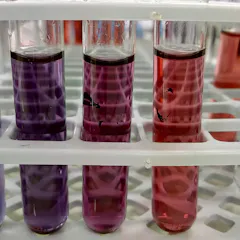
Nanotechnology brings together multiple science disciplines to create devices that mimic the refinements of nature. It’s difficult – and exhilarating.
Scientists can be powerful influencers and role models. So there’s reason for concern when the same names and faces dominate coverage and visibility.
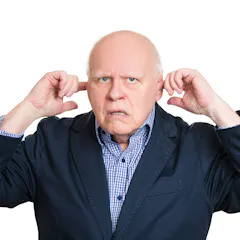
Facts will only get you so far when it comes to climate change. To get conservatives on side, climate communicators must focus on the values conservatives hold dear, such as preserving the status quo.
Top contributors
-

Associate Professor (hon) at the Centre for Public Awareness of Science, Australian National University
-
Senior Lecturer, Australian National Centre for the Public Awareness of Science, Australian National University
-
Science Communication Researcher, Stellenbosch University
-
Senior Research Fellow, Melbourne School of Psychological Sciences, The University of Melbourne
-
Professor of Public Relations, Michigan State University
-
Senior Lecturer in Philosophy and Education; Curriculum Director, UQ Critical Thinking Project, The University of Queensland
-
Science communicator and communication consultant to Questacon, and alumni, CSIRO
-
Professor, Australian National University
-
Chair, The Conversation Media Group
-
Professor and UNESCO Chair-holder, Australian National University
-
Associate Professor of Health Law, Policy and Management, Boston University
-
Laureate Professor of Mathematics, University of Newcastle
-
Campus Visitor / Director of Econnect Communication, Australian National University
-
Associate Professor, Interim Pro Vice Chancellor Learning and Teaching, Australian National University
-
PhD; Lawrence Berkeley Laboratory (retired) and Research Fellow, University of California, Davis