
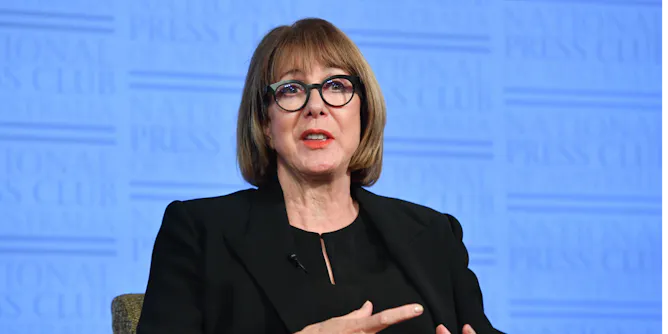
A calm voice, a trusted expert, devoted teacher. Epidemiologist Professor Mary-Louise McLaws was passionate about engaging with the mainstream media and communicating what she knew.
Articles on Science communication
Displaying 41 - 60 of 336 articles
Climate change board games can help players grasp the issues by experiencing them first-hand.
Public data about individual donors’ political contributions supports the perception that American academia leans left.
Mary Anning, Thomas Bopp and Ben Bacon are just a few of the nonprofessionals who pushed the frontiers of science.
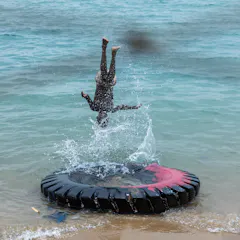
Traditional research outputs like journal articles don’t often give voice to communities’ stories.
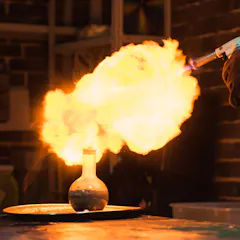
Inspiring our children to value and connect with science is key to improving society – and there are ways to do this safely in the classroom.
Preprints are often free to use, making them more accessible for journalists to report on. However, as they have yet to undergo peer review, science journalists take a gamble on their accuracy.
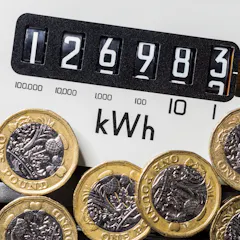
There never was a ‘maximum bill of £2,500’.
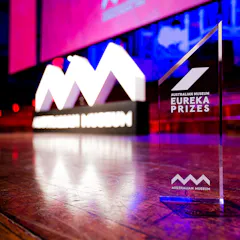
A microscope slide that can diagnose cancer, mapping how what we eat affects the environment, and an effort to track bushfire damage are among the winners at Australia’s leading scientific awards.
The annual Pitch it Clever prizes, awarded by Universities Australia, celebrate the work of three emerging researchers. These are the 2022 winners.
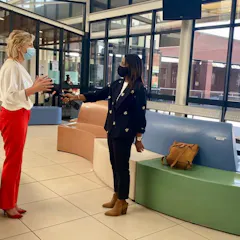
Journalists may unwittingly perpetuate the notion that men are the only experts worth listening to. This limits the visibility of women in science.

Poetry might seem like an odd way to communicate science research but the literary form can help engage a wide group of people
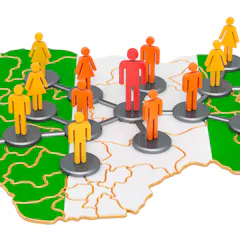
Social scientists in Nigeria communicate their research results more among themselves than they do to policymakers and the general public.

People often try to seem confident and certain in their message so it will be trusted and acted upon. But when information is in flux, research suggests you should be open about what you don’t know.

To convince 18- to 30-year-olds to get vaccinated, three doctoral students designed an innovative, fun, non-judgmental quiz.

Hooking trees up to internet-connected sensors provides a new way to study how they interact with the environment - and how the public interacts with their tweets.

It’s important for scientists to present their data in a accessible and comprehensible manner. However, the colour palettes commonly used to communicate information can also distort and misrepresent it.
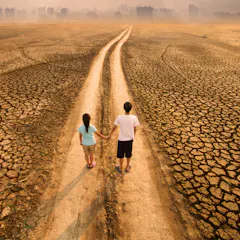
Storytelling can be a powerful tool to communicate complicated crises like climate change. Telling relatable and local stories can help motivate people to action.

Before the pandemic, the public perceived science as infallible and inaccessible. But the opening up of research to the general public has changed that perception.
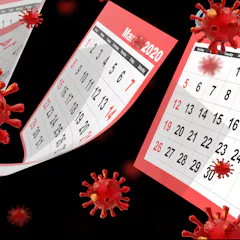
A lot has happened since the WHO declared the coronavirus outbreak a pandemic. A portrait in data highlights trends in everything from case counts, to research publications, to variant spread.
Top contributors
-

Associate Professor (hon) at the Centre for Public Awareness of Science, Australian National University
-
Senior Lecturer, Australian National Centre for the Public Awareness of Science, Australian National University
-
Science Communication Researcher, Stellenbosch University
-
Senior Research Fellow, Melbourne School of Psychological Sciences, The University of Melbourne
-
Professor of Public Relations, Michigan State University
-
Senior Lecturer in Philosophy and Education; Curriculum Director, UQ Critical Thinking Project, The University of Queensland
-
Science communicator and communication consultant to Questacon, and alumni, CSIRO
-
Professor, Australian National University
-
Chair, The Conversation Media Group
-
Professor and UNESCO Chair-holder, Australian National University
-
Associate Professor of Health Law, Policy and Management, Boston University
-
Laureate Professor of Mathematics, University of Newcastle
-
Campus Visitor / Director of Econnect Communication, Australian National University
-
Associate Professor, Interim Pro Vice Chancellor Learning and Teaching, Australian National University
-
PhD; Lawrence Berkeley Laboratory (retired) and Research Fellow, University of California, Davis