
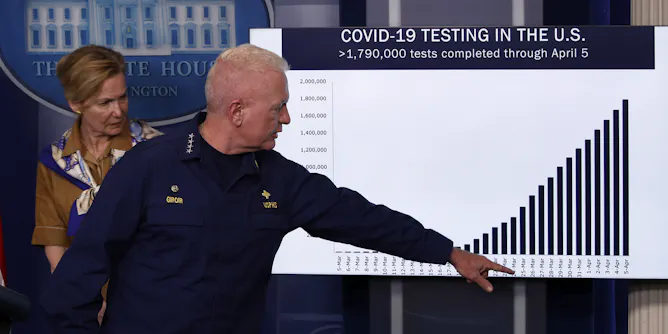
Visualizations can help you understand data better – but they can also confuse or mislead. Here, some tips on what to watch out for.
Articles on Science communication
Displaying 81 - 100 of 336 articles
When you ask Americans what the word ‘science’ brings to mind, a majority respond ‘hope.’ Using this built-in brand can help communicate important science messages.
Research on conspiracy theories can help people become receptive to health advice.

Scientific results are being rushed out quicker than ever to fight coronavirus. Here’s what you need to know about preprints, peer review and the difference between the two.

For science communicators to be effective, best practice principles need to be applied to the design of messages, the choice of who conveys those messages, and their tone and timing.
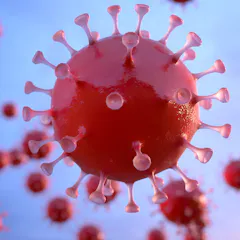
Viruses exist in a realm where there is no light and colour has no meaning. In their COVID-19 depictions, designers, illustrators and communicators make some highly creative and evocative decisions.

From coronavirus to climate change, it’s easy to be misled by some reporting.
To help humanity change its carbon course, we climate scientists must shed conservatism, refocus our research, and rethink what level of existential risk we’re willing to offer world leaders.

Decarbonizing the global economy would help the climate change problem – but also many others. Would putting all those additional co-benefits center stage help drum up support for climate action?
Science communication online is important to the intellectual work of scientists.

A science researcher’s work gets twisted by a conservative news site; he considers this his wake-up call to educate as many students as possible about the importance of science to our world.
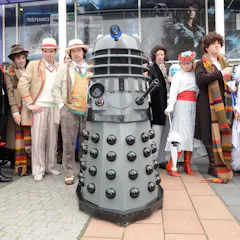
The first peer-reviewed survey of Doctor Who fans’ attitudes to science reveals it was literally life-changing TV for some. But the verdicts were surprisingly nuanced and sometimes contradictory.
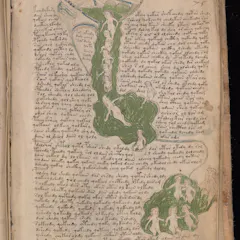
The Voynich Manuscript has researchers, the media, and the public hooked. But pseudo-explanations for the book’s ‘code’ reveals a serious problem with society’s relationship with science.
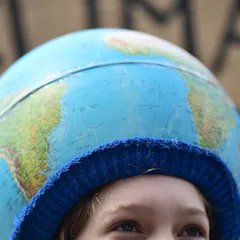
Strengthening the language on climate change can help, but journalists should cover its inspiring solutions, too.
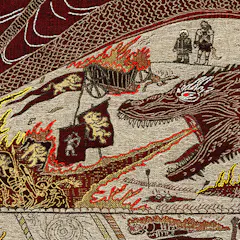
Even in this fantasy world, geological processes like tectonic plate movement, earthquakes and volcanic eruptions would have built the mountains, carved the rivers, and created vast oceans.
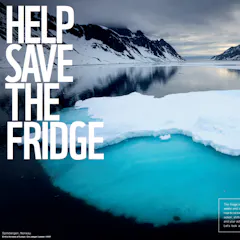
What makes people more likely to trust a climate change message? If it looks too corporate, it’s more likely to fail.
In Australia, the next government will need to meet the challenge of refreshing the social licence between science, government and the many and diverse communities that make up our nation.
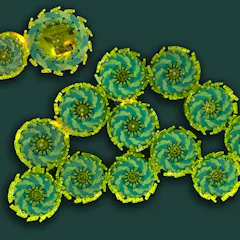
Using an artistic eye when creating pictures of scientific phenomena and new technologies can elevate the resulting images in terms of both their beauty and how informative they are.

Connecting with an audience in a productive way can mean first figuring out what they think, feel and believe before you start sharing your message.

The new White Paper can help scientists understand better why public engagement is crucial.
Top contributors
-

Associate Professor (hon) at the Centre for Public Awareness of Science, Australian National University
-
Senior Lecturer, Australian National Centre for the Public Awareness of Science, Australian National University
-
Science Communication Researcher, Stellenbosch University
-
Senior Research Fellow, Melbourne School of Psychological Sciences, The University of Melbourne
-
Professor of Public Relations, Michigan State University
-
Senior Lecturer in Philosophy and Education; Curriculum Director, UQ Critical Thinking Project, The University of Queensland
-
Science communicator and communication consultant to Questacon, and alumni, CSIRO
-
Professor, Australian National University
-
Chair, The Conversation Media Group
-
Professor and UNESCO Chair-holder, Australian National University
-
Associate Professor of Health Law, Policy and Management, Boston University
-
Laureate Professor of Mathematics, University of Newcastle
-
Campus Visitor / Director of Econnect Communication, Australian National University
-
Associate Professor, Interim Pro Vice Chancellor Learning and Teaching, Australian National University
-
PhD; Lawrence Berkeley Laboratory (retired) and Research Fellow, University of California, Davis