

No matter how much evidence scientists present in support of climate change there are those who refuse to believe it. They think it’s all part of the consprarcy theory.
Articles on Science communication
Displaying 201 - 220 of 336 articles

Science can be fascinating and exciting. But much science writing is dull and obscure. Here are some of the tricks scientists often use to suck the joy out of science.

A former dean of Sydney University’s Faculty of Medicine, where I work, once appointed me to a role where I was to try and increase the news media profile of our staff’s research and to encourage them…

Nobel Prize-winning science is almost by definition arcane and complex. While these esoteric fields have their moment in the spotlight, does it matter if the rest of us understand?
Missing links make a good story, but not good science. Outdated metaphors don’t help us understand the rapid evolution of infectious diseases such as flu and malaria.

Public engagement of academics has increased enormously in recent decades. But this new level of engagement is producing problems and conflicts for which many academics are ill-prepared.
Nobel Laureate Peter Doherty’s new book explores why so many people today selectively reject science, and in the process gives a behind the scenes look at how science really works.

There’s no evidence that cloud cover affects bowling at all, but everyone involved with cricket seems to think it does.

Some activists use open records requests to bully researchers – distracting them from their actual work and silencing others who don’t want to draw attention.
The recent claim that we might enter a mini ice age in 15 years is not only bad science, but it represents a failure of communication by both scientists and journalists.
I sometimes forget that people can feel embarrassed listening to me talk about my research on sperm. But often those same people can also be a source of amazement and inspiration.

What’s behind a plant scientist’s research getting reported in over 4,000 media outlets? Here’s her post-game analysis.
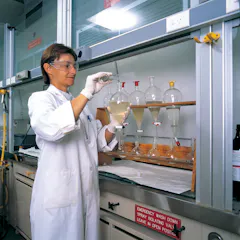
Australian scientists are listened to by government and business, but must do more to ensure their advice and work contributes to a stronger future for Australia.

Science communication and outreach can be motivated in ways other than reforming research funding bodies.
If we want scientists to spent time sharing their discoveries with the general public, then we need to change research metrics to reward them for their efforts.

One way to protect researchers from funding cuts in May’s budget is to make sure they explain the importance of their work to a wider audience.
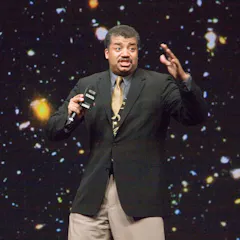
A bill before congress would create a science laureate position akin to the poet laureate for poetry. But some science stars are already essentially doing the job now.
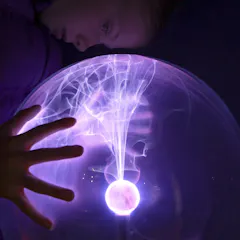
Most science communication appeals to those who already love science. It’s harder, but important, to reach out to the disengaged too.

At their annual meetings last month, leaders of the American Association for the Advancement of Science (AAAS) urged their members to advocate on behalf of federal funding for scientific research, actions…
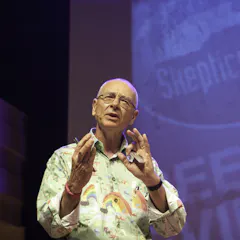
There is a wealth of science communication going on, but it’s still not enough.
Top contributors
-

Associate Professor (hon) at the Centre for Public Awareness of Science, Australian National University
-
Senior Lecturer, Australian National Centre for the Public Awareness of Science, Australian National University
-
Science Communication Researcher, Stellenbosch University
-
Senior Research Fellow, Melbourne School of Psychological Sciences, The University of Melbourne
-
Professor of Public Relations, Michigan State University
-
Senior Lecturer in Philosophy and Education; Curriculum Director, UQ Critical Thinking Project, The University of Queensland
-
Science communicator and communication consultant to Questacon, and alumni, CSIRO
-
Professor, Australian National University
-
Chair, The Conversation Media Group
-
Professor and UNESCO Chair-holder, Australian National University
-
Associate Professor of Health Law, Policy and Management, Boston University
-
Laureate Professor of Mathematics, University of Newcastle
-
Campus Visitor / Director of Econnect Communication, Australian National University
-
Associate Professor, Interim Pro Vice Chancellor Learning and Teaching, Australian National University
-
PhD; Lawrence Berkeley Laboratory (retired) and Research Fellow, University of California, Davis