

There is broad acknowledgement that the way science is taught and practised in Africa is not socially inclusive.
Articles on Science communication
Displaying 181 - 200 of 336 articles
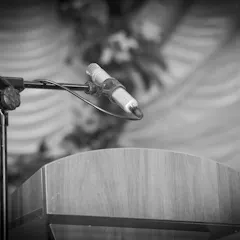
The scientific community enjoys one of the highest levels of trust among American institutions. But engaging in the political arena during a contentious election season comes with dangers.
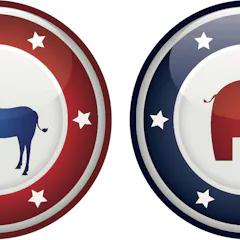
Social scientists investigate when and why liberals and conservatives mistrust science. The apparent split may be more about cultural and personal beliefs than feelings about science itself.

Bad Pharma author Ben Goldacre about how bad research hurts us all
The Conversation, CC BY36.4 MB (download)
Darren Saunders speaks with Bad Pharma author Ben Goldacre about bad medical research reporting, and how greater transparency in research practices could improve public trust in science and medicine.

Academics are getting out of touch with the rest of society. This helps explains the sorry state of our public discourse on science.
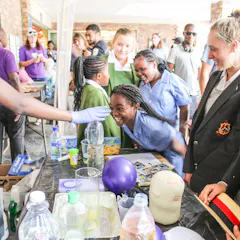
There is mounting evidence to show scientists and researchers why public engagement is worth their while.

Science communication has grown in leaps and bounds over the past 60 years. It plays a crucial role in democratising science and making it less mysterious.

Social media is a great way to spread science information, fast. But the online echo chamber isn’t always good at separating what’s valid from what’s not, and being prolific doesn’t make you right.

The public loses when their only choices are inaccessible, impenetrable journal articles or overhyped click-bait about science. Scientists themselves need to step up and help bridge the divide.

Broader goals like building trust, fostering excitement about science and influencing policy decisions don’t necessarily just fall into place when researchers focus only on describing their work.
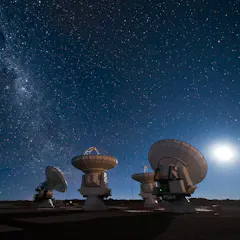
In a world of blogs, twitter and open data, scientists need to think again about how they’d communicate a discovery of alien life.
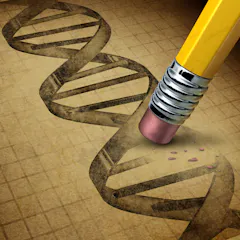
A recent closed meeting about building synthetic genomes raised suspicions about just what scientists were planning, away from the public eye.
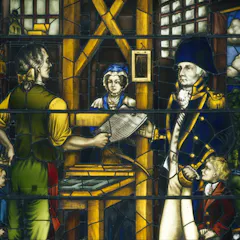
What science issues did Australia’s first newspaper - edited by a convict - discuss in its letter pages? The same ones we talk about today: the environment, education and health.

Research showing that more than 90% of climate scientists agree that we’re causing global warming prompted plenty of questions. And the authors are only too happy to answer.

Sometimes scientists, the media and the general public inadvertently conspire to oversell science, and that is bad for us all.

A new study confirms that 97% of publishing climate scientists believe humans are causing global warming.

Science is about more than protons, genes and neurons. Sometimes a bigger picture can help us make better decisions when it comes to public policy.
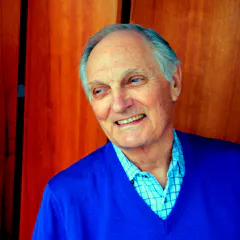
Everyone loves to hear a story, says actor Alan Alda, and that’s what every scientists should learn if they are to better communicate their work to a wider audience.
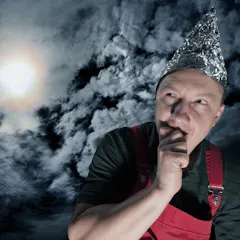
Some scientists refuse to debate or appear with those they consider to be unscientific. But is this the best approach to combat anti-science narratives?

Sometimes big research news bypasses the usual scientific publishing process. Here’s why that’s not good for scientists or the public.
Top contributors
-

Associate Professor (hon) at the Centre for Public Awareness of Science, Australian National University
-
Senior Lecturer, Australian National Centre for the Public Awareness of Science, Australian National University
-
Science Communication Researcher, Stellenbosch University
-
Senior Research Fellow, Melbourne School of Psychological Sciences, The University of Melbourne
-
Professor of Public Relations, Michigan State University
-
Senior Lecturer in Philosophy and Education; Curriculum Director, UQ Critical Thinking Project, The University of Queensland
-
Science communicator and communication consultant to Questacon, and alumni, CSIRO
-
Professor, Australian National University
-
Chair, The Conversation Media Group
-
Professor and UNESCO Chair-holder, Australian National University
-
Associate Professor of Health Law, Policy and Management, Boston University
-
Laureate Professor of Mathematics, University of Newcastle
-
Campus Visitor / Director of Econnect Communication, Australian National University
-
Associate Professor, Interim Pro Vice Chancellor Learning and Teaching, Australian National University
-
PhD; Lawrence Berkeley Laboratory (retired) and Research Fellow, University of California, Davis