
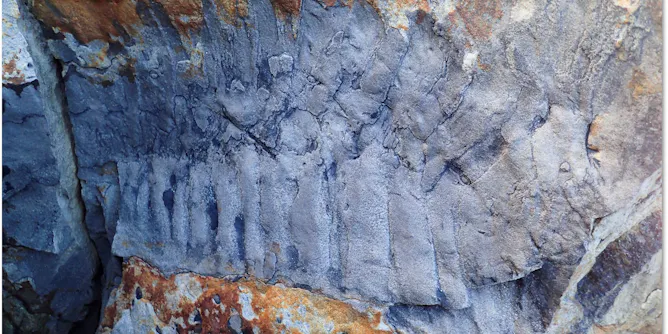
Why our chance discovery of an Arthropleura as long as an alligator, while on holiday on a beach in northern England, was such a landmark moment.
Articles on Fossils
Displaying 221 - 240 of 512 articles
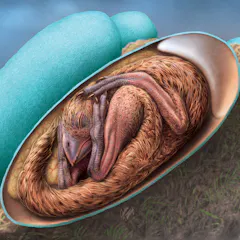
The little dinosaur is curled up inside its shell the same way birds do before hatching, shedding new light on the link between the behaviour of dinosaurs and modern birds.
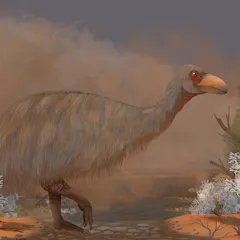
Genyornis newtoni was one of the biggest birds ever to walk the earth. And new research shows its mysterious extinction may have come amid a bout of widespread bone disease as its lake home dried out.
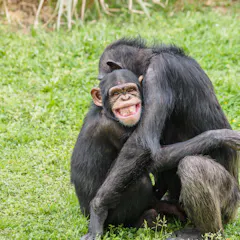
We studied 8,000 primate teeth and finally confirmed that humans are not the only living primate to suffer from cavities. But there are interesting differences.

A 5-million-year-old fossil that sat collecting dust in a Melbourne museum for more than a century has rewritten the evolutionary history of turtles in prehistoric Australia’s tropical climate.

Studying the lower back allows researchers to understand how the species’ anatomy was adapted for different kinds of movement.

A new study finds more than one early human species lived on the landscape in Northern Tanzania 3.66 million years ago. But there are reasons to be cautious about the findings.
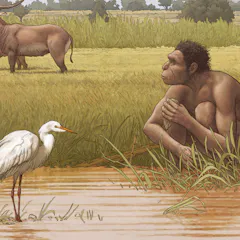
If scientific research is to take decolonization seriously, names for species should reflect this approach and consider the political, social and emotional implications.
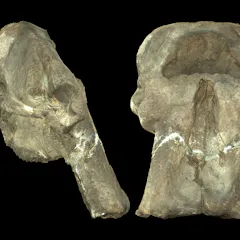
The anatomy of the teeth in the cranium and its bones show that it belongs to an extinct cousin of the living African savanna and forest elephants.
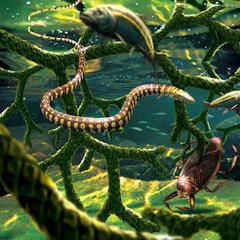
In 2015, a published article described the fossil of a four-legged snake. New research has revealed that it is in fact a lizard, and the fossil is the centre of a scientific ethics debate.
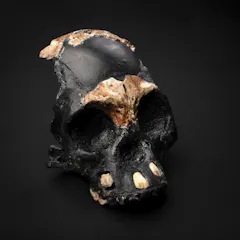
The fossil material was recovered from the surface of a tight, narrow passage that can only be accessed with difficulty by one person at a time.
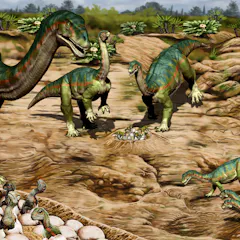
The complex social behaviour in early dinosaurs observed in a new study lines up with other fossil evidence that dinosaurs were more bird-like than crocodilian-like.
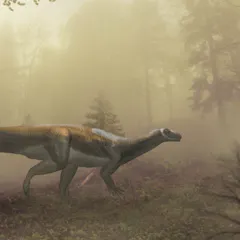
The oldest fossil evidence for dinosaurs in Australia came as a surprise when it was dug out by coal miners working in Ipswich.
Studying these deposits gives scientists information about how past environments change. That, in turn, gives us informed estimates on how climates and environments will change in the near future.
A recent discovery of a sponge fossil may be the oldest known animal fossil, extending the evolutionary timeline by hundreds of millions of years.
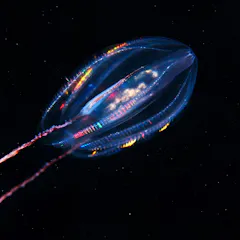
Fossilized comb jellies, or ctenophores, are rare because the creatures are almost completely soft-bodied. Rare fossil finds are helping us learn more about ancient animals and evolution.
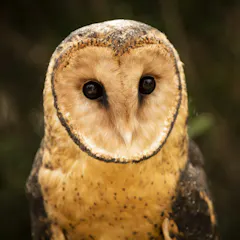
Birds have always been charged with carrying the burden of our feelings, writes Delia Falconer. Yet we’ve never treated these inscrutable, vivacious companions particularly well.

Archaehierax sylvestris, whose remains have been unearthed in the arid South Australian outback, was the apex predator in a lush prehistoric forest filled with marsupials and waterfowl.
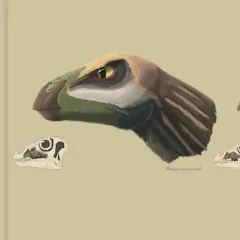
A detailed study of ornithopod jawbones from a single site reveals a high dinosaur diversity in Victoria during the late Early Cretaceous.
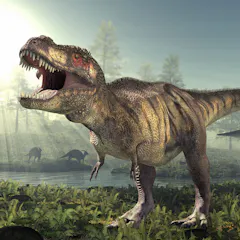
Ever since moviegoers saw the first ‘Jurassic Park,’ millions have wondered if scientists could make a dinosaur in the lab.
Top contributors
-

Research Associate, African Centre for Coastal Palaeoscience, Nelson Mandela University
-
Associate professor in Vertebrate Palaeontology, University of the Witwatersrand
-
Emeritus Strategic Professor in Palaeontology, Flinders University
-
Professor of Vertebrate Palaeontology, University of Bristol
-
Senior Research Scientist, South Australian Museum; Flinders University
-
Associate Professor in Vertebrate Palaeontology, Flinders University
-
Honorary Research Associate, Evolutionary Studies Institute, University of the Witwatersrand
-
Research Associate in the College of Science and Engineering, Flinders University
-
Research Associate, School of Earth and Planetary Sciences, Curtin University
-
Professor of Palaeobiology, University of Leicester
-
Technical Specialist in Earth Sciences, University of Bristol
-
Professor in Geochronology and Geochemistry, Southern Cross University
-
Senior Lecturer in Paleontology and Evolutionary Biology, Life Sciences at the University of Bath, University of Bath
-
Associate Professor in Ancient DNA, University of Otago
-
Lecturer in the School of Applied Sciences, Edinburgh Napier University