
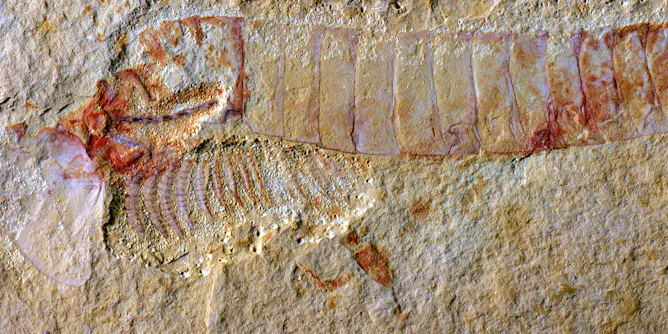
Researchers have found a new way by which the brains of ancient animals can be preserved.
Articles on Fossils
Displaying 241 - 260 of 512 articles
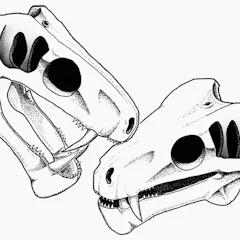
Finding a fossil tooth embedded in bone is always great news for palaeontologists, as it is the gateway to some otherwise out-of-reach understanding of the behaviour of extinct animals.
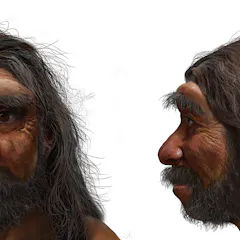
A new analysis of a ‘lost’ skull rewrites the recent family tree of the human species, showing our closest relatives lived in China.
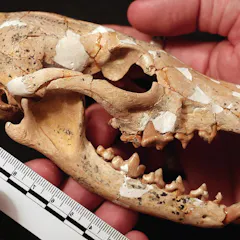
Jackals appeared and established themselves in Africa in at least the last five million years. These animals have evolved and adapted to the changing environment, allowing them to survive.

This is a crucial dinosaur for palaeontologists; the variety of fossils available means researchers can study the species’ growth through its whole life span.
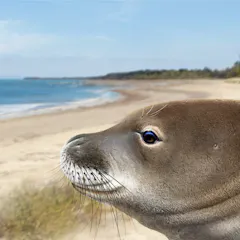
Ancient climate change doomed the monk seals that lived in Australian waters millions of years ago.
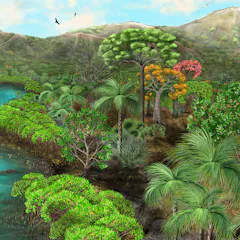
Using remnants of fossilized trees, scientists and an artist figured out what the forest looked like long before humans existed.
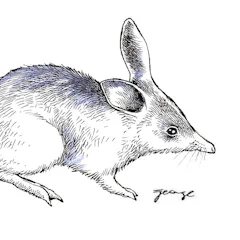
Very few bilby and bandicoot fossils have ever been found. Four new discoveries help fill in the picture of how these elusive animals evolved.

The recent discovery of fragments of a jaw fossil show that at one point, herbivorous reptiles evolved highly complex and efficient teeth.
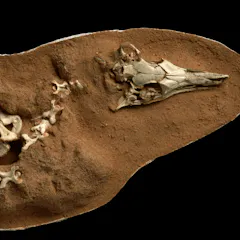
By looking at the eye bones and ear canals of extinct dinosaurs, researchers show that a small ancient predator likely hunted at night and had senses as good as a modern barn owl.

Combining evidence from archaeology, geochronology and paleoenvironmental science, researchers identified how ancient humans by Lake Malawi were the first to substantially modify their environment.
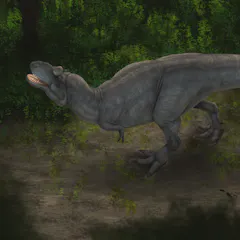
So how accurate is the T. rex’s running speed in that famous Jurassic Park jeep-chase scene?
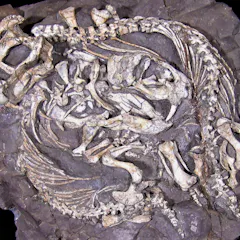
These new finds indicate that Diictodon was burrowing and giving some parental care to its young. This was long thought to be unique to mammals.
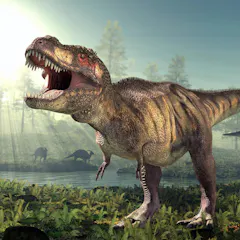
Using the incredible wealth of fossil data and a modern ecological theory, researchers estimated population density for the extinct apex predator.

Preserved in amber, a tiny beetle has shed light on the moment the world first burst into bloom.
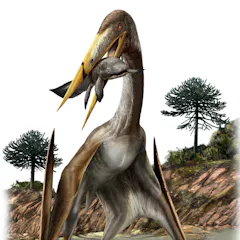
Gigantic flying reptiles had impressive wingspans of up to 12 metres – and a special trick in their necks.
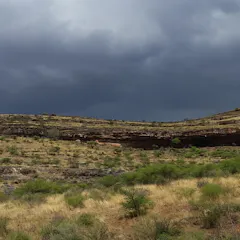
People were drawn to Ga-Mohana for many reasons. Surface water was likely among them.

The environmental, cultural and scientific sensitivity of some sites, and rarity of some fossils, means amateur fossil collecting comes with huge risks.
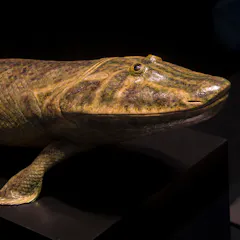
‘Tetrapods’ were the first fish to evolve lungs and walk onto land. They were also our ancestors. Now, a new study sheds light on the size and shape of these unique animals’ brains.

Since the 19th century, biologists have treated the larvae of lampreys as a relic of evolutionary ancestry that could potentially give clues about vertebrate origins. Now fossils overturn that view.
Top contributors
-

Research Associate, African Centre for Coastal Palaeoscience, Nelson Mandela University
-
Associate professor in Vertebrate Palaeontology, University of the Witwatersrand
-
Emeritus Strategic Professor in Palaeontology, Flinders University
-
Professor of Vertebrate Palaeontology, University of Bristol
-
Senior Research Scientist, South Australian Museum; Flinders University
-
Associate Professor in Vertebrate Palaeontology, Flinders University
-
Honorary Research Associate, Evolutionary Studies Institute, University of the Witwatersrand
-
Research Associate in the College of Science and Engineering, Flinders University
-
Research Associate, School of Earth and Planetary Sciences, Curtin University
-
Professor of Palaeobiology, University of Leicester
-
Technical Specialist in Earth Sciences, University of Bristol
-
Professor in Geochronology and Geochemistry, Southern Cross University
-
Senior Lecturer in Paleontology and Evolutionary Biology, Life Sciences at the University of Bath, University of Bath
-
Associate Professor in Ancient DNA, University of Otago
-
Lecturer in the School of Applied Sciences, Edinburgh Napier University