
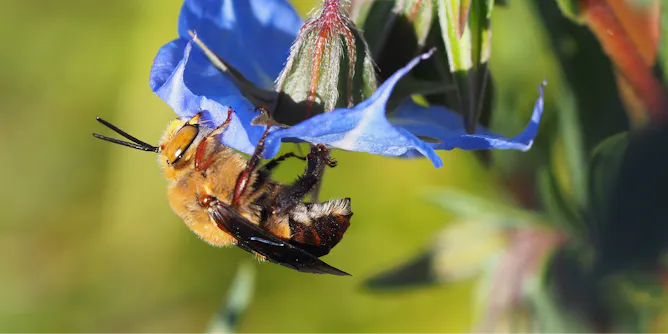
Native bees pollinate many of Australia’s unique plants and help entire ecosystems thrive.
Articles on Extinction
Displaying 1 - 20 of 420 articles

The stories of a whale, a panther and a butterfly help explain why new interpretations of the Endangered Species Act could be catastrophic for species’ survival.
The catastrophic story is familiar, but the insight, and the ending, offer an opportunity, and perhaps motivation, for modern readers.
Insects are under threat partly because of man-made climate change, heatwaves and intensive farming.
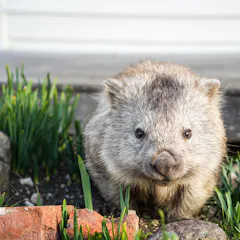
A new study reveals thousands of native animals are taking up residence in Australian homes.
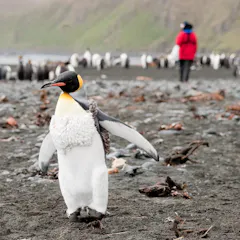
The federal government’s actions could leave the island’s wildlife more vulnerable to H5N1.

A new study has found that Tasmanian tigers had an adaptation found in no living carnivorous mammal.
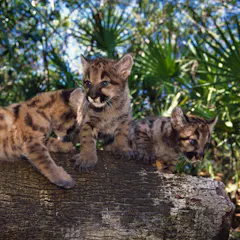
Four experts explain what genetic health is and why it matters for our most vulnerable wildlife.
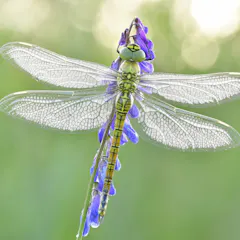
When we lose insect species without even knowing they existed, we will never know where they lived, what they looked like, how they interacted with other species or the impact they had on ecosystems.
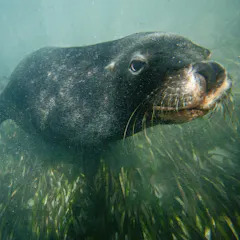
We should not wait for perfect certainty. It’s time to act before catastrophe.

The pint-sized pookila faces uncertainty in Queensland, as two experts explain.

Four experts explain how we can protect the rare – and increasingly at risk – spidery wattle.

A new study challenges conventional thinking about what drove the extinction of megafauna.

New Zealand’s well-documented fossil and living marine fauna allows scientists to explore drivers of extinction risk that are relevant globally.
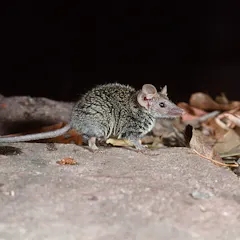
Using sophisticated genetic technology and 100-year-old museum specimens, we uncovered a new planigale species.
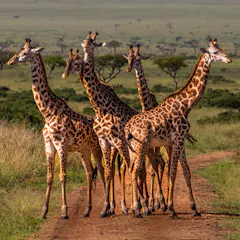
Even now, in an age of satellites and genome sequencing, the Earth still holds secrets.

A week after the asteroid impact, rotting vegetation, smoke and sulphur create a stinky planet. Plant and animal survivors succumb to the corrosive acid rain.
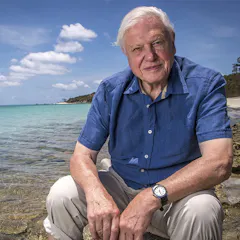
David Attenborough has captured and told the stories of nature to millions of people – and inspired scientists and conservationists the world over.
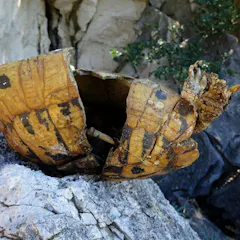
Female tortoises are bearing the brunt of the brutal behaviour of their male counterparts, who are regularly pushing them off cliffs in North Macedonia.
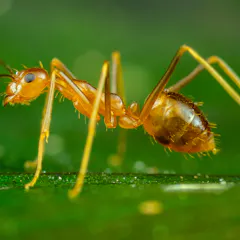
Biological invasions can severely harm the welfare of animals, causing them to suffer. AWICIS is a new framework that can be used to assess the severity of these impacts.
Top contributors
-

Professor of Conservation Biology, Charles Darwin University
-
Professor in Wildlife Ecology and Conservation, School of Life & Environmental Sciences, Deakin University
-
Professor of Conservation and Sustainable Livelihoods, Charles Darwin University
-
Matthew Flinders Professor of Global Ecology and Node Leader in the ARC Centre of Excellence for Indigenous and Environmental Histories and Futures, Flinders University
-
Professor in Conservation Science, School of the Environment, The University of Queensland
-
Professor of Wildlife Conservation, Australian National University
-
Distinguished Professor of Ecology, Fenner School of Environment and Society, Australian National University
-
Associate Professor in Vertebrate Palaeontology, Flinders University
-
Professor in Conservation Science, School of Ecosystem and Forest Science, The University of Melbourne
-
Professor, Urban Ecology and Biodiversity, The University of Melbourne; RMIT University
-
University Fellow in Biodiversity, Charles Darwin University
-
Professor of Environmental Management, The University of Queensland
-
Lecturer in the School of Applied Sciences, Edinburgh Napier University
-
Honorary Research Fellow, University of Sydney
-
Distinguished Research Professor and Australian Laureate, James Cook University