
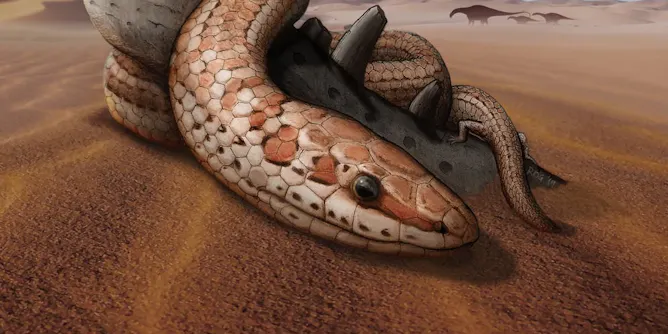
The discovery of a perfectly preserved snake skull fossil answers many questions about the evolution of snakes from lizards.
Articles on Fossils
Displaying 301 - 320 of 512 articles
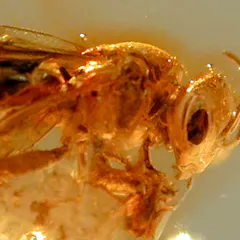
How do we know that bees were around when dinosaurs still roamed the Earth? The main evidence comes from fossils – the mineralized remains of long-dead organisms.
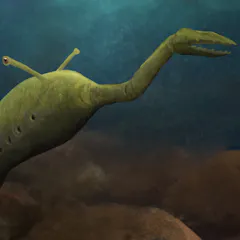
Scientists claimed they knew what this bizarre creature was – our evidence suggests the question is still open.
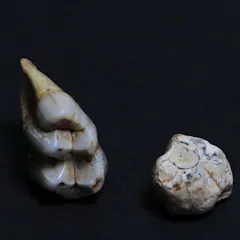
The rise and fall of monkeys in ancient Europe should remind us of our own species’ precarious relationship with changing climates.
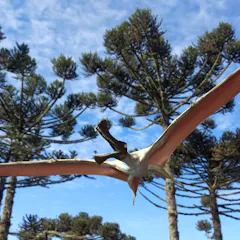
A ‘game-changing’ fossil pterosaur suggests these species could easily fly between continents, helping to explain why similar specimens have been found all over the world.
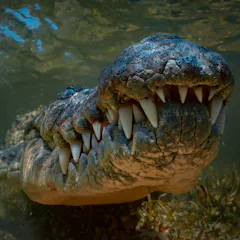
Paleontologists created an evolutionary map of how croc body size changed over the last 200 million years – with some interesting implications for today’s species.

Given that we know humans moved across these landscapes, we wondered whether there might also be evidence of other forms of human activity on these surfaces of sand.
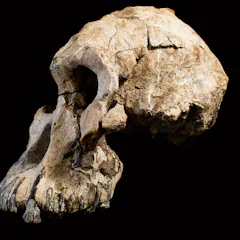
The hominin known as Lucy may not be the direct ancestor of humans.
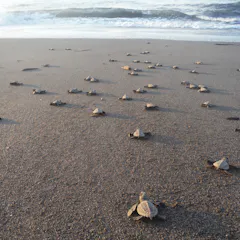
These trackways preserve an incredibly brief moment in time. More importantly, they tell us about ancient climates, and how turtle breeding ranges have changed over the millenia
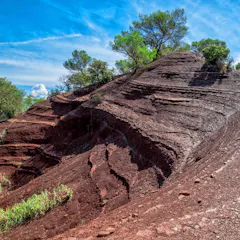
The geological and biological archives of the Earth shed light on both the distant past of our planet and allow us to imagine its future.
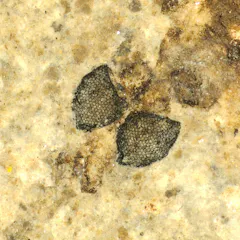
Fossil flies from what is now Denmark reveal some striking similarities between insect eyes 54 million years ago, and our own vision today.
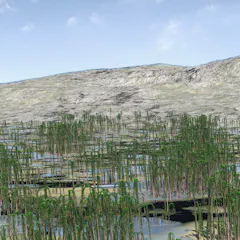
Remains of a 365m-year-old forest of extinct lycopsid trees has been found in China.

The more we know about the animals that lived during this time, the more we can start to comprehend how species react and recover after an extinction event.
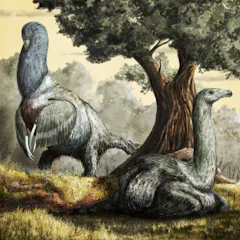
New research suggests some dinosaurs buried and protected eggs in groups.
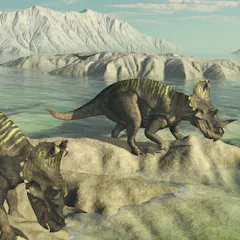
Fossils contain a thriving world of bacteria, proteins and perhaps even organic matter from dinosaurs.
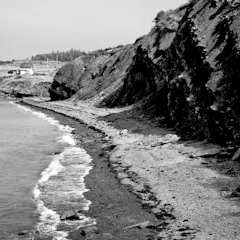
Remains found in the Joggins Cliffs at the Bay of Fundy in Nova Scotia reveal further clues about ancient ecosystems.
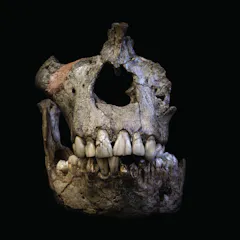
A new study shows the enigmatic hominin species Australopithecus africanus may have breastfed young for around 5-6 years – a very costly practice for the mother.
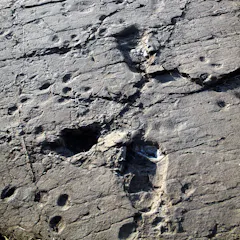
While the science is crucial, it is also important to know what sense the people who live in and around Laetoli make of these ancient footprints.
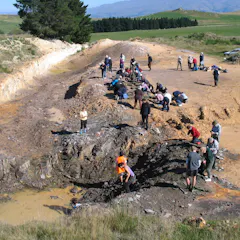
An Australian company’s plan to mine a fossil-rich site in New Zealand to produce pig food has been described as unjustifiable vandalism. A campaign is under way to protect the site in perpetuity.
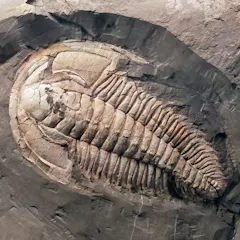
There is evidence to show this monster of the ancient sea was a cannibal, feeding on its own kind.
Top contributors
-

Research Associate, African Centre for Coastal Palaeoscience, Nelson Mandela University
-
Associate professor in Vertebrate Palaeontology, University of the Witwatersrand
-
Emeritus Strategic Professor in Palaeontology, Flinders University
-
Professor of Vertebrate Palaeontology, University of Bristol
-
Senior Research Scientist, South Australian Museum; Flinders University
-
Associate Professor in Vertebrate Palaeontology, Flinders University
-
Honorary Research Associate, Evolutionary Studies Institute, University of the Witwatersrand
-
Research Associate in the College of Science and Engineering, Flinders University
-
Research Associate, School of Earth and Planetary Sciences, Curtin University
-
Professor of Palaeobiology, University of Leicester
-
Technical Specialist in Earth Sciences, University of Bristol
-
Professor in Geochronology and Geochemistry, Southern Cross University
-
Senior Lecturer in Paleontology and Evolutionary Biology, Life Sciences at the University of Bath, University of Bath
-
Associate Professor in Ancient DNA, University of Otago
-
Lecturer in the School of Applied Sciences, Edinburgh Napier University