
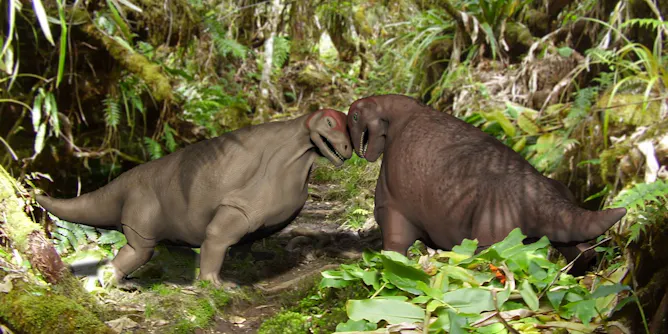
The Moschops fossil was discovered in South Africa in 1911 and a new study of a complete skull shows how its dense braincase protected the brain and sense organs during head-to-head combat.
Articles on Fossils
Displaying 381 - 400 of 512 articles

The evidence of a much earlier presence of humans in Indonesia was found more than 100 years ago. But only now has the age of the fossil teeth been accurately dated.
The footprints of dinosaurs can tell a lot about how they moved about many millions of years ago.

The location of a dinosaur find on a remote Queensland sheep station was lost for almost 80 years. But the site was rediscovered, and details are now emerging about the make up of the new dinosaur.

Homo naledi seems to have enjoyed small, hard foods like nuts.
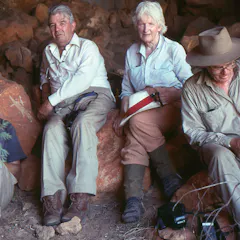
One of Australia’s most distinguished palaeontologists will be farewelled at a funeral in Canberra today.
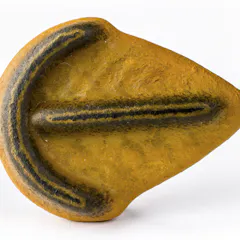
With no identifiable body parts, it’s hard to know how these fossilized creatures lived. A new approach models how the ocean’s water would interact with their unique shapes – hinting at their lifestyle.

Fossils of the lowly frog indicate that the evolution of South Africa’s west coast winter rainfall pattern is more complex, and possibly occurred much later, than previously thought
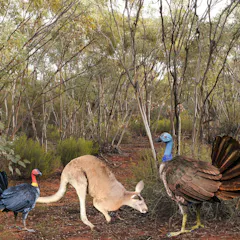
Large birds once lived across Australia, only to become extinct around the time that giant marsupials and other megafauna died out during the Pleistocene “ice ages”.
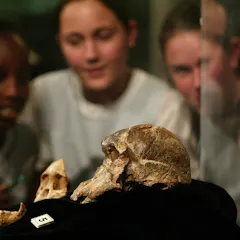
As an intellectual history of the disciplines of paleontology and paleoanthropology, Kuljan’s book is especially adept at narrating the interwoven connections between science and power.
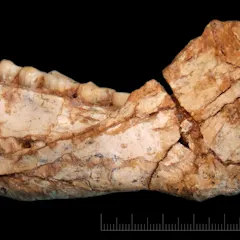
A researcher tells the story of how he and his team discovered the oldest Homo Sapiens fossil bones to date in Morocco.

Layers and layers of sand and sediment collected in Naracoorte Caves create windows into what Australia was like in our recent past.
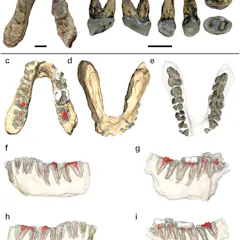
The theory that humankind originated in Europe is an old one. It was abandoned in 1924 when the first Australopithecus was discovered in South Africa.
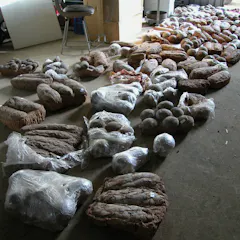
A new, “baby dragon” dinosaur revealed in a fossil returned to China is a striking example of the discoveries that might be lost when scientific specimens are illegally removed and traded.

Africa has one of the world’s richest fossil records, and evidence suggests that amateurs collected really important fossils long before professionals arrived on the scene.
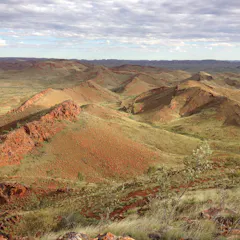
Life on the land could have started millions of years earlier on Earth than first thought. This could change the way we think about life developing elsewhere in the universe.
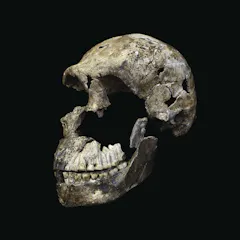
Evidence of Homo naledi’s age suggests we need to rethink our understanding of human history and evolution.

A century-old case of scientific fraud illustrates how hard it is to untangle the truth when access to new discoveries is limited.
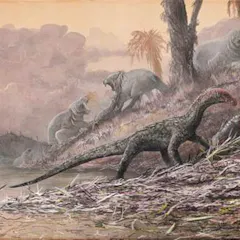
Researchers pieced together evidence from fossils that had been sitting in museums for years.
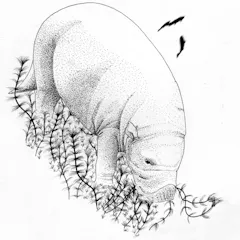
Sea cows (Sirenia) descended from four legged mammals that roamed Africa when this continent was isolated. They belong to the Afrotheria, the ‘African beasts’.
Top contributors
-

Research Associate, African Centre for Coastal Palaeoscience, Nelson Mandela University
-
Associate professor in Vertebrate Palaeontology, University of the Witwatersrand
-
Emeritus Strategic Professor in Palaeontology, Flinders University
-
Professor of Vertebrate Palaeontology, University of Bristol
-
Senior Research Scientist, South Australian Museum; Flinders University
-
Associate Professor in Vertebrate Palaeontology, Flinders University
-
Honorary Research Associate, Evolutionary Studies Institute, University of the Witwatersrand
-
Research Associate in the College of Science and Engineering, Flinders University
-
Research Associate, School of Earth and Planetary Sciences, Curtin University
-
Professor of Palaeobiology, University of Leicester
-
Technical Specialist in Earth Sciences, University of Bristol
-
Professor in Geochronology and Geochemistry, Southern Cross University
-
Senior Lecturer in Paleontology and Evolutionary Biology, Life Sciences at the University of Bath, University of Bath
-
Associate Professor in Ancient DNA, University of Otago
-
Lecturer in the School of Applied Sciences, Edinburgh Napier University