
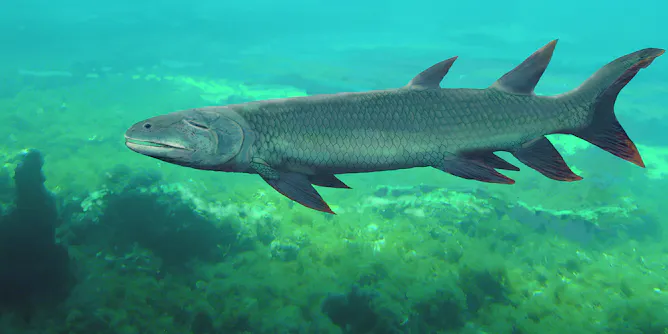
For decades, the sandstone in central Australia yielded tantalising segments of some sort of fossil fish. Now, we have finally pieced together a complete picture of this remarkable species.
Articles on Fossils
Displaying 141 - 160 of 512 articles
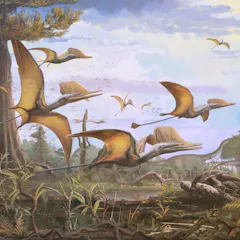
The Isle of Skye has a rich palaeontological heritage, so perhaps it’s no surprise scientists made an important discovery there.

While NASA rovers on the surface of Mars look for hints of life, researchers back on Earth are studying ‘echoes of life’ from ancient basins – hoping that the two sites might be similar.

What paleontologists had believed to be spiny fins turned out to be elongated jaws. New examination of fossils that were 365 million years old revealed a fish with a remarkable lower jaw.
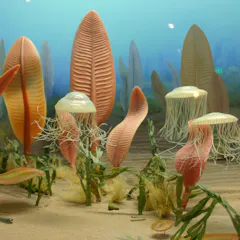
Fossil traces of the oldest complex ecosystems are found in precious few locations worldwide, including Australia. Newly dated fossils from Wales now join the ranks.
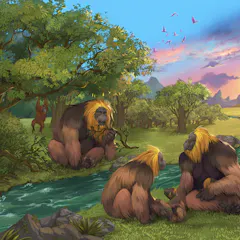
What happened to the three-metre tall apes that once lived alongside orangutans? A new study suggests they were too slow to adapt to a changing world.
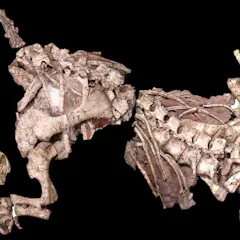
Some time between 1100 and 1700 AD, a Massospondylus bone was discovered and carried to a rock shelter in Lesotho.

Elephants can be viewed as geological engineers that create minor tectonic forces on the substrate they walk on.

A newly described fossil from South Australia is making waves in our understanding of where and when whales evolved titanic body sizes.
Impress your niece or nephew with these T rex facts.
New laboratory experiments add analytical rigour to the search for ancient biomolecules

Small holes in baby dinosaur bones add to the growing mass of evidence that the ancient creatures were warm-blooded and highly active.
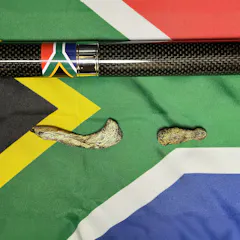
Experts insist there is no scientific reason for allowing these fossils to travel to space.
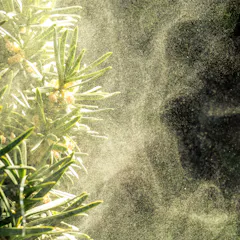
Pollen can become preserved in sediment deposits over thousands, or even millions, of years.

The fossil record tells conflicting stories about what happened to flowering plants after the asteroid.
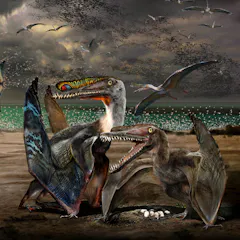
Reptiles don’t generally care for their offspring, but some pterosaurs may have bucked the trend.
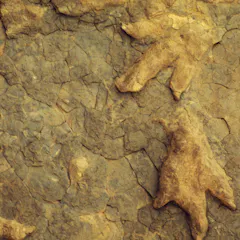
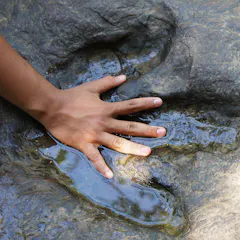
Some footprints last thousands or even millions of years, preserved in sand that turned to rock.
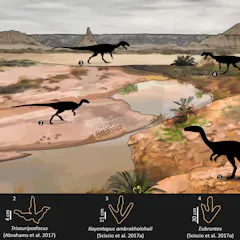
Fossilised tracks of a group of plant-eating dinosaurs have been found in Lesotho’s Roma Valley for the first time.
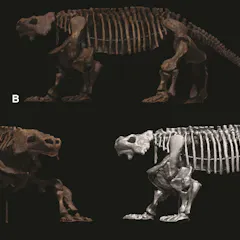
Large pareiasaurs are among the earliest huge plant-eating tetrapods to appear in the history of the development of life on Earth.
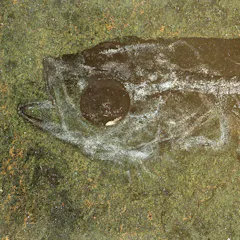
Foulden Maar is one of only two sites in New Zealand that preserve fossils showing ecological interactions and features such as eyes, skin, stomach contents and original colour patterns.
Top contributors
-

Research Associate, African Centre for Coastal Palaeoscience, Nelson Mandela University
-
Associate professor in Vertebrate Palaeontology, University of the Witwatersrand
-
Emeritus Strategic Professor in Palaeontology, Flinders University
-
Professor of Vertebrate Palaeontology, University of Bristol
-
Senior Research Scientist, South Australian Museum; Flinders University
-
Associate Professor in Vertebrate Palaeontology, Flinders University
-
Honorary Research Associate, Evolutionary Studies Institute, University of the Witwatersrand
-
Research Associate in the College of Science and Engineering, Flinders University
-
Research Associate, School of Earth and Planetary Sciences, Curtin University
-
Professor of Palaeobiology, University of Leicester
-
Technical Specialist in Earth Sciences, University of Bristol
-
Professor in Geochronology and Geochemistry, Southern Cross University
-
Senior Lecturer in Paleontology and Evolutionary Biology, Life Sciences at the University of Bath, University of Bath
-
Associate Professor in Ancient DNA, University of Otago
-
Lecturer in the School of Applied Sciences, Edinburgh Napier University