
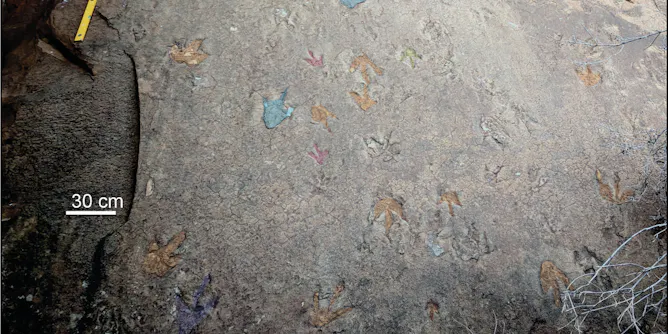
Fossil footprints are a treasure chest of information.
Articles on Fossils
Displaying 201 - 220 of 512 articles
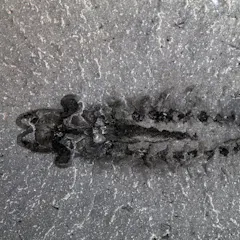
The discovery of a fossil over 500 million years old reveals new information. Its brain and nervous system are remarkably preserved, filling in some gaps in what we know about arthropod evolution.
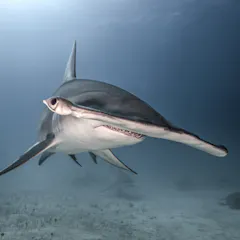
The first hammerhead shark was likely the result of a genetic deformity. A biologist explains how shark DNA reveals hammerheads’ history.
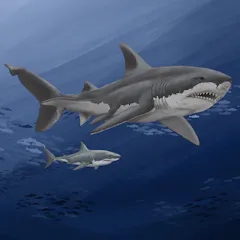
Megalodon, the world’s largest known shark species, swam the oceans long before humans existed. Its teeth are all that’s left, and they tell a story of an apex predator that vanished.

Warm-bloodedness is the key to what makes mammals what they are today. That’s why working out when it emerged in mammal ancestors matters.
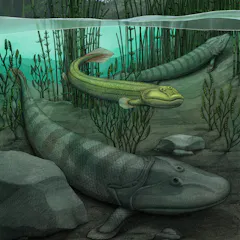
The newly discovered species – Qikiqtania – highlights evolution’s twisty, tangled path.
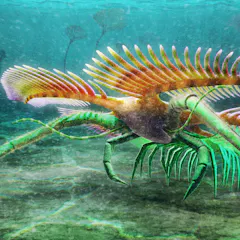
Marrellomorphs are one of the rarest arthropod groups in the world. The discovery of a new fossil sheds light on this enigmatic creature.
A biologist explains how researchers nail down the age of ancient fossils thanks to a physical process called radioactive decay.
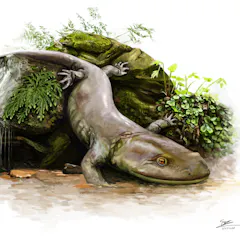
The discovery shakes up what scientists thought they knew about salamander evolution.
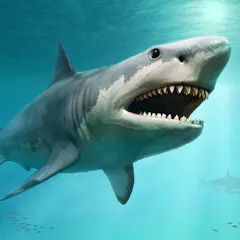
A terrifying sight in ancient waters, the megalodon shark was once the most feared creature in the sea.
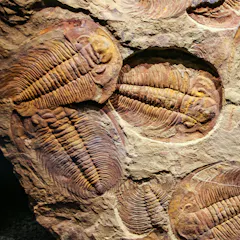
Australia has them, so why doesn’t New Zealand have national or regional fossil emblems? A campaign to change that kicks off today.

How flowering plants evolved has been a mystery, but a new fossil discovery hints at the unknown complexity of ancient plant diversity.
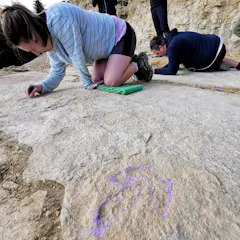
Collectively, the evidence studied by ichnologists helps to paint a picture of long-gone landscapes and the creatures and plants that populated those spaces.
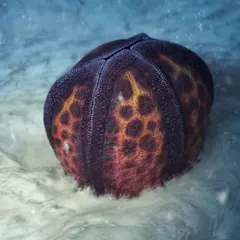
The discovery of a unique 510 million-year-old fossil in a Pennsylvania churchyard offers new clues into how early life evolved on Earth.
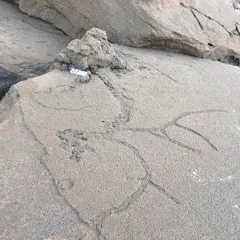
There is something near-miraculous in the concept of tiny creatures, weighing just grams, making tracks and traces so long ago, that are now evident in rock.
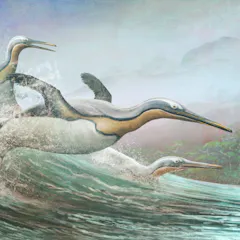
Some penguins would have been as tall (or even taller) than adults today.
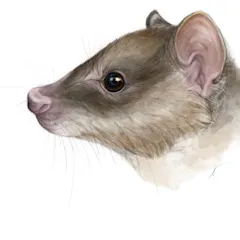
Two newly discovered species of quokka-sized kangaroos, which lived 18 million years ago in the Queensland rainforest, show evolution in the act of giving kangaroos a taste for leaves.
Spoiler: lots more floods.
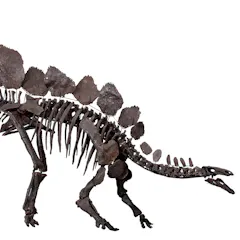
The lack of large numbers of fossils makes it hard to study sexual dimorphism in dinosaurs. But a new statistical approach offers insight into this question and others across science.
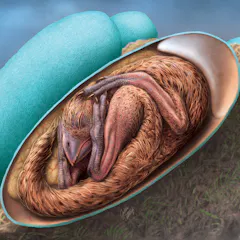
Baby Yingliang is a perfectly preserved oviraptorosaur embryo, a species where findings reveal the connections between dinosaurs and birds.
Top contributors
-

Research Associate, African Centre for Coastal Palaeoscience, Nelson Mandela University
-
Associate professor in Vertebrate Palaeontology, University of the Witwatersrand
-
Emeritus Strategic Professor in Palaeontology, Flinders University
-
Professor of Vertebrate Palaeontology, University of Bristol
-
Senior Research Scientist, South Australian Museum; Flinders University
-
Associate Professor in Vertebrate Palaeontology, Flinders University
-
Honorary Research Associate, Evolutionary Studies Institute, University of the Witwatersrand
-
Research Associate in the College of Science and Engineering, Flinders University
-
Research Associate, School of Earth and Planetary Sciences, Curtin University
-
Professor of Palaeobiology, University of Leicester
-
Technical Specialist in Earth Sciences, University of Bristol
-
Professor in Geochronology and Geochemistry, Southern Cross University
-
Senior Lecturer in Paleontology and Evolutionary Biology, Life Sciences at the University of Bath, University of Bath
-
Associate Professor in Ancient DNA, University of Otago
-
Lecturer in the School of Applied Sciences, Edinburgh Napier University