
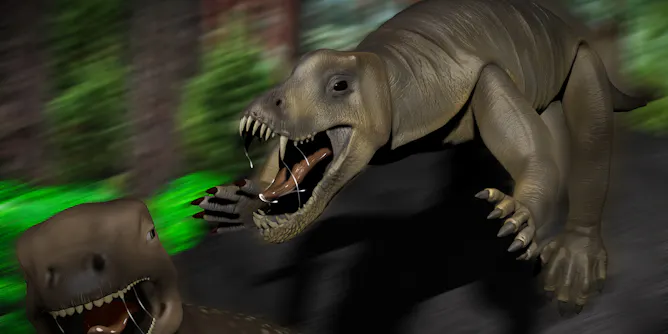
Because of its skeleton’s heavy architecture, scientists have always assumed that Anteosaurus was a rather sluggish, slow-moving animal, only capable of scavenging or ambushing its prey, at best.
Articles on Fossils
Displaying 261 - 280 of 512 articles
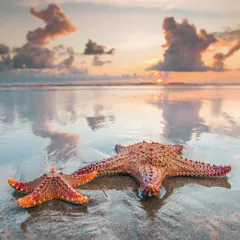
New study sheds light on how the starfish evolved.
Kate Winslet plays palaeontologist Mary Anning in the film Ammonite. The love story may be fictional — but how does the science stand up?
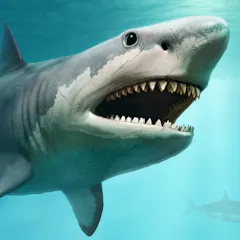
New fossil detective work sheds light on the life of megalodon, the biggest predatory shark ever discovered.
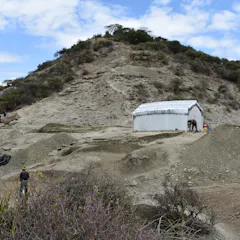
The research shows that 2 million years ago humans were not constrained technologically and already had the capacity to expand their geographic range.
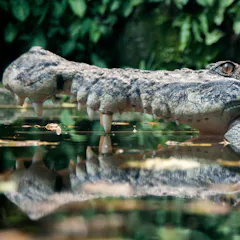
New research shows crocodiles have landed upon an equilibrium state of evolution.
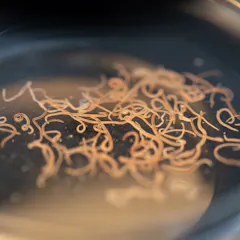
‘Worm’ is really a catchall term for a huge variety of animals with different characteristics that span the tree of life. They hold clues about our own origins as well as hints about human health.
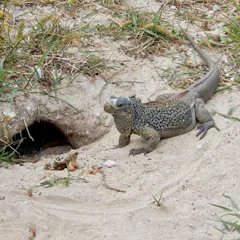
A trace fossil of an iguana burrow was discovered on San Salvador Island in the Bahamas. Estimated to be 115,000 years old, it is the first known fossil of its kind.
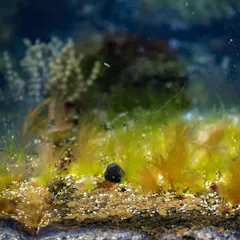
Ancient fatty molecules, once believed to be traces of some of the first animals to live on Earth, may have been produced by algae instead.

A war with Neanderthals makes a compelling narrative but the evidence is limited is best.
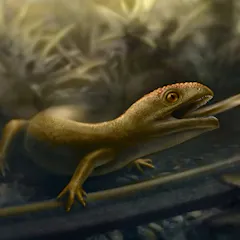
If albanerpetontids were around today, they’d easily fit in your hand. And although their bones are found all over the world, these unique amphibians eluded experts for a long time.
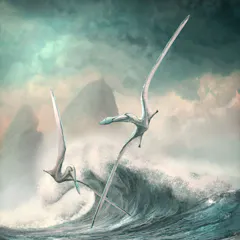
Fossils reveal that dinosaurs’ flying cousins become twice as efficient at flying over 150 million years.
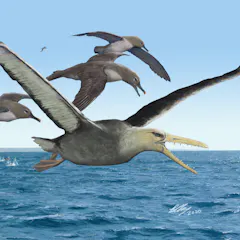
Paleontologists have discovered fossil remains belonging to an enormous ‘toothed’ bird that lived for a period of about 60 million years after dinosaurs.

A new environmental record for a prehistoric site in Kenya helped researchers figure out how external conditions influenced which of our ancient ancestors lived there, with what way of life.
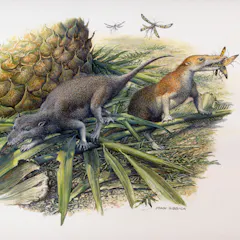
New study used X-rays of the teeth of early mammals’ to show they were more like cold blooded reptiles.

One avian track, probably made by a large gull or a small goose, was found in sediments that have been dated to about 400,000 years. That makes it the oldest avian track reported from southern Africa.
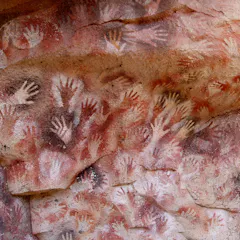
Artefacts suggest a ‘great leap’, a recent evolution of modern intelligence. Fossils and DNA argue that’s an illusion.
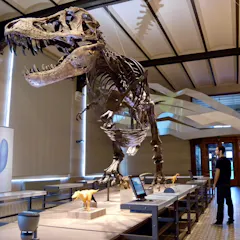
You can gauge a dinosaur’s body mass either by reconstructing it as accurately as possible, or by scaling its leg bones against those of today’s animals. Research shows both methods work well together.
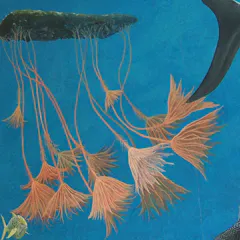
New research show how crinoids could live for so long on floating wood without it breaking up.
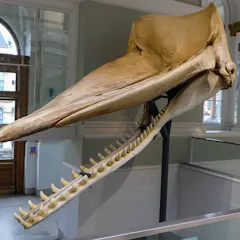
How we worked out when whales first evolved asymmetrical skulls.
Top contributors
-

Research Associate, African Centre for Coastal Palaeoscience, Nelson Mandela University
-
Associate professor in Vertebrate Palaeontology, University of the Witwatersrand
-
Emeritus Strategic Professor in Palaeontology, Flinders University
-
Professor of Vertebrate Palaeontology, University of Bristol
-
Senior Research Scientist, South Australian Museum; Flinders University
-
Associate Professor in Vertebrate Palaeontology, Flinders University
-
Honorary Research Associate, Evolutionary Studies Institute, University of the Witwatersrand
-
Research Associate in the College of Science and Engineering, Flinders University
-
Research Associate, School of Earth and Planetary Sciences, Curtin University
-
Professor of Palaeobiology, University of Leicester
-
Technical Specialist in Earth Sciences, University of Bristol
-
Professor in Geochronology and Geochemistry, Southern Cross University
-
Senior Lecturer in Paleontology and Evolutionary Biology, Life Sciences at the University of Bath, University of Bath
-
Associate Professor in Ancient DNA, University of Otago
-
Lecturer in the School of Applied Sciences, Edinburgh Napier University