
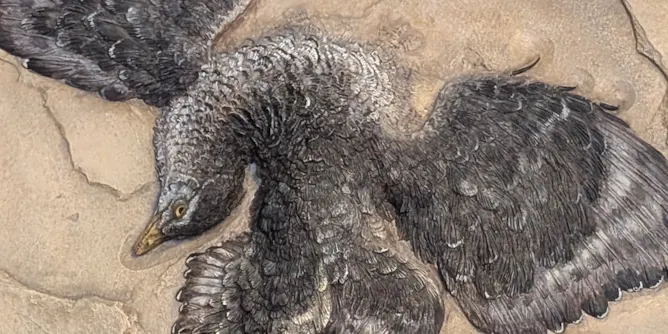
Archaeopteryx is an evolutionary icon for scientists.
Articles on Dinosaurs
Displaying 1 - 20 of 311 articles

The tracks are the first to be found in Canada from this time period.
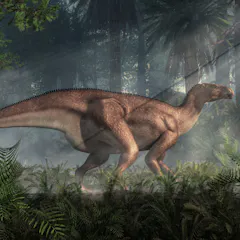
Listen to palaeobiologist Neil Gostling on The Conversation’s Curious Kids podcast talk about how scientists work out what dinosaurs looked like.

A new study has found that layers in the rock record days, not years, representing storms.
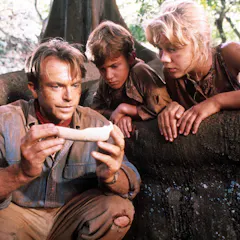
As Dr Alan Grant in Jurassic Park, Sam Neill portrayed a scientist who was authentic, normal and relatable. For many budding paleontologists, it was life changing.
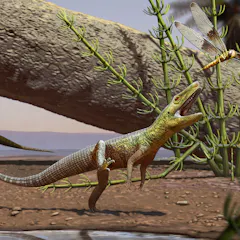
A 240-million-year-old animal helps us understand a period before the rise of dinosaurs and crocodiles, when their close relatives were still experimenting with different body shapes, postures, and modes of locomotion

Sold for a record price of more than $50 million, ‘Gus’ was described by Sotheby’s as more than 60% complete.
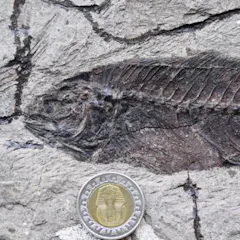
A team of researchers worked grueling, hot hours in the desert to understand the history of life in Earth’s oceans after a major extinction event.

A week after the asteroid impact, rotting vegetation, smoke and sulphur create a stinky planet. Plant and animal survivors succumb to the corrosive acid rain.
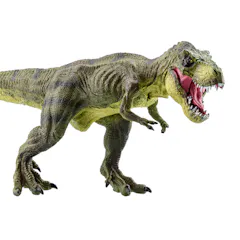
If humans had the same arm proportions as a T. rex, a 6-foot-tall person would have arms about 11 inches long.

Birds didn’t just evolve from dinosaurs. They are dinosaurs.

Dinosaur wings seem to have originally been used not to fly but to attract a mate.
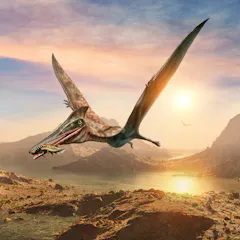
The case of a ‘fishy pterosaur’ is the latest example of mistaken identity involving these extraordinary flying reptiles.
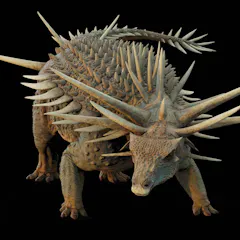
New research from Morocco shows that ankylosaurs evolved much earlier than originally thought. Their iconic tail also had a dual function.
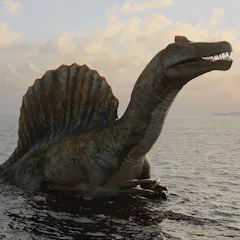
Life on Earth, according to ‘The Dinosaurs,’ is a story of conquest. And that is a cultural story as much as a scientific one.
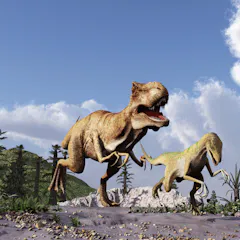
Scientific methods validated from modern life have brought dinosaurs to life in a testable way.
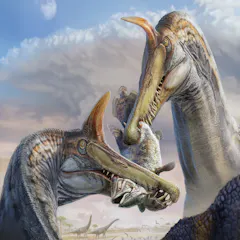
The hunt for a mythicized fossil hot spot took a team of researchers on a journey through the Sahara Desert.
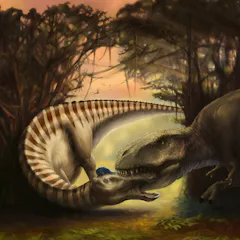
A tooth fragment found in the skull of a fossilized dinosaur sheds light on the Tyrannosaurus rex’s feeding habits.
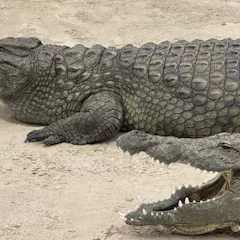
Growth marks in bones indicate the age of some animals. But a new study leaves researchers questioning this method for dinosaurs.

The strange fossils were lost in museum collections around the world for some 50 years.
Top contributors
-

Professor of Vertebrate Palaeontology, University of Bristol
-
Chancellor's Fellow in Vertebrate Palaeontology, University of Edinburgh
-
Emeritus Strategic Professor in Palaeontology, Flinders University
-
Senior Research Scientist, South Australian Museum; Flinders University
-
Senior Lecturer in Paleontology and Evolutionary Biology, Life Sciences at the University of Bath, University of Bath
-
Associate professor in Vertebrate Palaeontology, University of the Witwatersrand
-
Research Associate, School of Earth and Planetary Sciences, Curtin University
-
Senior lecturer, University of New England
-
Research Associate, African Centre for Coastal Palaeoscience, Nelson Mandela University
-
Professor, Palaeobiology, University College Cork
-
Palaeontologist, Earth Science Faculty, University of New England
-
PhD; Associate Professor, School of Biological Sciences, The University of Queensland
-
Palaeontologist, University of Southampton
-
Professor of Evolutionary Palaeobiology at the Milner Centre for Evolution, University of Bath
-
Researcher and curator, Jurassica Museum