
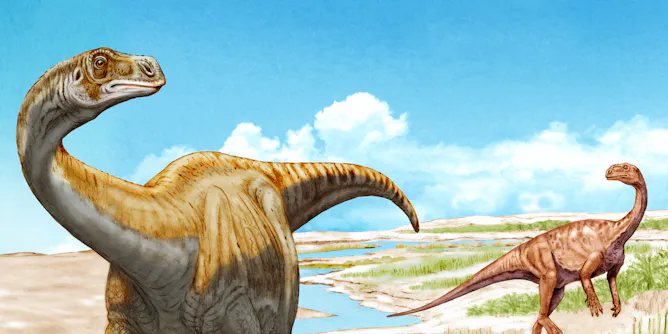
How we identified a new ancestor of the likes of Diplodocus from old bones.
Articles on Fossils
Displaying 281 - 300 of 512 articles
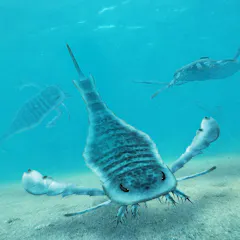
During the Paleozoic Era, giant sea scorpions would have been the equivalent of a great white shark in their food web.
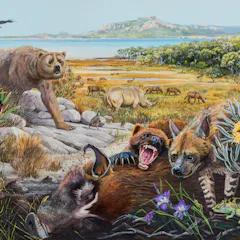
The teeth and limb bones we studied help to understand the role and lifestyle of these species in extinct ecosystems.
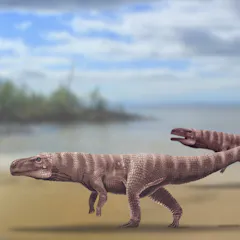
We found footprints that measure around 24 centimetres long. We suspect they came from animals with legs the same height as humans.
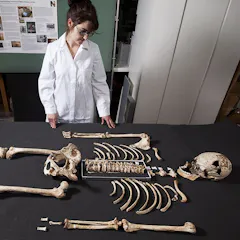
You can’t own a human, so why can you own their remains? We need to stop treating human fossils as objects.
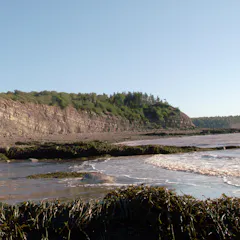
A very early mammal ancestor is one of the most recent discoveries at the Joggins Fossil Cliffs in Nova Scotia. This new finding sheds further light on theories of mammalian evolution.

This is a hugely important find. It means that one of our earlier ancestors possibly originated in southern Africa.

While crocodylian fossil swim traces have been described from other continents, to the best of our knowledge the examples we describe are the first such reptilian swim traces from Africa.

The arrangement of bones in our specimen’s fins are the same as those of ‘fingers’ in tetrapods. The only difference is the digits are locked within the fin, and not free moving.
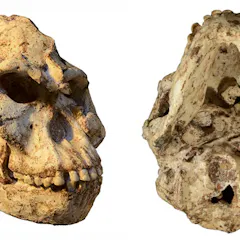
The findings suggest that this specimen could climb and move in trees. But it may also have been able to walk on the ground. This echoes previous studies.
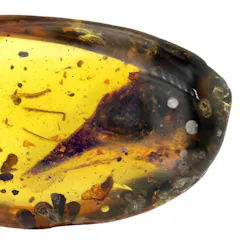
The fossil includes the tiny creature’s original bone and flesh.
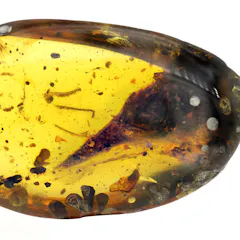
The skull of Oculudentavis, found encased in amber, provides new clues into the transition from dinosaurs to birds and may be smallest of either ever found.
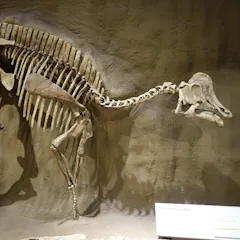
Scientists claim to have found DNA in fossilised dinosaur cartilage.
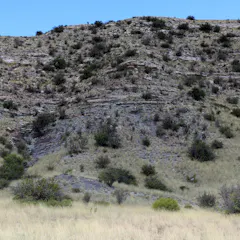
The analysis suggests that there was a mass extinction event at the time of the end-Permian, on land - and that it happened at the same time as the marine end-Permian extinction.
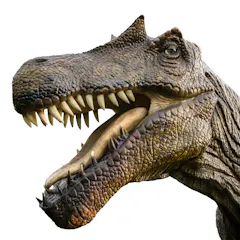
Teeth can reveal a lot about diversity when they are reasonably well-preserved.
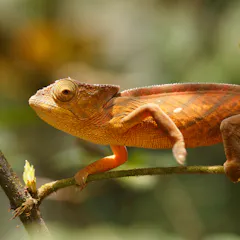
This fossil find provides strong evidence of an African origin for some Malagasy chameleon lineages.
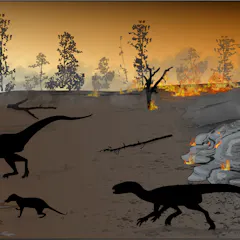
These trackways offer rare insights about ancient life in a stressful, hostile environment during the Early Jurassic.
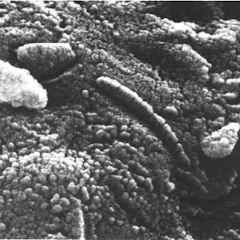
New research shows how rock features that look like fossilised microbes can form without life.
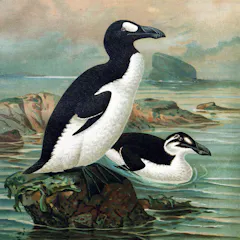
Understanding why the great auk went extinct could help protect species still living today.
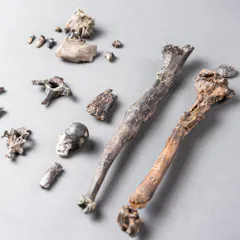
Newly discovered extinct ape Danuvius has some human-like features, but that doesn’t mean it could walk like us.
Top contributors
-

Research Associate, African Centre for Coastal Palaeoscience, Nelson Mandela University
-
Associate professor in Vertebrate Palaeontology, University of the Witwatersrand
-
Emeritus Strategic Professor in Palaeontology, Flinders University
-
Professor of Vertebrate Palaeontology, University of Bristol
-
Senior Research Scientist, South Australian Museum; Flinders University
-
Associate Professor in Vertebrate Palaeontology, Flinders University
-
Honorary Research Associate, Evolutionary Studies Institute, University of the Witwatersrand
-
Research Associate in the College of Science and Engineering, Flinders University
-
Research Associate, School of Earth and Planetary Sciences, Curtin University
-
Professor of Palaeobiology, University of Leicester
-
Technical Specialist in Earth Sciences, University of Bristol
-
Professor in Geochronology and Geochemistry, Southern Cross University
-
Senior Lecturer in Paleontology and Evolutionary Biology, Life Sciences at the University of Bath, University of Bath
-
Associate Professor in Ancient DNA, University of Otago
-
Lecturer in the School of Applied Sciences, Edinburgh Napier University