
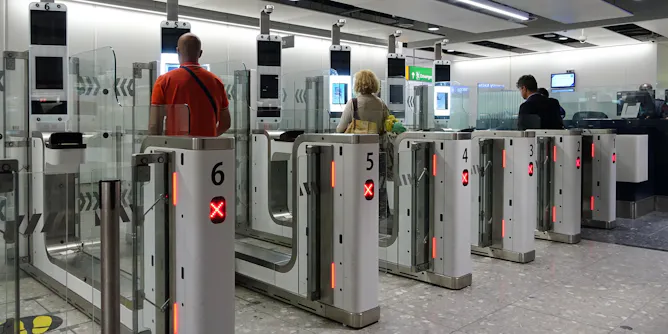
Innovative border control technologies may be great for governments cracking down on migration — but they could further disadvantage groups that are already vulnerable.
Articles on Facial recognition
Displaying 81 - 100 of 164 articles
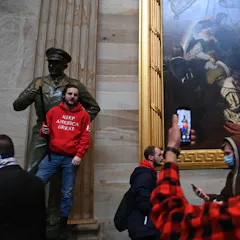
Facial recognition, social media and location tracking give law enforcement a leg up in a monumental investigation.
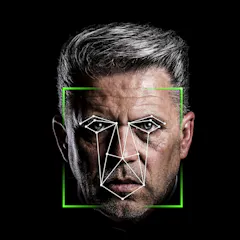
We have unwittingly volunteered our faces in social media posts and photos stored in the cloud. But we’ve yet to determine who owns the data associated with the contours of our faces.

Psychologists are hoping a new, extra-difficult facial recognition test will help unearth more of Australia’s top performers in facial recognition — known as ‘super-recognisers’.

With face masks now compulsory or recommended in various parts of the country, how are facial recognition systems functioning?

Technology is not neutral, as facial recognition algorithms and predictive policing have shown us. Algorithms discriminate by design, reflecting and reinforcing pre-existing biases.
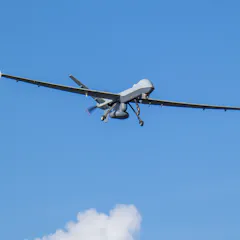
Avoiding drones’ prying eyes can be as complicated as donning a high-tech hoodie and as simple as ducking under a tree.

Facial recognition algorithms will always make mistakes. But how can we make them less discriminatory?
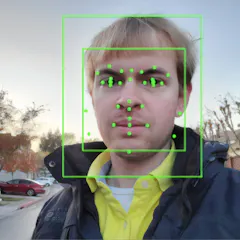
There are questions being raised about the legality of scanning, storing and sharing facial images. The law currently doesn’t prohibit even highly intrusive levels of surveillance by private entities.
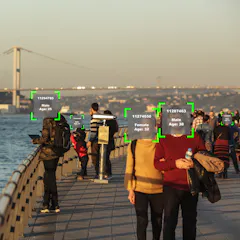
Face surveillance makes it easier to oppress vulnerable populations and violate everyone’s basic rights. It’s time for a moratorium.

The US is also ‘looking at’ banning the Chinese social media app.
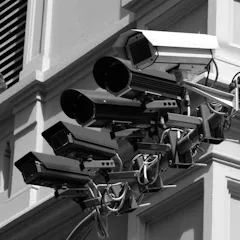
Police forces across the country now have access to surveillance technologies that were recently available only to national intelligence services. The digitization of bias and abuse of power followed.
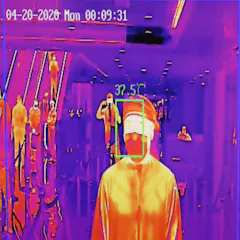
Temperature-scanning systems are not always accurate at detecting fever, and raise a host of privacy concerns.
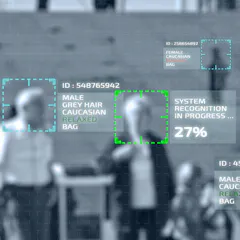
Recently, police forces have come under criticism for their engagement of facial recognition technologies. But pandemic response plans may increasingly incorporate surveillance.
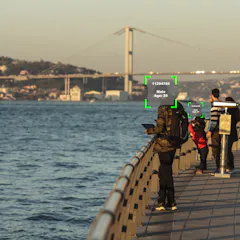
There are few guarantees that the facial recognition system is secure or even that it is accurate.
You’d thinking flying in a plane would be more dangerous than driving a car. In reality it’s much safer, partly because the aviation industry is heavily regulated. Airlines must stick to strict standards…
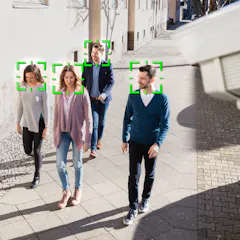
How you feel about eating chips and wearing your pyjamas out – experiments show how differently you react when you’re being observed.

The more we use facial recognition, the more we see its limits and its risks.

“Super-recognisers” who can identify a range of ethnicities could help increase fraud detection rates at passport control and decrease false conviction rates that have relied on CCTV.
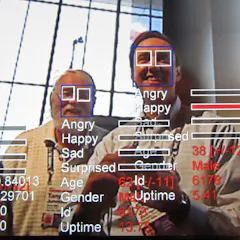
A report calls for banning the use of emotion recognition technology. An AI and computer vision researcher explains the potential and why there’s growing concern.
Top contributors
-

Research Director of the Security and Surveillance Research group; Professor, The University of Queensland
-
Senior Researcher and Project Manager, Advanced Surveillance Project, CSIRO
-
Sessional Academic, Faculty of Law, Monash University
-
Research engineer, Advanced Surveillance Project, CSIRO
-
Professor of Psychology and Science Communication, Head of Department of Sociological and Psychological Sciences, Abertay University
-
Scientia Fellow, UNSW
-
Professor of Media, School of Media, Film, and Journalism, Monash University
-
Associate Professor in Law, Macquarie University
-
Associate Professor, School of Psychology and Clinical Language Sciences, University of Reading
-
Professor of Computer, Web and Cognitive Sciences, Rensselaer Polytechnic Institute
-
Director, University of Technology Sydney
-
Post-doctoral Research Fellow, The University of Queensland
-
Responsible Technology Policy Specialist - Human Technology Institute, University of Technology Sydney
-
Professor of Cyber Security Practice, Edith Cowan University
-
Associate Professor, School of Psychology, UNSW