
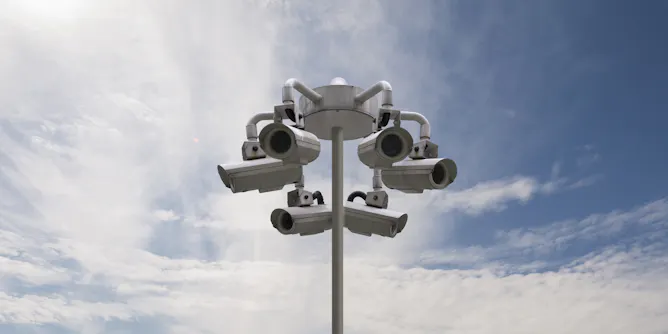
The architecture of automated license plate readers turns local cameras into a far-reaching surveillance network that can be accessed by agencies that never purchased the devices.
Articles on Surveillance
Displaying 1 - 20 of 410 articles

Barriers, checkpoints and surveillance have made the plight of Palestinians easier to keep hidden. But thanks to films like ‘NAZA,’ that’s starting to change.

Apple’s vision of constant recording that still ‘protects your privacy’ may help usher in a world where ambient surveillance is the norm.

The bipartisan revolution against automated license plate readers suggests Americans have not entirely lost their rebellious spirit.

Informant culture is so embedded in everyday Iranian life that there are common Persian terms to describe it.

The next phase of the response must not be about deploying more people into communities simply to deliver interventions.

Modern societies, argues Michel Foucault, think and talk about sex far more than their forebears ever did. But this has not been liberating.

An outright ban is legally risky. Here are some safer options.

Bird flu now threatens more than birds. Early detection in both birds and marine mammals remains crucial, and management must adapt as new evidence emerges.

Who gets to authorise such deployments? And who checks the safeguards?
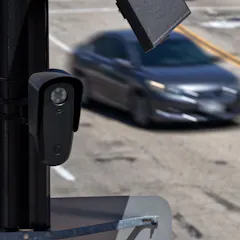
License plate readers are widely used in the US. A new product marketed to police departments promises to add the ability to sense phones and other devices in passing cars.

Grassroots activists and marginalized communities are ‘flipping the script’ on surveillance by watching, documenting and gathering information about powerful institutions such as ICE from below.

A growing body of research shows electronic monitoring rarely improves performance and reliably increases employee stress and distrust.

The US Supreme Court ruled that states could exclude transgender athletes from girls and women’s sports teams.

The World Cup is bringing visitors and AI-driven surveillance systems, but only one of those is certain to leave when the games are done.

Western Australia’s police are now scanning faces in real time. The technology works – roughly. The laws to govern it do not yet exist.

The use of artificial intelligence tools is among the top emerging issues in biodiversity conservation.

Democracies can either defend rights in the digital age, or drift into complicity as the architects of a new, global authoritarianism enabled by AI.

Data sovereignty is not just a technical issue — it is a collective challenge that all Canadians need to start taking seriously.

A persistent government strategy to sow fear through punitive measures has corroded freedom and democracy.
Top contributors
-

Associate Professor in Telecommunications Engineering, Swinburne University of Technology
-
Research Director of the Security and Surveillance Research group; Professor, The University of Queensland
-
Professorial Fellow, University of Canberra
-
Professor of Digital Society, University of Glasgow
-
Affiliated Faculty Member, Institute for Computational and Data Sciences, Penn State
-
Associate Professor, School of Law, University of Canberra
-
Senior Lecturer in Technology, The Open University
-
Research engineer, Advanced Surveillance Project, CSIRO
-
Senior Researcher and Project Manager, Advanced Surveillance Project, CSIRO
-
Lecturer in Technology and Crime, Griffith University
-
Professor and Director, Centre for Research into Information, Surveillance and Privacy, University of Stirling
-
Emeritus Professor in Law and Criminal Justice, Adelaide University
-
Professor of Global Legal Studies, Birmingham Law School, University of Birmingham
-
Head, The Cyber Academy, Edinburgh Napier University
-
Professor of Cyber Security Practice, Edith Cowan University