

Location tracking means parents can easily check in on their kids while allowing them more freedom. But there are risks too.
Articles on Technology
Displaying 1 - 20 of 1873 articles

The Manage My Health hacking breach exposed weaknesses in New Zealand’s digital defences. But the rise of autonomous AI agents poses a very different threat.
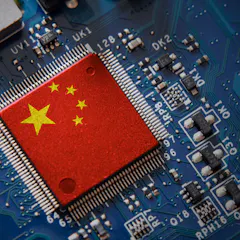
History could repeat itself if China turns AI into an abundant, commodity-driven industry. Should we be worried about AI’s new land of plenty?

People might feel more comfortable making mistakes if they’re interacting with AI chatbots. But they will miss the nuances that come from conversing with real people.
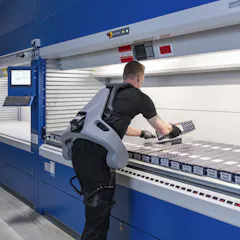
Powered robotic devices designed to enhance the wearer’s physical capabilities are being developed for an increasing range of uses.
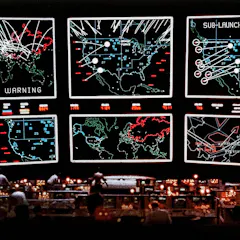
A hit 1983 movie illustrates what computer scientists have long known: If you give an AI agent a goal but don’t control what it can and can’t do, you shouldn’t be surprised by what it does.

China has already implemented many rules governing the use of artificial intelligence.

A regional permafrost map can’t tell a builder if a particular foundation or road will survive as temperatures rise. Engineers need to see beneath the surface to find the weaknesses.
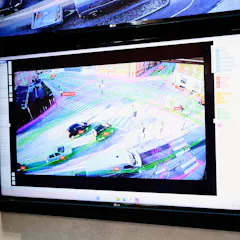
All the training data in the world can’t account for every possibility when AI systems interact with people and the environment.
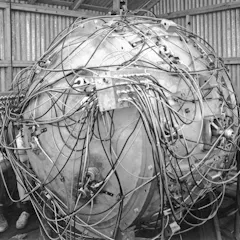
There are clear parallels between today’s AI debate and how the world tackled the threat from nuclear weapons.

One area of burgeoning employment is in people cleaning up ‘workslop’.

The team printed a honeycomb and a Canadian maple leaf, both roughly the size of a single grain of sand.

Scientists are creating additional robotic arms, legs and thumbs to push the boundaries of what can be achieved by the human body.

Today, China controls the vast majority of rare earths processing. That gives it enormous political leverage, and its trade truce with the US involving those minerals expires Nov. 10, 2026.
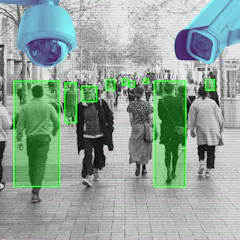
WA’s live facial recognition technology was deemed successful. But what happens when it fails, and who bears the burden when it does?

For the UK and Europe, the rollout of 6G is creating a geopolitical dilemma.

Apple’s vision of constant recording that still ‘protects your privacy’ may help usher in a world where ambient surveillance is the norm.

Are the warnings of a potential AI apocalypse credible?

Laws against surreptitiously recording someone extend to home devices like robot vacuums, but those recordings can still be used against you in court.
Governments can curb corporate power. But first we need to understand how corporate law allows private ventures to accumulate power that can endure for generations.
Top contributors
-

Professor of Information Systems, Michigan State University
-
Teaching Professor of Computer Science and Electrical Engineering, and Associate Director, UMBC Cybersecurity Institute, University of Maryland, Baltimore County
-
Adjunct Lecturer in Public Policy, Harvard Kennedy School; University of Toronto
-
Director of the Center for National Security Initiatives and Professor of Aerospace Engineering Sciences, University of Colorado Boulder
-
Affiliated Faculty Member, Institute for Computational and Data Sciences, Penn State
-
Researcher, Digital Wellbeing, Western Sydney University
-
Associate Professor of Information Science, University of Colorado Boulder
-
Professor of Philosophy and Director of Applied Ethics Center, UMass Boston
-
Professor of Advanced Technology Transitions, Arizona State University
-
Professor of Statistics and Professor of EECS, University of Michigan
-
Professor of AI, Research Group Leader, UNSW
-
Adjunct Senior Lecturer, Applied Ethics and CyberSecurity, Griffith University
-
Affiliate, Berkman Klein Center for Internet & Society, Harvard University
-
University Professor of Electrical and Computer Engineering, Iowa State University
-
Senior Lecturer in Economics, Lancaster University Management School, Lancaster University