
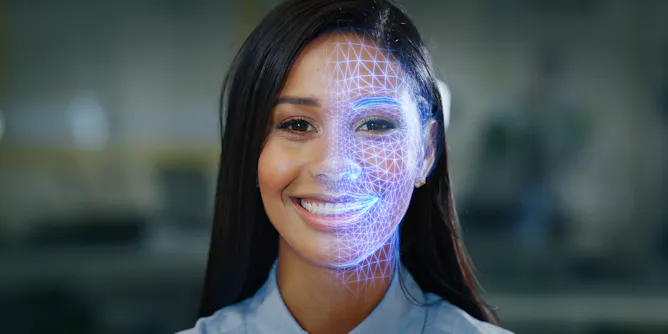
Our facial information is sensitive – yet companies and individuals can collect, sell and manipulate it without our consent. Australian law must change to protect us all.
Articles on Facial recognition
Displaying 41 - 60 of 164 articles

Police use of surveillance technologies — like security cameras and artificial intelligence — is becoming more widespread. Measures are needed to protect people’s privacy and avoid misidentification.
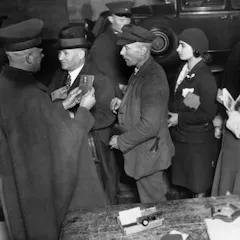
Face recognition technology follows earlier biometric surveillance techniques, including fingerprints, passport photos and iris scans. It’s the first that can be done without the subject’s knowledge.

2024 will see a massive expansion in Australia’s digital ID system. Good tech and strong guardrails will make Australia a world leader in this important area.
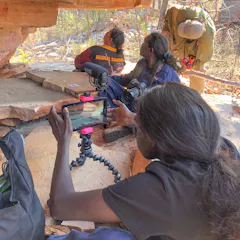
There are many programs where people can generate art using AI. However, this comes with a risk of non-Indigenous people generating Indigenous art, which negatively affects Indigenous artists.
Key to diagnosing foetal alcohol syndrome is an assessment of certain facial features. A 3D facial scan is expensive but 2D images may offer a solution.

Research suggests that photo ID checks at polling stations risk voters being turned away because of errors.

Preventing theft on farms is much more difficult than in urban areas for many reasons – but new technological developments may help curb the crimes.
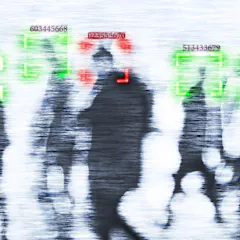
Civil liberties groups in the UK and elsewhere want to stop the police from using this technology altogether, but that’s going too far.
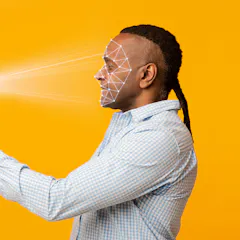
Many AI algorithms, like facial recognition software, have been shown to be discriminatory to people of color, especially those who are Black.
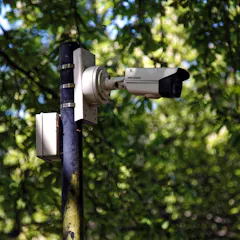
As states and nations struggle to regulate growing AI use, municipal authorities are often leading the way. An emerging paradigm known as AI Localism can help us better define the way forward.

Facial recognition technology has set us on a path to mass surveillance – but it’s not too late to change course.

In the pursuit of efficiency, governments turn to technological solutions, like automated decision-making systems. But these systems are often problematic.

Our research shows the technology simply isn’t ready yet.
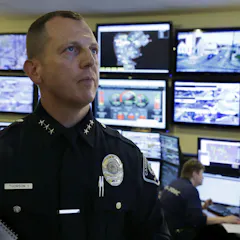
It’s increasingly difficult to move about – both in the physical world and online – without being tracked.

Australians – and Australian governments – need to get more savvy about data privacy

Private companies and public authorities are beginning to implement facial recognition technology, even without rules to govern what they can do.

A digest of the week’s coverage of the war against Ukraine.

Australia’s consumer advocacy group Choice identified three Australian retailers who use facial recognition to identify consumers. What are the privacy concerns?

Lawmakers around the world are making decisions about whether facial recognition technology is acceptable.
Top contributors
-

Research Director of the Security and Surveillance Research group; Professor, The University of Queensland
-
Senior Researcher and Project Manager, Advanced Surveillance Project, CSIRO
-
Sessional Academic, Faculty of Law, Monash University
-
Research engineer, Advanced Surveillance Project, CSIRO
-
Professor of Psychology and Science Communication, Head of Department of Sociological and Psychological Sciences, Abertay University
-
Scientia Fellow, UNSW
-
Professor of Media, School of Media, Film, and Journalism, Monash University
-
Associate Professor in Law, Macquarie University
-
Associate Professor, School of Psychology and Clinical Language Sciences, University of Reading
-
Professor of Computer, Web and Cognitive Sciences, Rensselaer Polytechnic Institute
-
Director, University of Technology Sydney
-
Post-doctoral Research Fellow, The University of Queensland
-
Responsible Technology Policy Specialist - Human Technology Institute, University of Technology Sydney
-
Professor of Cyber Security Practice, Edith Cowan University
-
Associate Professor, School of Psychology, UNSW