
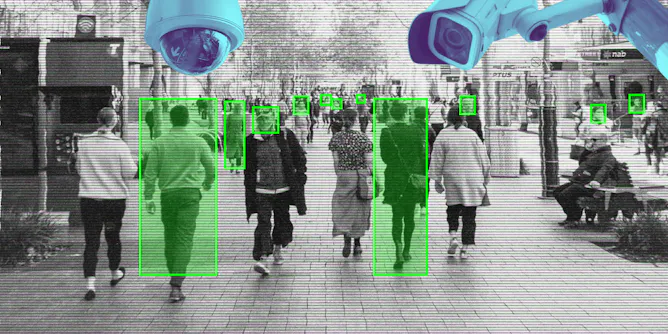
WA’s live facial recognition technology was deemed successful. But what happens when it fails, and who bears the burden when it does?
Articles on Facial recognition
Displaying 1 - 20 of 164 articles

Growing concerns about police use of AI could erode the public’s perception of trust in the legal system.

When consumers provide consent for recording their facial data, they must fully know what they’re consenting to.

The World Cup is bringing visitors and AI-driven surveillance systems, but only one of those is certain to leave when the games are done.

Western Australia’s police are now scanning faces in real time. The technology works – roughly. The laws to govern it do not yet exist.
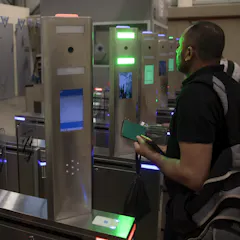
New AI-based facial recognition techniques are reducing false positive and false negative matches.
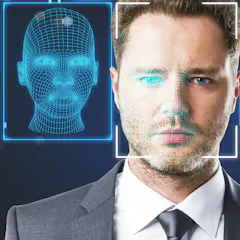
You can wear a mask, pull up a hood, avoid looking at a camera – but you cannot easily change how you walk.
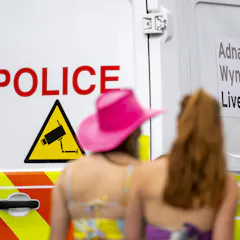
Danger arises when law enforcement believes that AI models are retrieving certainties rather than generating likelihoods.
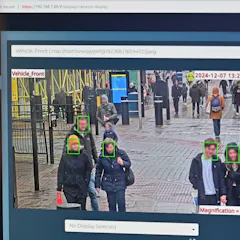
You can change a stolen password or credit card, but you can’t reset your face when your biometric data is breached.
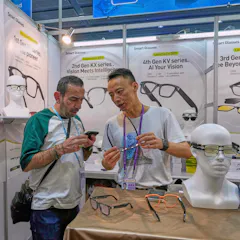
If Meta moves forward with plans to integrate facial recognition technologies into its AI-enabled smart glasses, some of us have more to lose than others.

Canada urgently needs stronger privacy laws, ones that deal explicitly with facial recognition.

It is not feasible, nor indeed ethical, to run a facial recognition system against all images on the internet.
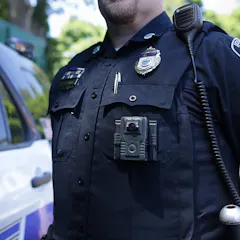
For body cameras to function as transparency tools, wrongdoing would have to be consistently penalized, highlighting the consequences of noncompliance.

Businesses using facial recognition cameras need customer consent – but a new ruling could open a loophole in the law.

It’s a common misconception that facial recognition technology captures and stores an image of your face.

Recent advances in computer vision and other types of artificial intelligence offer an opportunity for facial recognition to apply to bears and other animals.

Child refugees could live their entire childhoods in Britain with no guarantee that they will remain in the place they have come to think of as home.
Before you scan your face, you might want to think twice about the risks.

The Privacy Commissioner found Kmart should have tried other options before facial recognition systems – and told customers what it was doing.

With a potential ban of state regulation of AI soundly defeated, states are continuing to take the lead on protecting people from the technology’s potential harms – for now.
Top contributors
-

Research Director of the Security and Surveillance Research group; Professor, The University of Queensland
-
Senior Researcher and Project Manager, Advanced Surveillance Project, CSIRO
-
Sessional Academic, Faculty of Law, Monash University
-
Research engineer, Advanced Surveillance Project, CSIRO
-
Professor of Psychology and Science Communication, Head of Department of Sociological and Psychological Sciences, Abertay University
-
Scientia Fellow, UNSW
-
Professor of Media, School of Media, Film, and Journalism, Monash University
-
Associate Professor in Law, Macquarie University
-
Associate Professor, School of Psychology and Clinical Language Sciences, University of Reading
-
Professor of Computer, Web and Cognitive Sciences, Rensselaer Polytechnic Institute
-
Director, University of Technology Sydney
-
Post-doctoral Research Fellow, The University of Queensland
-
Responsible Technology Policy Specialist - Human Technology Institute, University of Technology Sydney
-
Professor of Cyber Security Practice, Edith Cowan University
-
Associate Professor, School of Psychology, UNSW