

Conservationists have to search rough terrain and thousands of automated photographs to find the elusive cats. Artificial intelligence can help them work more accurately and more efficiently.
Articles on Facial recognition
Displaying 21 - 40 of 164 articles

Being identified was once only a possibility, now it is a near certainty.

A new study shows that simply knowing we are being watched can unconsciously heighten our awareness of other people’s gaze.

The trial is testing age verification, age estimation and age inference. All three options come with problems.
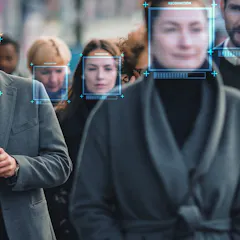
From facial recognition to delivery drones, cities around the UK are already trialling AI tech.
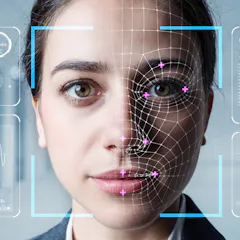
While AI promises to transform criminal justice by increasing operational efficiency and improving public safety, it also comes with risks around privacy, accountability, fairness and human rights.

Despite the ruling against Bunnings, Australian businesses can continue to collect your biometric information without your explicit consent by simply putting up signs.

While many people are comfortable with using facial recognition technology on their phone, they are less happy when it’s the government or private groups identifying them.

Views differ between owners and non-owners of smartglasses. But both groups agree the technology can help people.

AI impacts many things beyond the flashy chatbots – often in ways that quietly improve everyday processes.

A UN report proposes seven recommendations for addressing gaps in current AI governance. It’s a small step forward, but it needs refining.

Facial recognition technology is not new, but using your face to pay for shopping is. New research has identified what will help consumers embrace this new tech, and what could stop them.
The decision underscores the importance of strengthening privacy laws and enforcement powers of regulators.
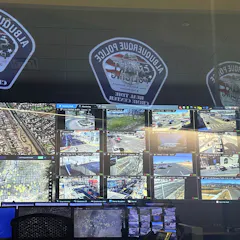
As police departments across the US and the world adopt real-time crime centers, there’s a need for better public understanding of how these centers work.

A risk-based approach to regulating AI can help minimise the dangers of the new technology
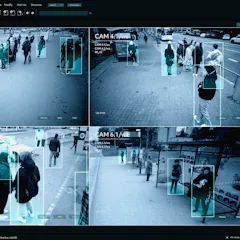
Automated facial recognition is becoming widespread in Australia. The technology has already been used by retail outlets, sport stadiums and casinos around the country. And in November, the Australian…

Police can reconstruct someone’s movements for days or weeks at a time, without any court oversight.

The Rotorua woman wrongly identified by a supermarket facial recognition system says ethnicity was a ‘huge factor’. Her case shows why human-centered design is needed to avoid misuse, bias and harm.

State surveillance of citizens is growing all over the world, but it is a fact of daily life in China. People are developing mental tactics to distance themselves from it.

Loss of privacy is just the beginning. Workers are worried about biased AI and the need to perform the ‘right’ expressions and body language for the algorithms.
Top contributors
-

Research Director of the Security and Surveillance Research group; Professor, The University of Queensland
-
Senior Researcher and Project Manager, Advanced Surveillance Project, CSIRO
-
Sessional Academic, Faculty of Law, Monash University
-
Research engineer, Advanced Surveillance Project, CSIRO
-
Professor of Psychology and Science Communication, Head of Department of Sociological and Psychological Sciences, Abertay University
-
Scientia Fellow, UNSW
-
Professor of Media, School of Media, Film, and Journalism, Monash University
-
Associate Professor in Law, Macquarie University
-
Associate Professor, School of Psychology and Clinical Language Sciences, University of Reading
-
Professor of Computer, Web and Cognitive Sciences, Rensselaer Polytechnic Institute
-
Director, University of Technology Sydney
-
Post-doctoral Research Fellow, The University of Queensland
-
Responsible Technology Policy Specialist - Human Technology Institute, University of Technology Sydney
-
Professor of Cyber Security Practice, Edith Cowan University
-
Associate Professor, School of Psychology, UNSW