

If Facebook already knows how you feel from reading what you post, soon it will know from reading the expressions on your face.
Articles on Facial recognition
Displaying 141 - 160 of 164 articles
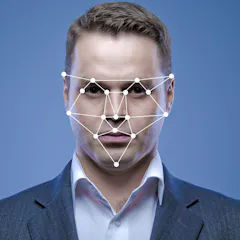
Computers are getting better at identifying people’s faces, and while that can be helpful as well as worrisome. To properly understand the legal and privacy ramifications, we need to know how facial recognition technology works.
Researchers are looking for ways to improve our ability to recognise and match faces.

Big brother is not watching you … yet.

Plans to introduce voice and facial recognition technology for online shopping and banking point to a password-free future.
Should Australia’s law enforcement agencies be allowed to use images supplied for driving licenses, passports and other identification documents as part of a facial recognition search for criminals?
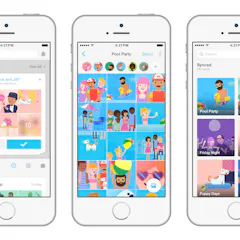
Facebook Moments adds a new level of complexity to the issue of user consent.

The need to accurately identify people is important for security (and for not embarrassing yourself by hugging strangers). It was cited as the main reason for excluding and restricting the movements of…

It is common knowledge – at least to anyone who trawls the shallower reaches of the internet – that people resemble their pets. Sad-looking humans have melancholy animal companions and bright-eyed and…
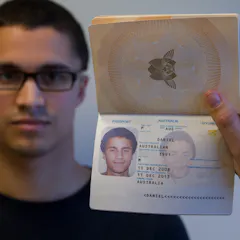
Staff responsible for issuing passports are no better than the average person at identifying if someone is holding a fake passport photo, my colleagues and I report in a study published in PLOS ONE today…
One of the problems with using passwords to prove identity is that passwords that are easy to remember are also easy for an attacker to guess, and vice versa. Nevertheless, passwords are cheap to implement…

A computer system has been developed that can tell whether facial expressions of pain are real or fake – with possible implications for those of us who fake the occasional “sickie”. A study, published…
Smartphones can already understand your voice commands but imagine if they tried to read your emotions as well. What if you asked it for details of movies showing at your local cinema and it replied: Well…
It seems intuitive that many of us would fear and avoid emotions such as anger and anxiety. But some people fear positive emotions such as happiness and contentment, and of accepting the compassion, kindness…

James Dyson’s decision to fund a robotics laboratory at Imperial College London may not lead to the super advanced robot friends of our dreams, but what he has planned could make robotic domestic appliances…

An app on offer in the US says it can determine whether the person you are dating has anything to hide, using facial recognition to see if they are on the sex offenders register. This should make us question…
Chatty updates on Facebook are easier to remember than carefully-worded sentences. Researchers from the University of Warwick…
Babies respond to faces virtually the same way adults do, even though their visual systems are still developing. Researchers…
Facial recognition software could only need a dot-sized part of a face to recognise the individual. Multi-spectral imaging…
Face-recognition software and social media profiles can be used to identify strangers and get access to their personal information…
Top contributors
-

Research Director of the Security and Surveillance Research group; Professor, The University of Queensland
-
Senior Researcher and Project Manager, Advanced Surveillance Project, CSIRO
-
Sessional Academic, Faculty of Law, Monash University
-
Research engineer, Advanced Surveillance Project, CSIRO
-
Professor of Psychology and Science Communication, Head of Department of Sociological and Psychological Sciences, Abertay University
-
Scientia Fellow, UNSW
-
Professor of Media, School of Media, Film, and Journalism, Monash University
-
Associate Professor in Law, Macquarie University
-
Associate Professor, School of Psychology and Clinical Language Sciences, University of Reading
-
Professor of Computer, Web and Cognitive Sciences, Rensselaer Polytechnic Institute
-
Director, University of Technology Sydney
-
Post-doctoral Research Fellow, The University of Queensland
-
Responsible Technology Policy Specialist - Human Technology Institute, University of Technology Sydney
-
Professor of Cyber Security Practice, Edith Cowan University
-
Associate Professor, School of Psychology, UNSW