

The bipartisan revolution against automated license plate readers suggests Americans have not entirely lost their rebellious spirit.
Articles on Mass surveillance
Displaying 1 - 20 of 48 articles

Create a moral panic. Blame it on certain people. Commence monitoring. Deploy droves of security agents. Detain or remove the targets. Sound familiar?
A new study shows that simply knowing we are being watched can unconsciously heighten our awareness of other people’s gaze.

The federal government is encouraging more people to use artificial intelligence. But this blind hype dismisses the harms caused by the new technology.

Our facial information is sensitive – yet companies and individuals can collect, sell and manipulate it without our consent. Australian law must change to protect us all.

At a time of increasing unease about the checks and balances for the use of AI, some African countries are spending more on harmful surveillance of their citizens.

The electronic monitoring and surveillance of employees is on the rise as growing numbers of people switch to hybrid and at-home work.

Facial recognition technology has set us on a path to mass surveillance – but it’s not too late to change course.

Australia’s consumer advocacy group Choice identified three Australian retailers who use facial recognition to identify consumers. What are the privacy concerns?

In recent years, Indigenous land defenders have lived under increasing police and state surveillance while far-right, conspiratorial movements have not.

Mass data collection and surveillance have become ubiquitous. For marginalized communities, the stakes of having their privacy violated are high.
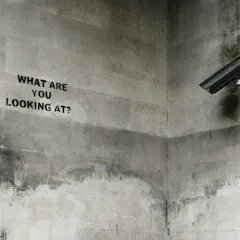
Once analysts gain access to our private data, they can use that information to influence and alter our behaviour and choices. If you’re marginalized in some way, the consequences are worse.

In the current pandemic, finding the right balance between the protection of public health and respecting civil liberties has proven to be supremely difficult.
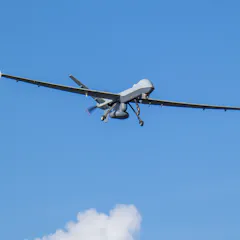
Avoiding drones’ prying eyes can be as complicated as donning a high-tech hoodie and as simple as ducking under a tree.
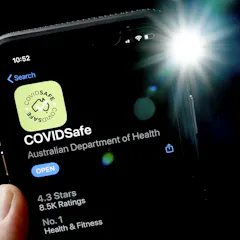
The COVIDSafe app hasn’t come out of nowhere. The promises of ‘smart city’ data collection may be seductive, but we must always weigh up what we’re being asked to give up in return.

The more we use facial recognition, the more we see its limits and its risks.
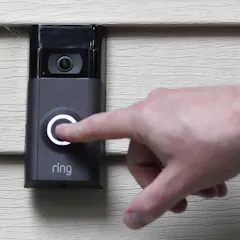
Amazon says it’s the “new neighbourhood watch” but Ring may just be another technology that gives police too much data and lets neighbourhoods double down on their biases.

30 years after the fall of the Berlin Wall, covert surveillance images offer us an unparalleled look at the lives of people trying to escape from the east to the west.

Surveillance software that identifies people from CCTV is eroding human rights and democracy.

Darwin is one of the aspiring ‘smart cities’ that is adopting Chinese technology that can identify and track individuals. Add changes in Australian law, and we have the makings of a surveillance state.
Top contributors
-

Lecturer and Teacher, Department of Politics and International Relations, Cardiff University
-
Assistant researcher, University of Sydney
-
Professor of Media, Communications and Social Theory, London School of Economics and Political Science
-
Professor and Director, Centre for Research into Information, Surveillance and Privacy, University of Stirling
-
Professor of Criminology and Head of Department for Sociology, Social Policy and Criminology, University of Southampton
-
Professor of Global Legal Studies, Birmingham Law School, University of Birmingham
-
Assistant Professor of Performance and Communication Arts, St. Lawrence University
-
Professor of Global Media and Politics, Goldsmiths, University of London
-
Lecturer, Arts, Design & Architecture, UNSW
-
Professor of Law, Wayne State University
-
Assistant Professor of Digital Communication, The University of Texas at San Antonio
-
Professor of Culture and Economy, Loughborough University
-
Assistant professor, University of Zurich
-
Fellow for Cyber-security and Internet Governance, School of International and Public Affairs, Columbia University
-
Senior Lecturer in Psychology, Manchester Metropolitan University