
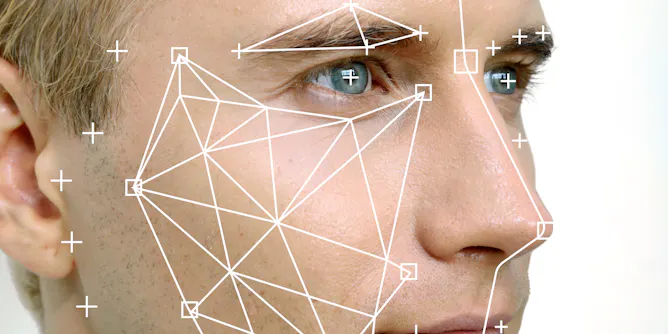
Australia’s parliament will soon decide on a bill to try to regulate facial recognition technology, but it leaves a lot of questions unanswered.
Articles on Facial recognition
Displaying 121 - 140 of 164 articles

Authorities need a better way to identify so-called super recognisers who match suspects to CCTV footage.
With the iPhone X, facial recognition is spreading throughout society. How does it work? What technologies enable it?
Bees and wasps can recognise people’s faces – despite having less than one million brain cells, compared to 86,000 million brain cells that make up a human brain.

The re-education centres are linked to a return to core Communist ideology under President Xi Jinping and party obsession with ‘stability maintenance’.
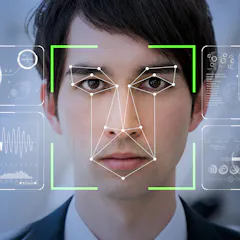
Facial recognition software is an Orwellian concept that will monitor and regulate the public. Most disturbing is the recent announcement by China to use it in school systems.
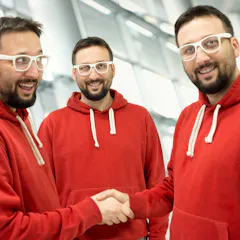
Same person or different person? Most people are extremely good at recognising faces of people they know well, but not so much strangers. See how well you perform on the tests in this story.
It can be unpleasant to be mistaken for someone of a different gender. When an algorithm does it secretly, it’s even more concerning – especially for transgender and gender-nonconforming people.
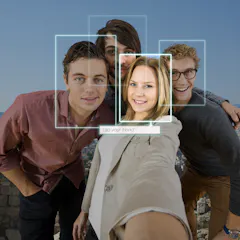
In a major blow to Facebook, a judge has ruled that a class action can proceed. If similar actions are brought around the world, Facebook could face billions of dollars in damages.

Building features can be analyzed in the same way that facial recognition software works, revealing previously hidden elements of history.
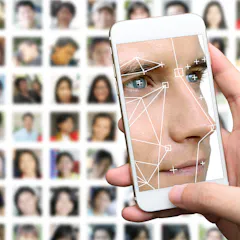
The government’s plans to store our biometric data are currently going through parliament. The data could reveal more than we’d like to those who seek to access the information.

People with facial difference often develop strategies for smoothing over social awkwardness, such as ways of introducing the issue into conversation early or using humour to deflect attention.
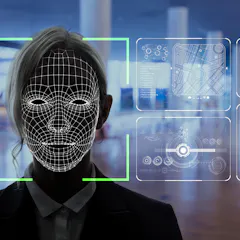
Facial recognition software isn’t ready for face-in-a-crowd applications. Specialist police officers are far superior at spotting criminals.
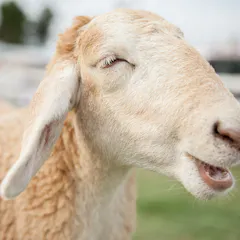
It’s no surprise sheep can recognise people – their intelligence is often overlooked.
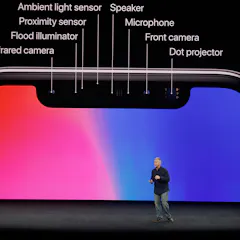
Apple’s latest iPhone sold out within minutes of its launch, but questions still remain about whether that pace of demand will continue and, if so, whether the company’s supply chain will be able to keep up.
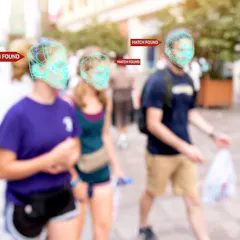
Treating video like a mutating gene could improve surveillance software.

Governments must stop thinking that owning as much data as possible is the only way to protect national security and prevent crime.
The COAG agreement to share our biometric data - including some photo ID - is an erosion of our privacy and will give people a false sense of comfort.

National discussions about counter-terrorism strategy are welcome, but require robust follow-up if they are to improve responses to terrorism.

Scientists are beginning to link animal facial expressions to emotions, making it possible for us to understand how they feel.
Top contributors
-

Research Director of the Security and Surveillance Research group; Professor, The University of Queensland
-
Senior Researcher and Project Manager, Advanced Surveillance Project, CSIRO
-
Sessional Academic, Faculty of Law, Monash University
-
Research engineer, Advanced Surveillance Project, CSIRO
-
Professor of Psychology and Science Communication, Head of Department of Sociological and Psychological Sciences, Abertay University
-
Scientia Fellow, UNSW
-
Professor of Media, School of Media, Film, and Journalism, Monash University
-
Associate Professor in Law, Macquarie University
-
Associate Professor, School of Psychology and Clinical Language Sciences, University of Reading
-
Professor of Computer, Web and Cognitive Sciences, Rensselaer Polytechnic Institute
-
Director, University of Technology Sydney
-
Post-doctoral Research Fellow, The University of Queensland
-
Responsible Technology Policy Specialist - Human Technology Institute, University of Technology Sydney
-
Professor of Cyber Security Practice, Edith Cowan University
-
Associate Professor, School of Psychology, UNSW