
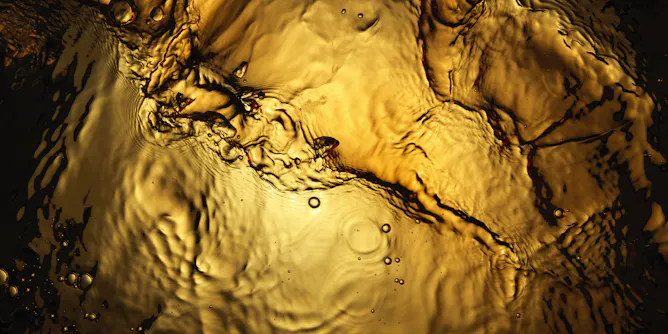
For millennia, farmers relied on human urine for its vital plant nutrients. As synthetic fertilisers get more expensive, is it time to give pee a chance?
Articles on Wastewater
Displaying 1 - 20 of 109 articles

The first full-scale trial of its kind, this floating wetland cut greenhouse gases by nearly a third over two years.
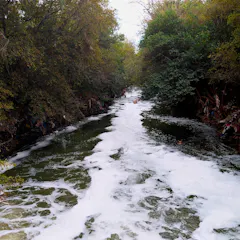
After harmful bacteria are removed by water treatment, the genetic information that enables antimicrobial resistance can persist.

The heatwave in May meant people started to use more water to stay cool, and on their plants.

Years of industrial expansion have boosted water demand, with no new sources coming online since 2016. Desalination and reclaiming sewage wastewater are among the current options.

Critics warn Ontario’s new water laws could shift control of public water systems to arms-length corporations, paving the way for private profit at public expense.
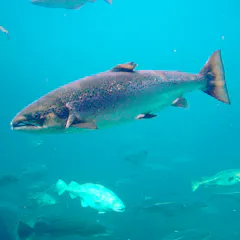
Drugs and their byproducts can end up in wild fish – and strange behaviour results.
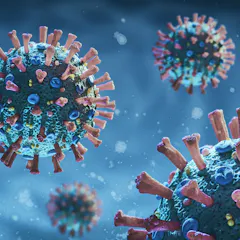
The current COVID-19 vaccine does not match the strain that’s now becoming dominant in the US, which could lead to a rise in COVID-19 cases.

Paracetamol has been detected in rivers around the world.
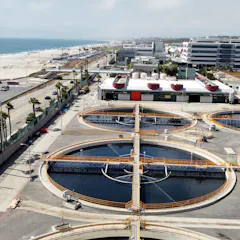
Desalination of seawater and sewage treatment plants leave behind water that contains high concentrations of salt, metals and other contaminants. What if that water could be separated from the rest?

The disinfectants we trust to protect us from microbes may also inadvertently help those microbes evolve to become more resistant to them.

Current science communications in Cape Town are not serving the public well.

Blue, green orange, brown − water comes in many colors, depending on what’s in it.

Ten million people could die in 2050 if there are no decisive efforts to contain antibiotic resistance.

Billions have been spent making the Seine swimmable for the first time in a century. It might not be enough.

Detecting infectious agents in sewage is only the first step. Researchers are working on developing reliable ways to translate surveillance measurements to case numbers and infection predictions.
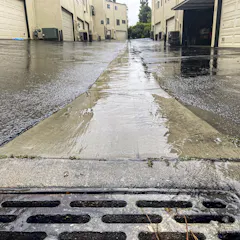
US cities are doing green infrastructure, but in bits and pieces. Today’s climate-driven floods require a much broader approach to create true sponge cities that are built to soak up water.

The UK’s Victorian-era sewer network is at breaking point.

We sampled sewage sludge from 13 wastewater treatment plants across three states. We found every resident adds microplastics to farmland, in dried sewage sludge (biosolids) used as fertiliser.

Too much stormwater is disappearing down the drain. Here’s how our cities can make more of their last untapped water source.
Top contributors
-

Associate Professor in Environmental Science, Western Sydney University
-
Professor / Leader of the Environmental and Nanoscience Research Group, University of the Western Cape
-
Adjunct Professor, Global, Urban and Social Studies, RMIT University
-
Associate Programme Officer, Institute for Integrated Management of Material Fluxes and of Resources (UNU-FLORES), United Nations University
-
Professor and Head of School of Civil Engineering, University of Sydney
-
Researcher, University of Cape Town
-
Academic Officer, Water Resource Management Unit lead, Institute for Integrated Management of Material Fluxes and of Resource (UNU-FLORES), United Nations University
-
Assistant Professor, Department of Biology & School of Environmental Studies, Queen's University, Ontario
-
Associate Professor in Food Systems, The University of Melbourne
-
Senior Scholar in Environmental & Geographical Science, University of Cape Town
-
Executive Co-Director, UNU Hub on Empowering Communities to Adapt to Environmental Change, United Nations University; University of Calgary
-
Researcher in sustainable food systems, The University of Melbourne
-
Senior lecturer, Nelson Mandela University
-
Senior Lecturer: Water Quality Engineering, University of Cape Town
-
Associate Professor of Civil and Environmental Engineering, University of Maine