

In Oceanhamnen, wastewater is collected through three separate pipelines, making the processing and reuse of black and greywater more efficient.
Articles on Water
Displaying 1 - 20 of 832 articles

To survive dry spells, trees stop the water-rich process of photosynthesis. When nature’s natural carbon capture machine grinds to a halt entire forests end up producing more CO₂ than they absorb.
Water services are too important to fail. If a utility becomes financially unstable, consequences are passed on to customers, regulators and governments.

Playing out year over year, the chaotic cycle of drought crises has become a familiar experience for British Columbians.
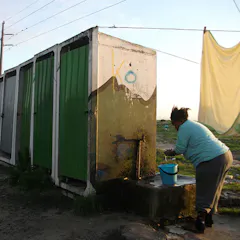
South Africa’s water law promises fairness, but ageing infrastructure, weak governance and unequal power leave many without reliable water.
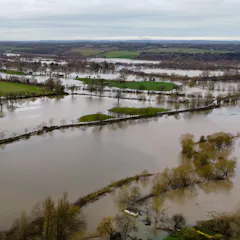
We have built the system to shed much of the surplus rather than keep it. We allow a wet winter to rush away, then ration what remains through a dry summer.
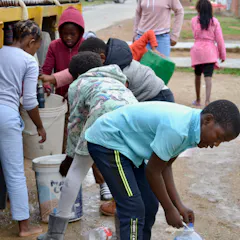
South Africa is running short of water, but new research finds scarcity is only part of the problem: water is also not being shared fairly among those who need it.
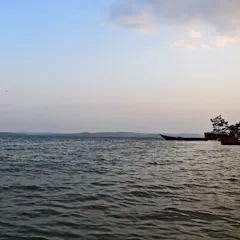
A new nanomaterial ‘blanket’ could reduce evaporation from dams by blocking heat while letting sunlight through, helping save scarce water in hot parts of Africa.
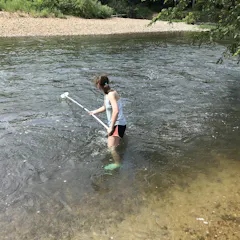
A fish-finding expedition not only detects unexpected species but also uncovers a living link to Missouri’s geological past.
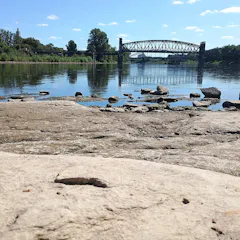
To protect our planet’s waters, we need to better understand these new economic and technological factors that underlie disputes over water.
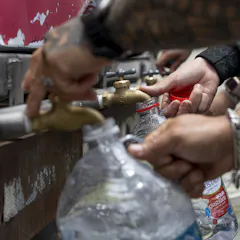
Drought and a ruptured pipeline have forced Puerto Rico into revolving water shut-offs. For many people, the disruption started years earlier, as did loss of faith in the utility.
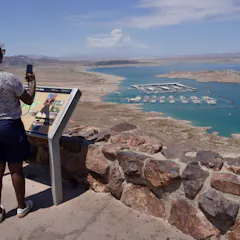
The existing plans and commitments to reduce water use don’t add up to even half of the savings that are needed to keep the river flowing.

A home might appear fine, but toxic contamination isn’t always evident by sight or smell. An engineer share safety tips for the recovery.
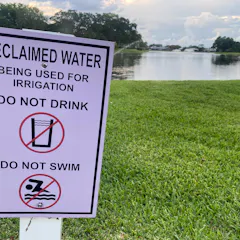
US sewage treatment plants likely don’t get rid of all the disease-causing protozoa, and monitoring discharged wastewater for it is difficult.

Philadelphia’s tap water meets federal drinking water standards but falls far short of public health goals when it comes to cancer-causing chemicals.
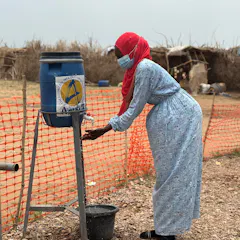
While cholera launched modern epidemiology and has nearly disappeared in many countries, the disease never went away. It has instead retreated to the places least equipped to fight it.

Wastewater from Pennsylvania’s oil and gas wells is salty and radioactive, and doesn’t suppress dust. Two researchers explain why it keeps ending up on rural roads.
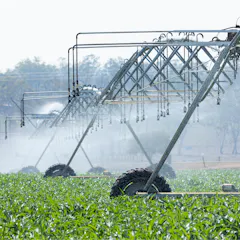
Despite their flaws, well-designed and regulated water markets remain one of our best tools for managing drought.

In its current form, safe drinking water legislation would weaken key legal provisions, particularly those related to rights and governance for First Nations.
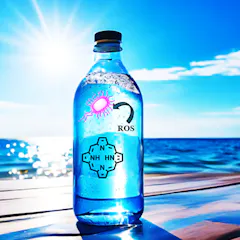
Scientists are exploring light-activated nanoparticles to kill biofilms in stored drinking water, aiming to make household water safer in South Africa.
Top contributors
-

Associate Professor in Environmental Science, Western Sydney University
-
Visiting Adjunct Professor, School of Governance, University of the Witwatersrand
-
Professor of Civil, Environmental and Ecological Engineering, Purdue University
-
Regents Professor Emeritus and Morris K. Udall Professor of Law & Public Policy Emeritus, University of Arizona
-
Senior lecturer, Nelson Mandela University
-
Executive Co-Director, UNU Hub on Empowering Communities to Adapt to Environmental Change, United Nations University; University of Calgary
-
Research Associate, Department of Economics, SOAS, University of London
-
Matthew Flinders Professor in Water Economics, Flinders University
-
Professor, School of Biological, Earth and Environmental Sciences, UNSW
-
Distinguished Professor of Engineering, University of California, Merced
-
Distinguished visiting professor, University of Glasgow
-
Research Fellow, Monash Sustainability Institute, Monash University
-
Associate Professor of Environmental Economics and Policy, School of Environment, Science and Engineering, and Fellow of the Marine Ecology Research Centre, Southern Cross University
-
Professor, Fenner School of Environment & Society, Australian National University
-
Senior Lecturer, Melbourne Law School, The University of Melbourne