

Both too much and too little sleep may interfere with our cognition.
Articles on Sleep
Displaying 261 - 280 of 567 articles

Research highlights the importance of daily meditation, exercise and sleep for improving executive functioning, a component of attention that helps people focus.

How sharks sleep has been a mystery. Some species of shark need to swim continuously to push water over their gills and breathe. New research is shedding light on how sharks sleep.

Research suggests that permanent daylight saving time would save lives as well as energy and prevent crime.

Binaural beats are said to have a range of effects, but how does the evidence stack up?

Sleep and mental health have a well established relationship.

An effective alarm is one which should minimise ‘sleep inertia’ – that stage of grogginess we feel between being asleep and becoming fully alert.
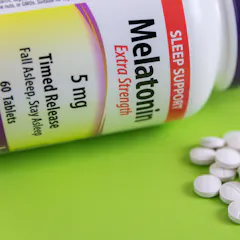
Melatonin can be useful as a sleep aid, but should be prescribed by a physician after a careful analysis of the causes of sleep loss.

Two sleep doctors offer some survival tips to help you adjust to losing that hour of sleep as clocks spring forward into daylight saving time.

People – particularly women – take a little longer to fall asleep when they are next to a casual partner or single.
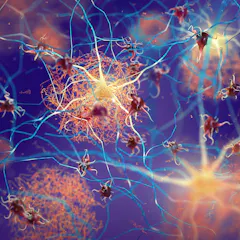
If replicated in humans, these findings could mean that targeting or boosting the circadian rhythm in Alzheimer’s patients, could help with managing the disease

Exercise might be the last thing on your mind if you’re at home with COVID. But these gentle breathing exercises can help.
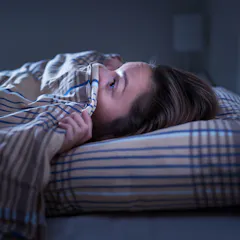
New research found unfamiliar voices elicited a type of brain wave linked to disturbances during sleep.

We compared the ability of volunteers to solve a problem after a cat nap compared to those who stayed awake. It’s a technique we borrowed from Thomas Edison and Salvador Dali.

A third of the UK population have trouble sleeping, and there’s evidence that eating some foods can help.
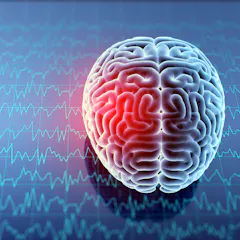
The molecule C1q has both protective and detrimental effects after traumatic brain injury. Blocking it after injury in mice restored normal brain rhythms during sleep and prevented epileptic spikes.

Too much time studying isn’t good for you or your grades. The challenge is to find the best balance of study, sleep and other activity to improve learning without compromising well-being.
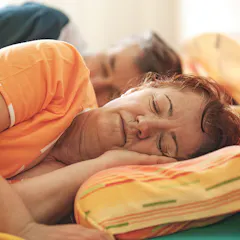
The researchers found that people who slept less than 4.5 hours and more than 6.5 hours every night had a greater risk of cognitive decline.

LED face masks are popular with celebrities and promise a glowing complexion. But should they come with ‘daytime use’ recommendation?
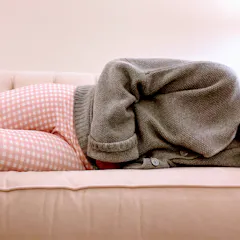
Menstruating women who sleep less than six hours a night suffer worse periods. But leading treatments for insomnia rarely look at menstrual health.
Top contributors
-

Emeritus Professor of Psychology, Adelaide Institute for Sleep Health, Flinders University
-
Sleep Researcher, Appleton Institute, HealthWise Research Group, CQUniversity Australia
-
Conjoint Senior Lecturer, School of Medicine and Public Health, University of Newcastle
-
Professor of Sleep Health, University of the Sunshine Coast
-
Associate Professor of Neurology, University of Pittsburgh
-
Research Professor and Director of the Behaviour-Brain-Body Research Centre, Adelaide University
-
Professor and Head of Paediatric Sleep Research, CQUniversity Australia
-
Associate Professor at Turner Institute for Brain and Mental Health, School of Psychological Sciences, Monash University
-
Sleep & Circadian Scientist, CQUniversity Australia
-
Professor of Sleep and Physiology and Director of Surrey Sleep Research Centre, University of Surrey
-
Senior Lecturer in Psychology, CQUniversity Australia
-
Professor Emeritus of Nursing, University of British Columbia
-
Lecturer in Psychology, University of York
-
Lecturer, University of Cambridge; Anglia Ruskin University
-
Royal Holloway, University of London