

Never seem to get enough sleep? Why chasing ‘enough sleep’ to repay your ‘sleep debt’ might not be helping.
Articles on Insomnia
Displaying 1 - 20 of 100 articles

Why a shattered body and a racing mind so often arrive together at 2am – and what the science says can help.

Because melatonin is sold as a dietary supplement rather than a drug in the US, there is little to no quality control over the wide array of product types.

Young people and those with trauma, such as veterans, are especially vulnerable to the difficulty of stopping cannabis use for sleep.

We have probably all had the experience of lying awake in bed, our mind turning, unable to sleep.

Brief awakenings are a normal part of sleep, but stress, alcohol, caffeine and irregular routines can make them harder to recover from.

Sleeping together can synchronise heart rates and boost intimacy. But if a partner disrupts your sleep, separate beds may protect both health and relationship.

Research suggests there may be evolutionary reasons we don’t fully switch off when we’re sleeping in an unfamiliar environment.

Why melatonin is not a simple fix for childhood sleep problems.

The ‘Scandinavian sleep method’ is having a moment on social media. But what is it? And will it stop you fighting over the doona?

Want better sleep? Start by fixing your gut microbiome.

The military sleep method might work for soldiers, and even you. But shift the goalposts away from the two-minute target.

Insomnia damages the brain in two ways that fuel cognitive decline.
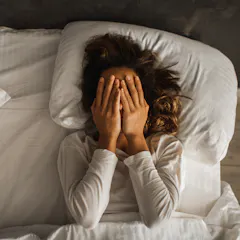
Lying awake at night doesn’t necessarily mean you have insomnia. Here’s what it could be instead.

The weighted blanket craze explained by someone who read the research.
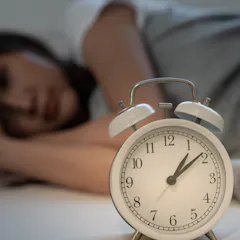
Sleep hygiene is useful if you’re a good sleeper already. If you have insomnia, some of these habits could be making it worse.

Who gets to sleep, and for how long, is a complex mix of biology, psychology and society. Here’s what we know so far.

Any reduction in sleep time for people with clinical insomnia could be concerning.

Insomnia can be a common problem during the lighter, warmer months.

Is there any science behind this TikTok trend? Cognitive shuffling attempts to mimic the thinking patterns good sleepers typically have before drifting off.
Top contributors
-

Honorary Affiliate and Clinical Psychologist at the Woolcock Institute of Medical Research, and Macquarie University Research Fellow, Macquarie University
-
Professor of Sleep Science, Northumbria University, Newcastle
-
Adjunct Senior Research Fellow, School of Psychological Sciences, The University of Western Australia
-
Associate Professor at Turner Institute for Brain and Mental Health, School of Psychological Sciences, Monash University
-
Associate Professor, Adelaide Institute for Sleep Health, Flinders University
-
Royal Holloway, University of London
-
Emeritus Professor of Psychology, Adelaide Institute for Sleep Health, Flinders University
-
Professor and Head of Paediatric Sleep Research, CQUniversity Australia
-
Senior Lecturer in Psychology, CQUniversity Australia
-
Associate Professor, Canada Research Chair in Mental Health and Intersectionality, University of British Columbia
-
Associate Professor of Sleep and Wellbeing, University of Sydney
-
Research Fellow, Senior Clinical Psychologist, Flinders University
-
Assistant Professor of Aging Studies, University of South Florida
-
Sleep Researcher, Appleton Institute, HealthWise Research Group, CQUniversity Australia
-
Lecturer, University of Cambridge; Anglia Ruskin University