
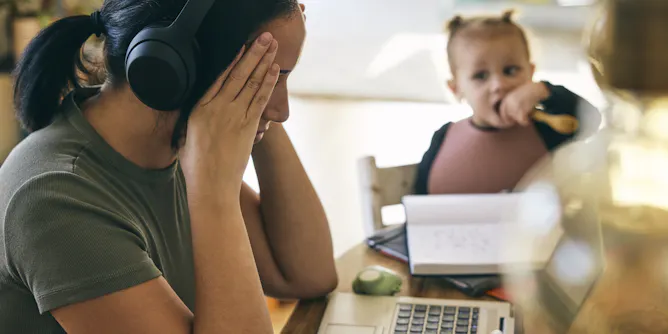
You can build resilience that will work with the changing rhythms in your life.
Articles on Circadian rhythms
Displaying 1 - 20 of 154 articles

Eight hours isn’t necessarily the magic number for sleep. Your age, body clock and individual needs all matter.
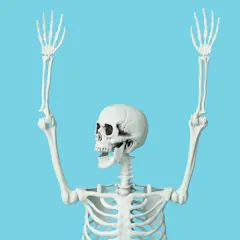
Your bones run on a 24-hour clock too and disrupting it with late nights and screens could be weakening your skeleton.
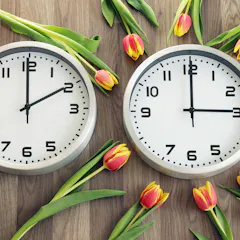
A bill now being considered in the Senate would make daylight saving time permanent, but research suggests moving to standard time would bring more benefits.

Because melatonin is sold as a dietary supplement rather than a drug in the US, there is little to no quality control over the wide array of product types.

Technology, planning and management can reduce lighting energy use by over 60%.
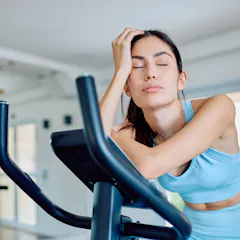
Aligning your workouts to your unique ‘chronotype’ may boost the benefits you see.

The adoption of permanent DST in B.C. raises significant concerns about social jetlag and long-term health impacts, especially for young people.
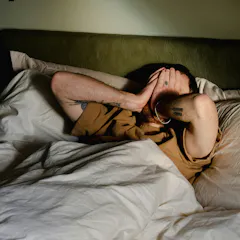
February creates a perfect storm for night owls: limited daylight and the added burden of ‘social jet lag’ layered with circadian misalignment. Here’s how to get through the dark days.
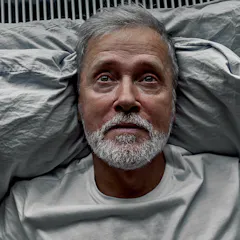
Research links disrupted biological rhythms to dementia risk, but sleep length alone may not be the key factor.

Using evidence-based strategies that focus on mindset, light exposure, activity, rest and social connection can help people beat winter-related low mood.
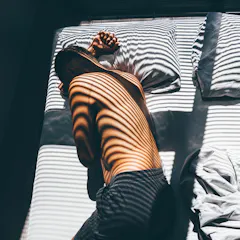
The ‘Scandinavian sleep method’ is having a moment on social media. But what is it? And will it stop you fighting over the doona?

Christmas disrupts sleep more than any other time of year. Here are 12 hidden culprits and how to beat them.
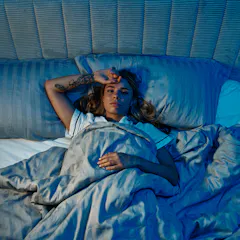
Inadequate sleep can have negative downstream effects on everyday cognitive functioning and mental health, which can then lead to even worse sleep.
The answer lies in what’s known as the body’s ‘master clock’.
Aligning mealtimes with your body’s natural rhythms can help steady energy, mood and sleep through the darker months.

It’s not just down to being a night owl or an early bird. There’s a large body of evidence to show most of us are stronger and faster later in the day.
Many animals synchronise their behaviour to the phases of the Moon.

Is it equally detrimental to us all – or do some groups of people suffer more than others?
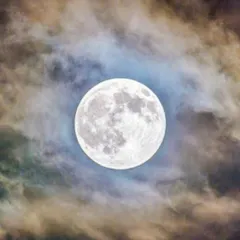
Folklore suggests that a full moon has a strong effect on sleep. But the reality is more complex, and lifestyle habits like screen use before bedtime are likely to have a larger effect.
Top contributors
-

Professor, School of Medicine, University of Connecticut
-
Emeritus Professor of Psychology, Adelaide Institute for Sleep Health, Flinders University
-
Director, Appleton Institute, CQUniversity Australia
-
Associate Professor, Physiology of Circadian Rhythms, Institute for Molecular Bioscience, The University of Queensland
-
Professor of Neurology and Pediatrics, Vanderbilt University
-
Associate Professor of Neurology, University of Pittsburgh
-
Professor (Assoc), School of Pharmacy and Biomolecular Sciences (PBS), RCSI University of Medicine and Health Sciences
-
Professor of Chronobiology and Integrative Physiology, University of Surrey
-
Personal Chair in Nutrition, The Rowett Institute, University of Aberdeen
-
Conjoint Senior Lecturer, School of Medicine and Public Health, University of Newcastle
-
Research fellow, The University of Queensland
-
Associate Professor of Physical & Biological Sciences, University of California, Santa Cruz
-
Professor of Endocrinology, University of Oxford
-
Postdoctoral Research Officer, University of Surrey
-
Professor and Director, Centre for Mental Health, Swinburne University of Technology