
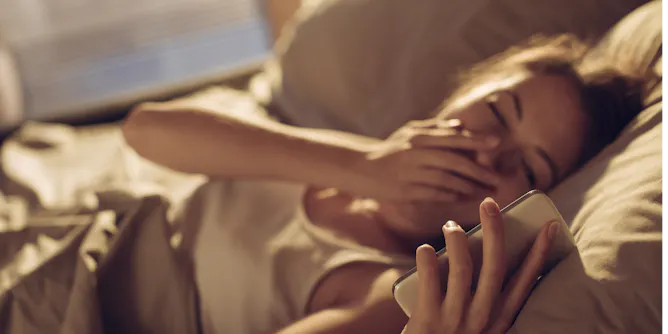
Waking up to a tuneful melody or favourite song can make us feel more alert than the traditional high-pitched ringing or buzzing of an alarm clock.
Articles on Sleep
Displaying 301 - 320 of 567 articles

It’s been a stressful year, and for 61% of US adults, a year of unwanted weight change too. This isn’t surprising, as stress, eating and motivation are all linked through hormones in the brain.

Colour-changing patterns in snoozing octopuses are characteristic of two alternating sleep states.

Sleeping through a live performance would usually indicate it wasn’t engaging. But as a film about Max Richter’s Sleep concerts explains, this is exactly the response the composer was hoping for.

Early childhood is the critical time in which the foundations of life-long habits are built. Developing healthy sleep habits can set children on the right path for better future health and wellbeing.
A year into the pandemic, sleep scientists are beginning to understand how our sleep has changed.

Napping in the afternoon can benefits both motor skills and your ability to recall facts.
What is it about chamomile tea, milk and cocoa that could help us sleep better, and what does the evidence say?
With school closures across 2020, teenagers used mobile phones even more frequently than before. But their use has an effect on their sleep.

Chemicals banned in the EU were recently granted an exemption for limited use in the UK.

Lifestyle medicine targets the root of chronic diseases like obesity, heart disease and diabetes. Experts explain why everyone should embrace these free prescriptions for good health.
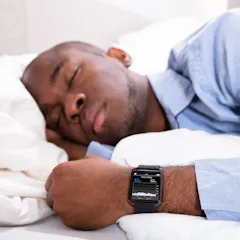
Despite the appeal of sleep trackers, they could cause unwanted anxiety for some.

The mystery of how the brain creates consciousness still puzzles scientists, but the mechanics of waking up are starting to be understood.
As uncertainty abounds and anxiety skyrockets, you’ve probably heard advice to be patient, stay calm and keep the faith. Here are 10 concrete tips to help you actually manage the stress.
Springing forward for daylight saving time will be especially hard this year due to sleep loss from COVID-19. Why does the US keep doing this?

Spontaneous thought, or mind wandering, occupies up to 50% of our time awake. In a time of COVID, the unruliness and unboundedness of our minds might be a great escape.
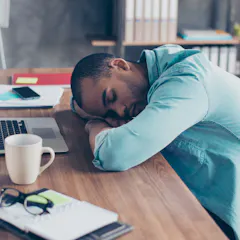
Time changes make many people feel tired, irritable, and unable to sleep.

The design of a campus and its buildings and dorms can be crucial to a student’s overall well-being.

Couch potatoes are always looking for a way out.
A lack of sleep increases appetite, makes us more likely to eat unhealthy foods, and even affects how body fat is lost while dieting.
Top contributors
-

Emeritus Professor of Psychology, Adelaide Institute for Sleep Health, Flinders University
-
Sleep Researcher, Appleton Institute, HealthWise Research Group, CQUniversity Australia
-
Conjoint Senior Lecturer, School of Medicine and Public Health, University of Newcastle
-
Professor of Sleep Health, University of the Sunshine Coast
-
Associate Professor of Neurology, University of Pittsburgh
-
Research Professor and Director of the Behaviour-Brain-Body Research Centre, Adelaide University
-
Professor and Head of Paediatric Sleep Research, CQUniversity Australia
-
Associate Professor at Turner Institute for Brain and Mental Health, School of Psychological Sciences, Monash University
-
Sleep & Circadian Scientist, CQUniversity Australia
-
Professor of Sleep and Physiology and Director of Surrey Sleep Research Centre, University of Surrey
-
Senior Lecturer in Psychology, CQUniversity Australia
-
Professor Emeritus of Nursing, University of British Columbia
-
Lecturer in Psychology, University of York
-
Lecturer, University of Cambridge; Anglia Ruskin University
-
Royal Holloway, University of London