
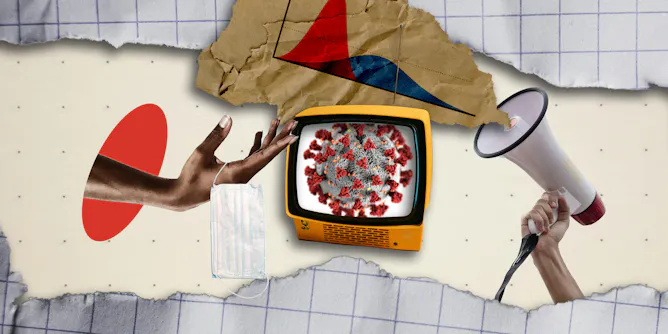
Our research found clarity and consistency of information were key features of effective public health communication throughout the COVID pandemic.
Articles on Science communication
Displaying 21 - 40 of 336 articles

In the absence of clear-cut regulation, who should decide on where and how a technology that could change the course of human health should be applied?
A new glossary of environmental science terms offers deaf people a new way to visualise and understand marine ecosystems.
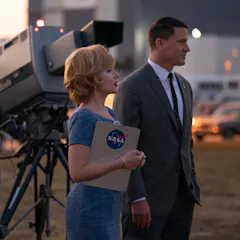
People are drawn to human interest stories and negative information.

Whether sharing online about health topics or chatting about the weather, you communicate about science. Borrowing a tactic from antiscience advocates can help make your stories more persuasive.
Novel metaphors can make it easier to understand complex concepts such as quantum computing.

Research reveals lots of reasons why well-meaning attempts to inform, persuade or correct misinformation go awry. It also identifies ways to avoid these communication backfires.
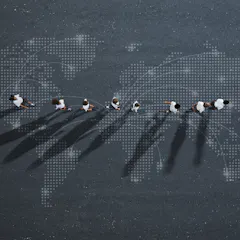
The study analyses the social media feeds of three science journalism websites: Bhekisisa, SciBraai and The Conversation Africa.
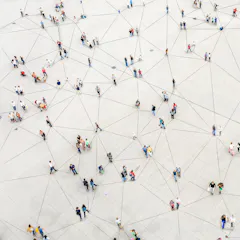
Use-inspired research goes beyond translational research to build lasting connections between researchers and communities.

This bias in science journalism seems not to be due only to pragmatic concerns about time zones or the language spoken in the country where the scientist is based.
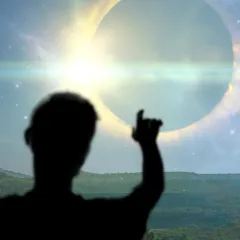
Eclipses have inspired myths, predictions and scientific discoveries. The total solar eclipse occurring on April 8 provides a once-in-a-lifetime opportunity to engage with science and the cosmos.

Researchers want real-world impact. Lawmakers want programs that work. The public wants to benefit from taxpayer-funded research. Building a bridge from academia to legislatures is key to all three.
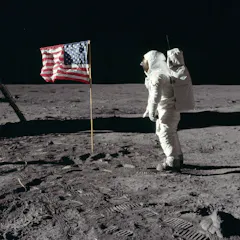
People who are suspicious of science often assume they are understand it well – and that others agree with them.

The logic of shared birthdays is stranger than you might think, but learning to understand counter-intuitive mathematics is key to seeing the world clearly.
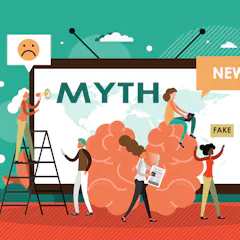
Studies show that health misinformation on social media has led to fewer people getting vaccinated and more lives lost to COVID-19 and other life-threatening diseases.

Science communication has to start with values – and most of the time it does.

New research shows the uncomfortable and shocking truth behind a revered scientist’s reputation.

Science is essential for human flourishing. So why does so much science communication paint a bleak, nihilist picture of the world?
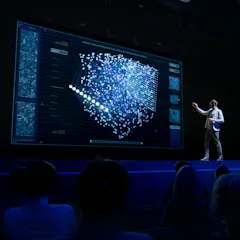
Conversations about scientific research and technological innovations allow the public to build trust with experts, and understand the impacts on everyday lives.

To build trust with an audience, scientists must demonstrate that they are competent experts. But they must also come across as warm, caring and human.
Top contributors
-

Associate Professor (hon) at the Centre for Public Awareness of Science, Australian National University
-
Senior Lecturer, Australian National Centre for the Public Awareness of Science, Australian National University
-
Science Communication Researcher, Stellenbosch University
-
Senior Research Fellow, Melbourne School of Psychological Sciences, The University of Melbourne
-
Professor of Public Relations, Michigan State University
-
Senior Lecturer in Philosophy and Education; Curriculum Director, UQ Critical Thinking Project, The University of Queensland
-
Science communicator and communication consultant to Questacon, and alumni, CSIRO
-
Professor, Australian National University
-
Chair, The Conversation Media Group
-
Professor and UNESCO Chair-holder, Australian National University
-
Associate Professor of Health Law, Policy and Management, Boston University
-
Laureate Professor of Mathematics, University of Newcastle
-
Campus Visitor / Director of Econnect Communication, Australian National University
-
Associate Professor, Interim Pro Vice Chancellor Learning and Teaching, Australian National University
-
PhD; Lawrence Berkeley Laboratory (retired) and Research Fellow, University of California, Davis