
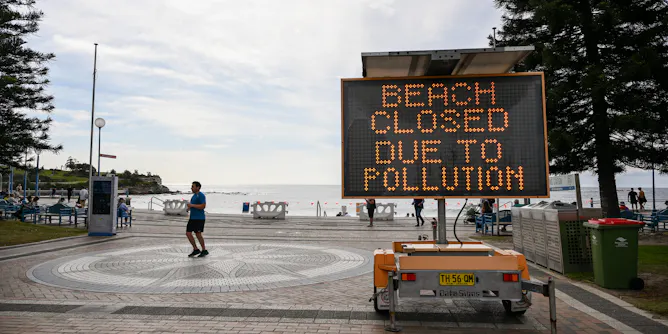
There’s a good chance the objects on Coogee beach are not, as some have suggested, tar balls. But in any case, they pose a potential risk and authorities are right to close the beach.
Articles on Marine life
Displaying 41 - 60 of 215 articles
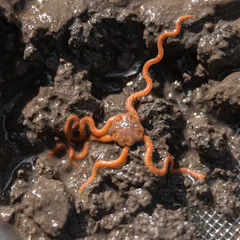
There is a diversity of life within our seabeds, capable of moving mountains of mud and slowing the effects of climate change.

Scientists who took part in an independent inquiry that refuted the ‘pyridine hypothesis’ faced widespread criticism and distrust from politicians and the media
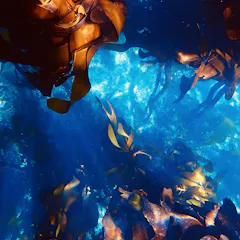
Marine art is an important form of storytelling. Visual, performance, sculptural and moving image arts have driven the evolution of marine sciences too.

Plankton bloom and wither with the seasons much as plants do on land.
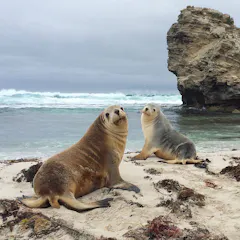
Using cameras and trackers attached to Australian sea lions, we explored previously unmapped ocean habitats off the South Australian coast. The data also fed into predictive computer models.

Certain sunscreens could harm the marine environment - here’s how to choose ones with environmentally friendly UV filters.

What do you know about your national currency? How about the cash used overseas? We studied wildlife imagery on banknotes around the world. Here’s what we found.
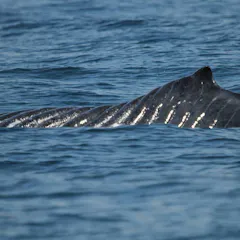
Recent sightings of Bladerunner the humpback and Split Fin the killer whale provide an opportunity to remind everyone to keep their distance and avoid collisions with majestic marine mammals.

Recording soundscapes in seagrass is useful because it allows researchers to detect creatures that can’t be seen, because they’re camouflaged, hiding or nocturnal.
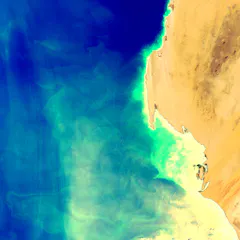
Taking more carbon dioxide out of the atmosphere by stashing it in the ocean seems like a good idea, but it could backfire if tiny marine animals called zooplankton get extra hungry.
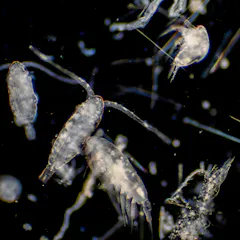
Explore the incredible underwater world of plankton.
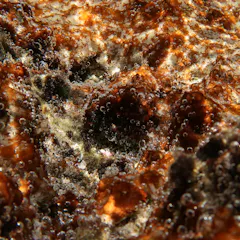
Marine species respond to ocean deoxygenation in different ways depending on where in the ocean they live.

Nine artists have taken part in a snorkelling artists’ residency that began underwater in Scotland.

Egg cases of sharks and rays can be found washed up on the shore. Citizen science data helps scientists understand the life cycles of these marine animals and how to best conserve them.
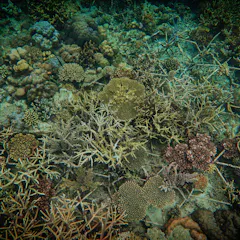
Artificial reef stars have been added to damaged coral reefs in Sulawesi, Indonesia. A new study shows that within just four years, restored reefs are thriving as much as healthy reefs.

The toll on wildlife from illegal fishing, bycatch and entanglement in fishing gear is likely underestimated, because it doesn’t account for ‘dark’ fishing vessels, a new study finds.

Deeper ocean habitats (30-150 metres) are a key feeding ground for critically endangered hawksbill turtles.
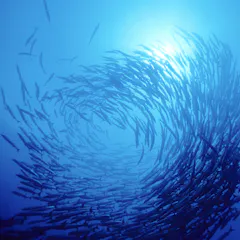
The ‘20°C effect’ could give us new insights into how temperature controls ecosystems and influences evolution – as well as how species might adapt to climate change.
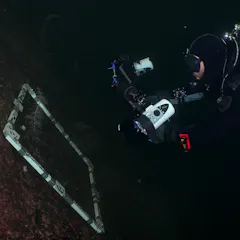
Photogrammetry, a technique where 3D information is extracted from photographs, is reducing the guesswork in counting – and understanding – the world below the ocean surface.
Top contributors
-

Whale Scientist and Lecturer, Faculty of Science and Engineering, Macquarie University
-
Professor and Deputy Vice-Chancellor (Research), University of Sydney
-
Postdoctoral Research Associate, University of Sydney
-
Professor of Marine Botany, The University of Western Australia
-
Senior Principal Research Scientist, Environment, CSIRO
-
Chief Research Scientist - Environment, CSIRO
-
Senior Curator of Marine Invertebrates, Museums Victoria Research Institute
-
Associate Professor, School of Science, Edith Cowan University
-
Professor, Sustainable Marine Futures, Environment Institute, Adelaide University
-
Research Fellow in Marine Ecology, Marine Biological Association
-
Associate Professor of Marine Conservation, University of Plymouth
-
PhD candidate, University of the Western Cape
-
Postdoctoral Research Scientist, Marine Biological Association
-
Curator of Vertebrates, Museum of New Zealand Te Papa Tongarewa
-
Research Fellow, University of Tasmania