
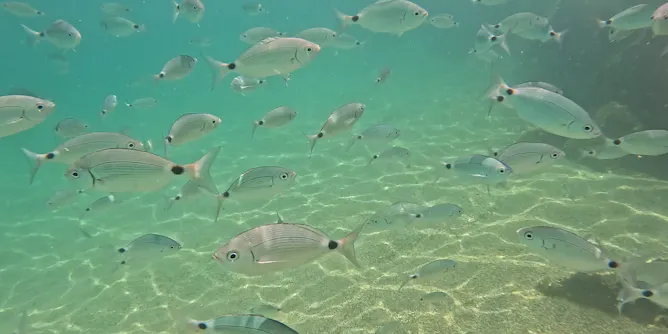
The Mediterranean is one of the world’s most vulnerable ecosystems. A scientific study on shifting distribution dynamics examines how its fish species contend with sea warming.
Articles on Marine biodiversity
Displaying 1 - 20 of 80 articles
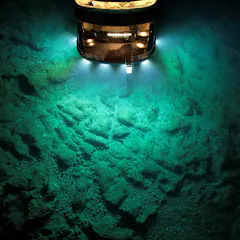
Robotic and autonomous underwater vehicles have collected vast quantities of footage from the deep sea, but most of it hasn’t been analysed.

Researchers have found that one offshore mussel farm is boosting marine biodiversity and regenerating the seabed.
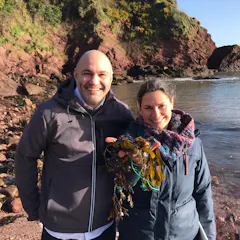
A chance encounter on a rocky seashore led one professor to invent autonomous robotics that can harvest the power of seaweed.
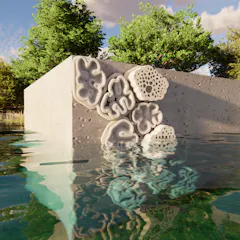
BIOCAP tiles reimagine seawalls as dynamic, ecologically active systems that have the potential to enhance coastal resilience.
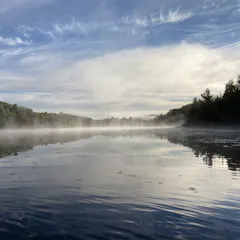
Many wild fish in Québec have parasites. Is this necessarily a bad thing? How can we limit the proliferation and spread of specific harmful parasites?
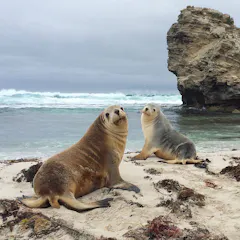
Using cameras and trackers attached to Australian sea lions, we explored previously unmapped ocean habitats off the South Australian coast. The data also fed into predictive computer models.

Recording soundscapes in seagrass is useful because it allows researchers to detect creatures that can’t be seen, because they’re camouflaged, hiding or nocturnal.
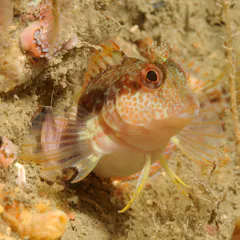
Although marine conservation around Britain has shown some success, many of the tools that are in use today are irrelevant, or missing entirely.
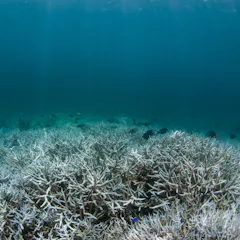
Increasing coral bleaching will be worst for the most biodiverse reefs along the equator, impacting the livelihoods and nutrition of the people who depend on them.
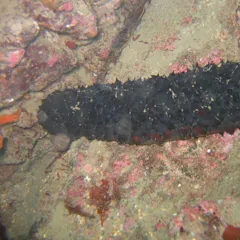
Sea cucumbers have been overharvested for centuries. At the same time, coral reefs have declined as well. Research suggests that saving the former may help restore the latter.
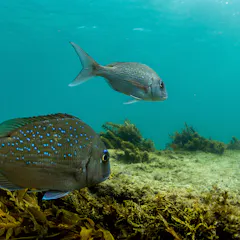
Marine protection represents our best strategy to reverse declining biodiversity. But protected areas also provide a low-tech and cost-effective way for the fishing industry to safeguard stocks.
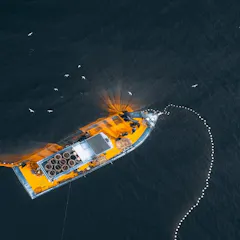
Governments all over the world are propping up overfishing. Now scientists have penned an open letter calling on trade ministers to implement stricter regulations against harmful fisheries subsidies.
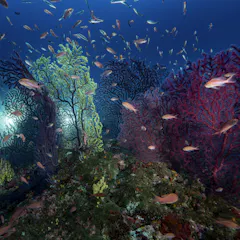
In the Mediterranean, heat waves are decimating underwater forests that are essential to ecosystems. The gorgonians seem to be better able to resist in the depths, but this refuge may only be temporary.
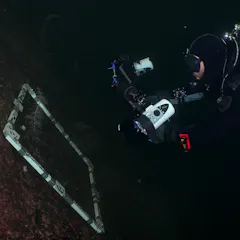
Photogrammetry, a technique where 3D information is extracted from photographs, is reducing the guesswork in counting – and understanding – the world below the ocean surface.
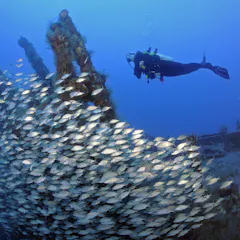
When ships sink, they add artificial structures to the seafloor that can quickly become diverse, ecologically important underwater communities.
Blood isn’t sterile, and analyzing the bacteria in it could help assess the health of fish and prevent the collapse of their populations.
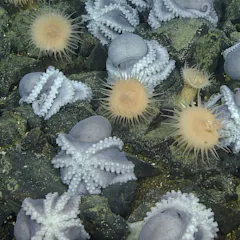
Thousands of pearl octopuses were discovered in 2018 lining thermal vents near a deep-sea volcano. Researchers now know why octopus moms gather there.
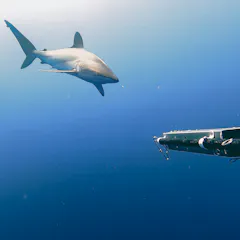
Open ocean sharks are globally threatened with extinction. Knowing where they are helps us protect them. Here, new research into silky sharks reveals priorities for conservation.

Rhino rays, which are close relative of sharks, are some of the most fascinating – and most threatened – fishes that you’ve never heard of.
Top contributors
-

Professor of Comparative and Plural law, Newcastle University
-
Professor of Marine Ecology, University of Southampton
-
Distinguished Professor of Marine Science, King Abdullah University of Science and Technology
-
Postdoctoral Research Associate, University of Sydney
-
Wen Family Chair in Conservation, The University of Western Australia
-
Associate Professor in Marine Biology, Swansea University
-
Professor in Marine Biology, Nord University
-
Associate Research Faculty, Coastal and Marine Laboratory, Florida State University
-
Doctorante en neuroéthologie, Université de Caen Normandie
-
Postdoctoral Research Associate in Coral Reef Ecology, Newcastle University, Newcastle University
-
Professor of Coral Reef Ecology, Newcastle University
-
Lecturer in coastal environmental sciences and sustainable development, Uppsala University
-
Conservation Scientist, RSPB & Visiting Researcher, University of Cambridge
-
Professor and Deputy Vice-Chancellor (Research), University of Sydney
-
Chief Conservation Officer, Project Seagrass & Research Affiliate, Swansea University