
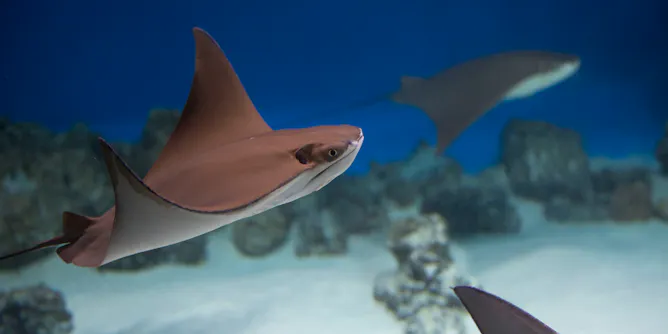
The tragic death of Steve Irwin in 2006 gave stingrays a reputation for being dangerous. But stingray-caused deaths are incredibly rare.
Articles on Marine life
Displaying 81 - 100 of 215 articles
A solution for managing the growing populations of long-spined sea urchins may not be clear at the moment, but there is a path forward.
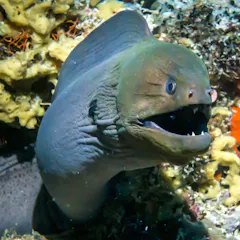
Imagine if you had to go through puberty four or five times, with each bodily change more dramatic than the last. Then you’d have a pretty good understanding of what it’s like to be an eel.

Each year, enough fishing line to circle the Earth 18 times is lost at sea. This not only harms marine life, but also the livelihoods of fishers worldwide.
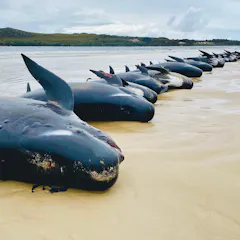
As the dead whales decompose, an astonishing and rare chain of events is likely to flow through the marine ecosystem – ultimately leading to an explosion of activity and new life.
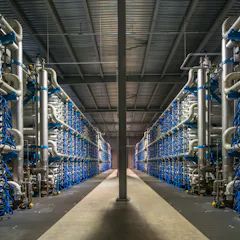
Nearly 97% of the world’s water is in the oceans, but desalination is no magic bullet for water-stressed coastal cities.

The scars many whales bear throughout their lives resulting from shark attacks are more than sufficient evidence sharks will have a go if an opportunity arises.
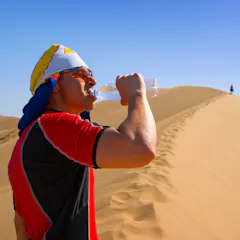
Drinkable water resources are becoming increasingly scarce. Are technologies such as desalination capable of averting such a crisis?
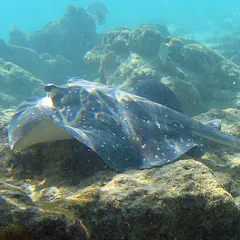
I attest these rather ordinary, mud-covered stingrays are beautiful, and I never tire of watching them. Unfortunately, they are at risk of decline and localised extinctions.

Only 200 years ago, Australian waters were full of oyster and shellfish reefs. Then they collapsed. Now large scale restoration efforts are underway.
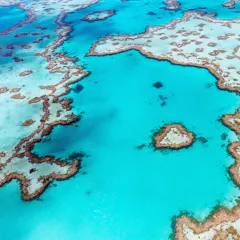
New data shows coral cover in the Great Barrier Reef is at a record high, despite a disturbing decade of marine heatwaves, cyclones and floods. While the data is robust, it can be deceptive.
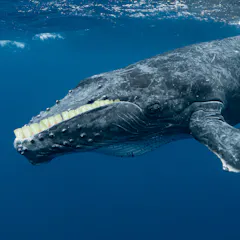
It’s all based on their diet and how they capture their food. But did you know some whales do have teeth?
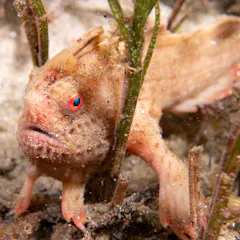
These tiny fish with oversized hands crawl along the seafloor. They only live in two locations in the world, and they’re disappearing rapidly.

Spider crabs form huge underwater piles, some as tall as a person. These fascinating crustaceans are on a risky mission – to get bigger.
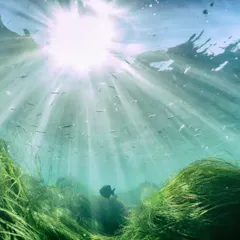
Much of the world’s seagrass is highly threatened through human actions such as coastal degradation, as well as impacts of climate change.

When humans eat fish, mussels and other foods containing antibiotics, the residual antibiotics may cause bacterial pathogens to become resistant.

Normally land-bound pathogens that cause deadly diseases for both humans and animals can cling to microplastics and end up in your seafood.
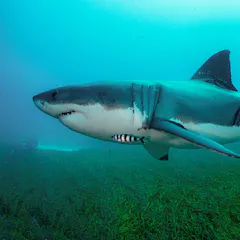
As authorities grapple with the best way to respond to the tragedy, it’s worth remembering all shark mitigation measures come with both merits and drawbacks – and none is a silver bullet.
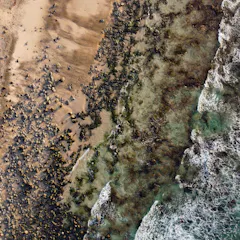
Australia’s coastline spans more than 33,000km – and there are myriad marvellous marine animals we share this space with.
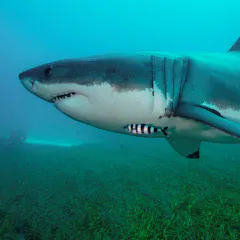
No country has a higher diversity of sharks than Australia. That means we have a special responsibility to protect them.
Top contributors
-

Whale Scientist and Lecturer, Faculty of Science and Engineering, Macquarie University
-
Professor and Deputy Vice-Chancellor (Research), University of Sydney
-
Postdoctoral Research Associate, University of Sydney
-
Professor of Marine Botany, The University of Western Australia
-
Senior Principal Research Scientist, Environment, CSIRO
-
Chief Research Scientist - Environment, CSIRO
-
Senior Curator of Marine Invertebrates, Museums Victoria Research Institute
-
Associate Professor, School of Science, Edith Cowan University
-
Professor, Sustainable Marine Futures, Environment Institute, Adelaide University
-
Research Fellow in Marine Ecology, Marine Biological Association
-
Associate Professor of Marine Conservation, University of Plymouth
-
PhD candidate, University of the Western Cape
-
Postdoctoral Research Scientist, Marine Biological Association
-
Curator of Vertebrates, Museum of New Zealand Te Papa Tongarewa
-
Research Fellow, University of Tasmania