
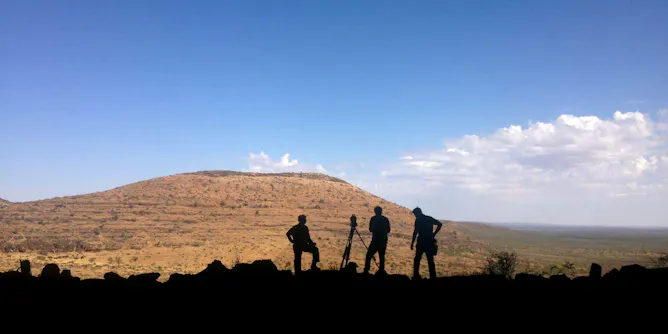
Researchers unearthed the 105,000-year-old artefacts from a spiritual site in southern Africa. Although far from the coast, the area is associated with stories of a great water snake.
Articles on Human evolution
Displaying 101 - 120 of 237 articles

We’re the only species that can throw at speeds that kill.

The ancestors of modern-day people living on Southeast Asian islands likely interbred with a prehistoric species called Denisovans - raising the possibility of fresh and intriguing fossil discoveries.

Since the 19th century, biologists have treated the larvae of lampreys as a relic of evolutionary ancestry that could potentially give clues about vertebrate origins. Now fossils overturn that view.
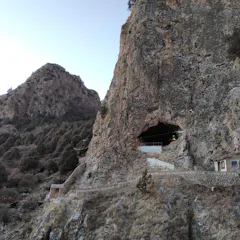
Early humans called Denisovans lived in a remote mountain cave between 100,000 and 60,000 years ago, and possibly longer still, raising intriguing questions about their relationship to modern humans.

A new environmental record for a prehistoric site in Kenya helped researchers figure out how external conditions influenced which of our ancient ancestors lived there, with what way of life.
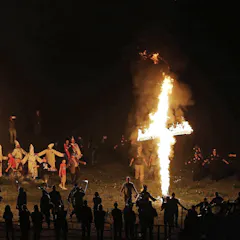
Genetic studies show mingling between populations has been the norm throughout human history.
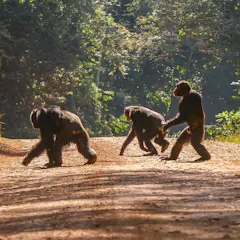
As in humans, environmental changes provoked chimpanzees to develop a diverse range of behaviours.
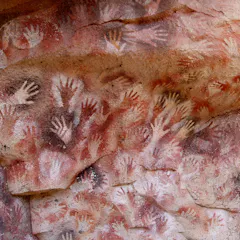
Artefacts suggest a ‘great leap’, a recent evolution of modern intelligence. Fossils and DNA argue that’s an illusion.
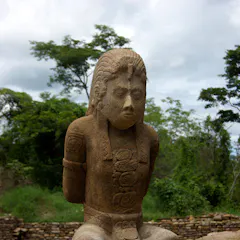
A new study of centuries-old Mesoamerican statues lends weight to the idea that many human facial expressions are universal.

The invention of the humble bag was a game changer. Without it, we’d still be running in the woods with our hands full.
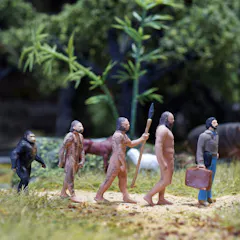
The oldest known skeleton of our species Homo sapiens is about 300,000 years old. But there was a time when humans didn’t exist at all and the world was covered in nothing but slime.
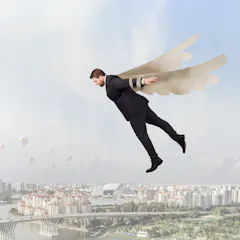
Human genes are one of the main reasons we can’t grow wings. And even if humans did have wings, they wouldn’t necessarily allow us to fly.
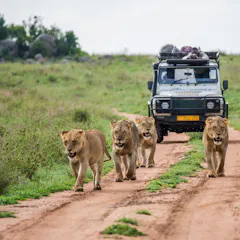
Evolution seems to lead to increasing complexity of species. But perhaps a dominant, intelligent species like humans will always end up destroying itself.
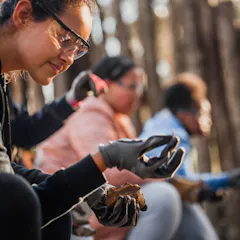
There are some moves towards recognising and redressing archaeology’s colonial history.
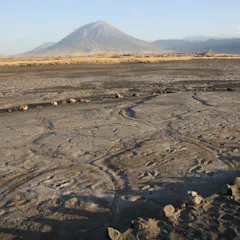
The footprints of over 20 different prehistoric people, pressed into volcanic ash thousands of years ago in Tanzania, show possible evidence for sexual division of labor in this ancient community.
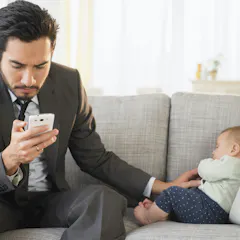
Research shows smartphone use disrupts an essential facet of human connection – eye contact.

People have changed over time, growing ever more distant and isolated from others – while at the same time finding new ways and technologies that let individuals connect and feel with others.

The arrangement of bones in our specimen’s fins are the same as those of ‘fingers’ in tetrapods. The only difference is the digits are locked within the fin, and not free moving.
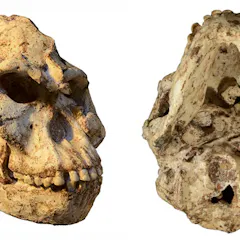
The findings suggest that this specimen could climb and move in trees. But it may also have been able to walk on the ground. This echoes previous studies.
Top contributors
-

Honorary Associate Professor, UNSW
-
Professor of Earth System Science, UCL
-
Emeritus Strategic Professor in Palaeontology, Flinders University
-
Professor of Archaeology and Biological Anthropology, School of Social Science, The University of Queensland
-
Director, ARC Centre of Excellence for Australian Biodiversity and Heritage (CABAH), University of Wollongong
-
Associate Professor of Archaeology, Griffith University
-
Director, Australian Research Centre for Human Evolution, Griffith University
-
Professor in Geochronology and Geochemistry, Southern Cross University
-
Wood Jones Professor of Anthropological and Comparative Anatomy, Adelaide University
-
Postdoctoral fellow, Australian National University
-
Group Leader, Genomics and Bioinformatics, Australian Centre for Ancient DNA, Adelaide University
-
Senior Lecturer in Paleontology and Evolutionary Biology, Life Sciences at the University of Bath, University of Bath
-
Research Fellow in Biological Anthropology, Monash University
-
Jenny Graves is a Friend of The Conversation.
Distinguished Professor of Genetics and Vice Chancellor's Fellow, La Trobe University
-
Scientia Professor of Evolution, UNSW