

When you stop treating AI as another human, you’ll get on with it better.
Articles on Human evolution
Displaying 61 - 80 of 237 articles
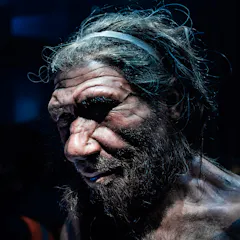
The analysis could help us understand behavioural differences between the two groups of humans.
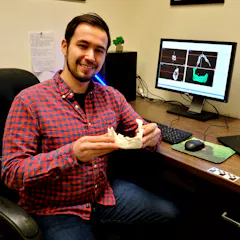
Scientists had figured a fossil found in Spain more than a century ago was from a Neandertal. But a new analysis suggests it could be from a lost lineage of our species, Homo sapiens.
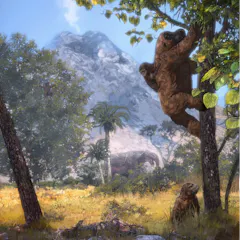
Contrary to the idea that apes evolved their upright posture to reach for fruit in the forest canopy, the earliest known ape with this stature, Morotopithecus, lived in more open grassy environments.

For more than a century, scientists have been puzzled by the set of shared changes that happen to many animals when they are domesticated.
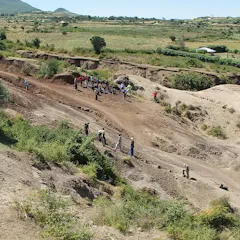
The findings suggest we weren’t the first advanced carnivore among the hominins, as has been previously assumed.
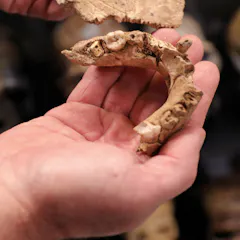
Using a new equation based on today’s primates, scientists can take a few molar teeth from an extinct fossil species and reconstruct exactly how fast their offspring grew during gestation.
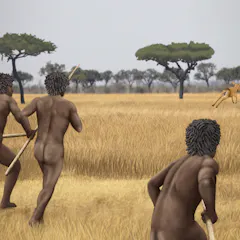
Africa’s large mammal heritage has formed a deep cultural legacy for all of humankind.

If we go far enough back in time, we all share an ancestor. And some of the features found in our bones and bodies today are a testament to that.
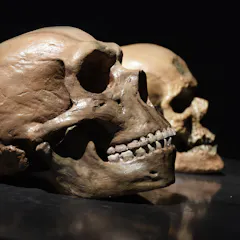
The way human brains develop is special – but not quite as special as you’d like to think, if we consider Neanderthals as well.

Rituals have been around for hundreds of thousands of years – but are they still useful today?
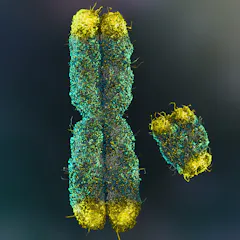
The human Y chromosome could disappear over time, putting our species in jeopardy. But some rodents have managed just fine without it – and we now know how.
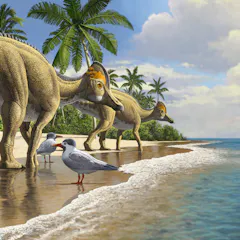
It’s hard to imagine the world without Homo sapiens. But it’s unlikely we would be here if it wasn’t for a chance asteroid collision.
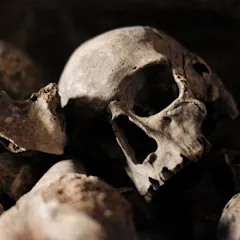
New genetic research shows humans’ famed ability to adapt our behaviour and develop new tools and techniques has not always been enough to survive when times have grown tough.
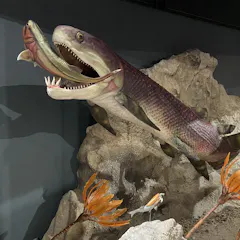
The findings come from placoderm fish fossils found in Western Australia’s Kimberley region. This extinct order of fish represents some of our earliest jawed ancestors.

As early modern humans spread across the globe, their gut microbes genetically changed with them. Understanding the origins of gut microbes could improve understanding of their role in human health.
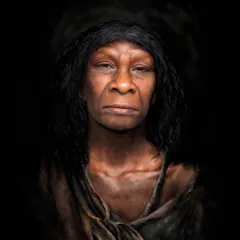
Here’s what we can learn from our closest extinct relatives.

Cutting-edge analysis of fossil ape teeth reveals ancient seasonal change in Africa, long before human ancestors appeared. The method will be crucial for the future study of early hominins.

A language scientist explains that talking was never invented but has evolved over hundreds of thousands of years.

Reproduction is at the very heart of evolution. So why has celibacy persisted for so long?
Top contributors
-

Honorary Associate Professor, UNSW
-
Professor of Earth System Science, UCL
-
Emeritus Strategic Professor in Palaeontology, Flinders University
-
Professor of Archaeology and Biological Anthropology, School of Social Science, The University of Queensland
-
Director, ARC Centre of Excellence for Australian Biodiversity and Heritage (CABAH), University of Wollongong
-
Associate Professor of Archaeology, Griffith University
-
Director, Australian Research Centre for Human Evolution, Griffith University
-
Professor in Geochronology and Geochemistry, Southern Cross University
-
Wood Jones Professor of Anthropological and Comparative Anatomy, Adelaide University
-
Postdoctoral fellow, Australian National University
-
Group Leader, Genomics and Bioinformatics, Australian Centre for Ancient DNA, Adelaide University
-
Senior Lecturer in Paleontology and Evolutionary Biology, Life Sciences at the University of Bath, University of Bath
-
Research Fellow in Biological Anthropology, Monash University
-
Jenny Graves is a Friend of The Conversation.
Distinguished Professor of Genetics and Vice Chancellor's Fellow, La Trobe University
-
Scientia Professor of Evolution, UNSW