
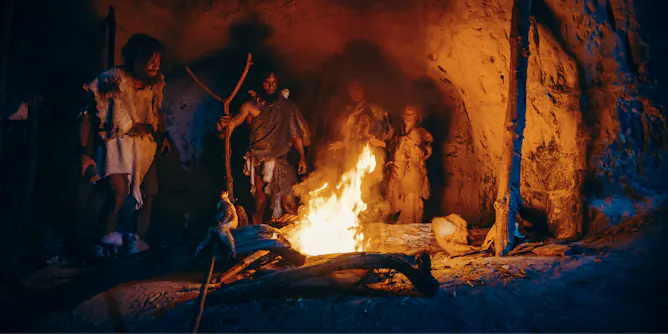
Around 200,000 years ago, people were living who were as intelligent as us.
Articles on Human evolution
Displaying 81 - 100 of 237 articles
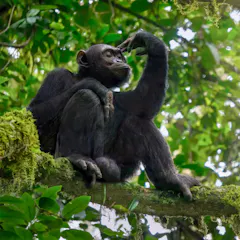
Human brains seem to be wired differently to those of chimps or macaques.
New research sheds light on why predators don’t evolve to become so aggressive that they eat all their prey – and then go extinct themselves.

You have a finely honed sense of privacy in the physical world. But the sights and sounds you encounter online don’t help you detect risks and can even lull you into a false sense of security.

Stone artifacts and a fossil tooth point to Homo sapiens living at Grotte Mandrin 54,000 years ago, at a time when Neanderthals were still living in Europe.
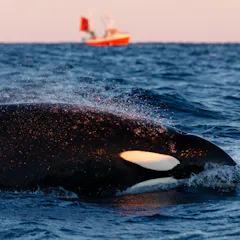
To a group of hungry killer whales, a longline fishing boat looks like an all-you-can-eat buffet.

If you ever feel like you can’t stop eating sugar, you are responding precisely as programmed by natural selection. What was once an evolutionary advantage has a different effect today.

Having intelligence helps humans survive.
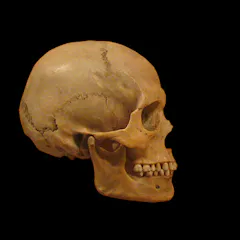
What looks like a bright, sharp dividing line between humans and other animals is really an artefact of extinction.
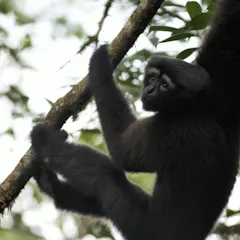
Differences between male and female skulls in some species of gibbon may shed light on how our extinct ancestors lived.

Same-sex sexual behaviour presents a paradox: it’s influenced by genes, but how and why do these genes continue to be passed down the generations? One theory is they have reproductive benefits too.
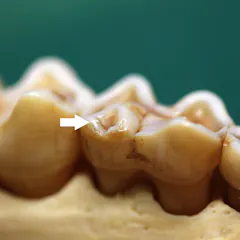
The genus Paranthropus stands out in our human family tree because of their massive back teeth, but new techniques suggest we should throw out the hypothesis they mainly ate hard seeds and nuts.

Toba eruption caused temperatures to plummet by up to 10°C in some regions – but not where most humans lived.
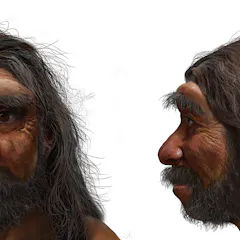
A new analysis of a ‘lost’ skull rewrites the recent family tree of the human species, showing our closest relatives lived in China.
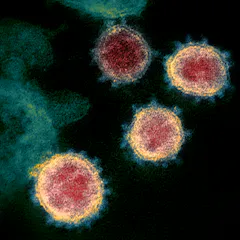
New DNA evidence shows humans may have been battling coronaviruses for longer than recorded history.

Each year, more and more people are looking to dating apps to find a partner. And a trove of data from these users is finally revealing what men and women really want.

A small child buried almost 80,000 years ago in a cave in Kenya shows how ancient humans treated the dead.

Even though they cover most of our features, face masks are no match for our highly-evolved capacity to recognise friends.

Our biggest evolutionary advantages are an ability to walk on two legs and our big brains.

If both people like and trust each other enough to kiss, the good shared feelings they get makes them more likely to stay together.
Top contributors
-

Honorary Associate Professor, UNSW
-
Professor of Earth System Science, UCL
-
Emeritus Strategic Professor in Palaeontology, Flinders University
-
Professor of Archaeology and Biological Anthropology, School of Social Science, The University of Queensland
-
Director, ARC Centre of Excellence for Australian Biodiversity and Heritage (CABAH), University of Wollongong
-
Associate Professor of Archaeology, Griffith University
-
Director, Australian Research Centre for Human Evolution, Griffith University
-
Professor in Geochronology and Geochemistry, Southern Cross University
-
Wood Jones Professor of Anthropological and Comparative Anatomy, Adelaide University
-
Postdoctoral fellow, Australian National University
-
Group Leader, Genomics and Bioinformatics, Australian Centre for Ancient DNA, Adelaide University
-
Senior Lecturer in Paleontology and Evolutionary Biology, Life Sciences at the University of Bath, University of Bath
-
Research Fellow in Biological Anthropology, Monash University
-
Jenny Graves is a Friend of The Conversation.
Distinguished Professor of Genetics and Vice Chancellor's Fellow, La Trobe University
-
Scientia Professor of Evolution, UNSW