
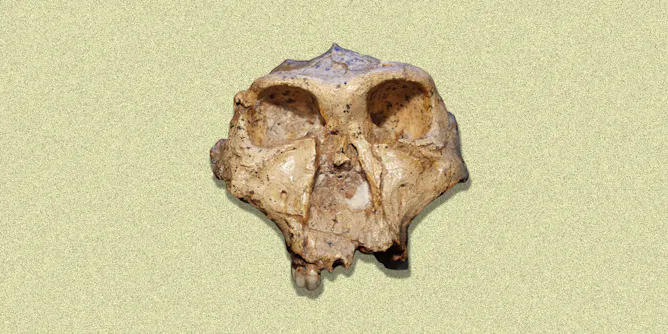
The way we classify humanity’s ancient relatives is a mess. But there’s a simple fix.
Articles on Paleoanthropology
Displaying 1 - 20 of 47 articles
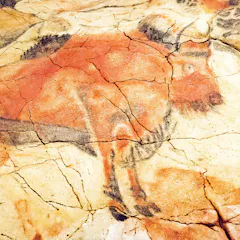
A new study has retrieved human genetic material from the walls of caves with ancient rock art.

Studies of Chinese Homo erectus suggest that it was no evolutionary dead end, but contributed genes to modern people in the region.
A recent article published and widely read in Science revealed that Neanderthal men preferred “Sapiens” women, but it fails to tell the whole story.
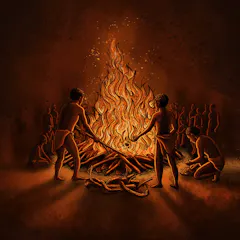
An ancient cremation would have been a community spectacle in a place returned to and reignited over many generations. What was behind this unexpected funeral ritual?

Studying ancient genes can tell us more about the evolution of humans’ anatomy, behaviour and thinking.
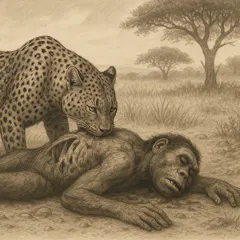
Paleoanthropologists have thought that Homo habilis was the first stone-tool maker and meat-eater in our genus. But new research suggests H. habilis might not have been so advanced.
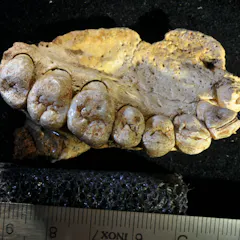
A common scanning method used to create ‘virtual copies’ of precious fossils could be erasing some of the crucial information held within.

Humans have feasted since the dawn of agriculture – but a new find suggests the practice of bringing exotic food to a communal gathering is even older.
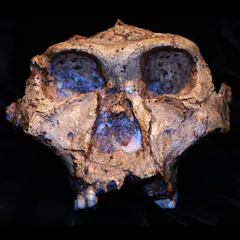
Researchers have extracted 2-million-year-old protein remains from Paranthropus robustus teeth to reveal biological sex and genetic variability.
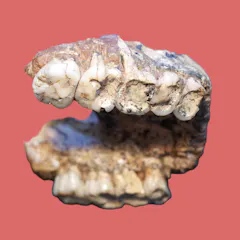
Curiously uniform dimples on the teeth of ancient hominins may give scientists a new way to trace their origins and relationships.
The tools that feminist science studies have developed are critical to the sciences because they ask new questions, and develop new methodologies.
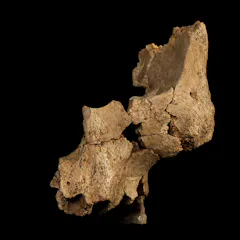
Western Europe appears to have been difficult territory for early human relatives to settle in.
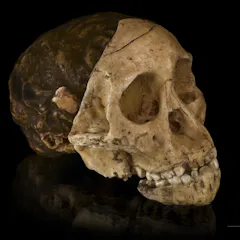
Historian Christa Kuljian and paleoanthropologist Dipuo Kgotleng talk to The Conversation Weekly podcast about the complicated legacy of the Taung child skull, 100 years since its discovery.
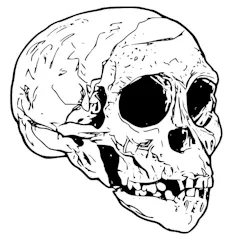
The history of human origins research is intimately intertwined with the prevalent socio-political landscape.

Our understanding of human ancestry has changed dramatically since the discovery of Lucy the ancient hominin 50 years ago. Here is the history of humanity as we know it today.
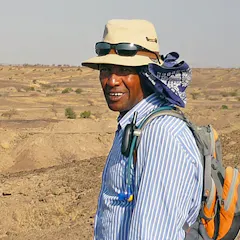
On the 50th anniversary of the discovery of ancient hominin Lucy, a leading Ethiopian scientist on why we need to ‘decolonise’ paleo research – and what it’s like to find the oldest human ancestor.

New 700,000-year-old fossils from island east of Bali hint at ancient shrinking of extinct miniature humans.
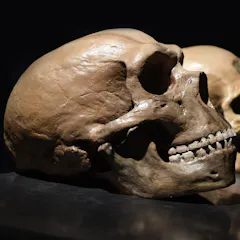
The two human species had many similarities but their communication would have been different.
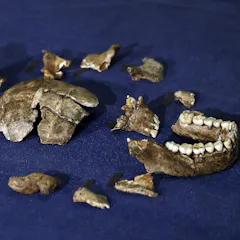
How, when and where did modern humans evolve? Nobody has all the answers, but studying rock and dirt can put the debate on firmer footing.
Top contributors
-

Assistant Professor of Anthropology, Yale University
-
Curator of Human Evolution of the Cleveland Museum of Natural History and Research Assistant Professor of Anthropology, Stony Brook University (The State University of New York)
-
Research Associate, WiSER, University of the Witwatersrand
-
Associate Professor of Anthropology, Binghamton University, State University of New York
-
Archéologue et chercheur au CNRS, Auteurs historiques The Conversation France; Université de Toulouse
-
Research Fellow in Biological Anthropology, Monash University
-
Chancellor's Professor of Medicine, Liberal Arts, and Philanthropy, Indiana University
-
Professor of Archaeological Theory and Method, University of Liverpool
-
Lecturer in Clinical Communication, University of Liverpool
-
Associate Professor of Osteoarchaeology, Uppsala University
-
Professor of History, UMass Amherst
-
Professor of Earth System Science, UCL
-
Assistant Professor of Biological Sciences, Vanderbilt University
-
Postdoctoral Research Fellow in Biology, Stanford University
-
Paleoanthropologist, University of Wisconsin-Madison