
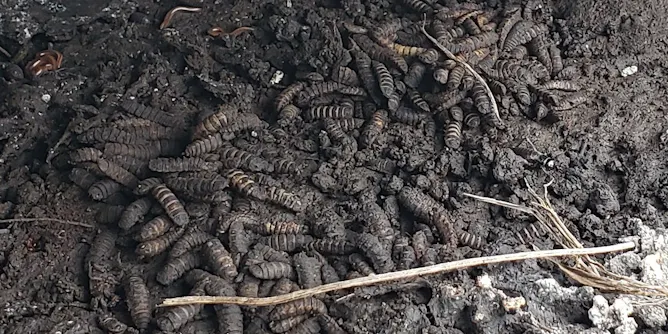
New research highlights the prevalence of maggots as an easily obtained, nutrient-rich supplement of ancient hominin diets.
Articles on Human evolution
Displaying 21 - 40 of 237 articles

Learners understood human evolution better after interactive workshops at a museum.
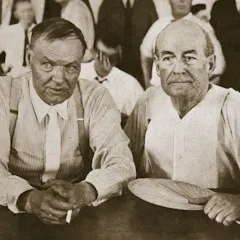
Pop culture about the ‘trial of the century’ reflected broader cultural rifts.
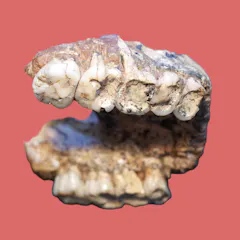
Curiously uniform dimples on the teeth of ancient hominins may give scientists a new way to trace their origins and relationships.
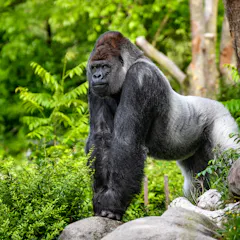
Beyond the jokes and memes, this silly debate provides an opportunity to reflect on human evolution.

Human beings don’t have a thick coat of fur like many other mammals do. Scientists think it has to do with something else that comes out of skin: sweat.

From Spartan feasts to Sunday brunches, the way we eat has transformed since our hunter-gatherer ancestors first shared meals around the hearth.
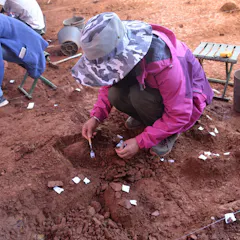
Discovery in China of tools called Quina scrapers suggests the people of East Asia were as inventive and flexible with technology during the Middle Paleolithic era as those in other parts of the world.
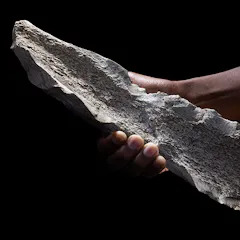
By 1.5 million years ago, Homo erectus was able to transfer tool-making skills from stone to bone.
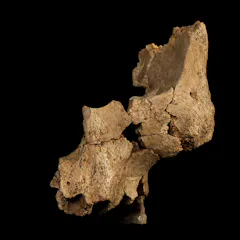
Western Europe appears to have been difficult territory for early human relatives to settle in.

Chimpanzees bear genetic adaptations that help them thrive in their different forest and savannah habitats. Some of the adaptations may protect against malaria.

A fossil face reveals that a prehistoric human species reached Western Europe much earlier than anybody thought.
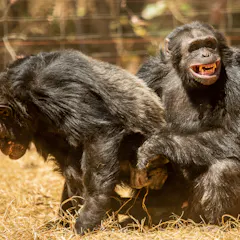
Any notion of a dominant alpha chimp getting all the action is far from reality.

The neck’s vitality and vulnerability are rooted in a quirky evolutionary history.

Twins are pretty rare, accounting for just 3% of births in the US these days. But new research shows that for primates 60 million years ago, giving birth to twins was the norm.
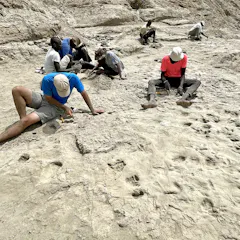
Ancient fossil footprints are the first evidence of two different hominin species − Homo erectus and Paranthropus boisei − living in the same place at the same time.

The discovery of a finger bone in a cave in Siberia some 15 years ago kicked off a race to unravel the mysteries of an entirely new group of humanoids.

Our understanding of human ancestry has changed dramatically since the discovery of Lucy the ancient hominin 50 years ago. Here is the history of humanity as we know it today.
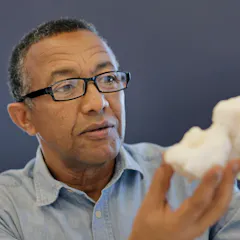
Yohannes Haile-Selassie is responsible for some of the most remarkable ancient human fossil discoveries in his home country.
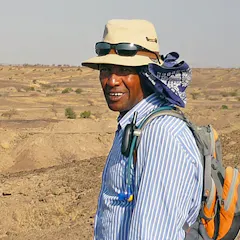
On the 50th anniversary of the discovery of ancient hominin Lucy, a leading Ethiopian scientist on why we need to ‘decolonise’ paleo research – and what it’s like to find the oldest human ancestor.
Top contributors
-

Honorary Associate Professor, UNSW
-
Professor of Earth System Science, UCL
-
Emeritus Strategic Professor in Palaeontology, Flinders University
-
Professor of Archaeology and Biological Anthropology, School of Social Science, The University of Queensland
-
Director, ARC Centre of Excellence for Australian Biodiversity and Heritage (CABAH), University of Wollongong
-
Associate Professor of Archaeology, Griffith University
-
Director, Australian Research Centre for Human Evolution, Griffith University
-
Professor in Geochronology and Geochemistry, Southern Cross University
-
Wood Jones Professor of Anthropological and Comparative Anatomy, Adelaide University
-
Postdoctoral fellow, Australian National University
-
Group Leader, Genomics and Bioinformatics, Australian Centre for Ancient DNA, Adelaide University
-
Senior Lecturer in Paleontology and Evolutionary Biology, Life Sciences at the University of Bath, University of Bath
-
Research Fellow in Biological Anthropology, Monash University
-
Jenny Graves is a Friend of The Conversation.
Distinguished Professor of Genetics and Vice Chancellor's Fellow, La Trobe University
-
Scientia Professor of Evolution, UNSW