
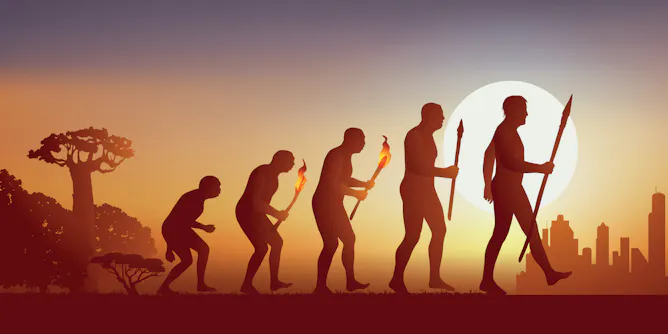
Light helps explains the evolution of our skin colour, why some of us have curly hair, and the size of our eyes. And light still shapes us today.
Articles on Human evolution
Displaying 41 - 60 of 237 articles

New 700,000-year-old fossils from island east of Bali hint at ancient shrinking of extinct miniature humans.
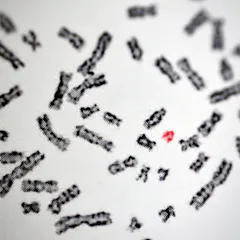
A mysterious century-old law of genetics may explain the puzzling genetic legacy of our extinct Neanderthal cousins.
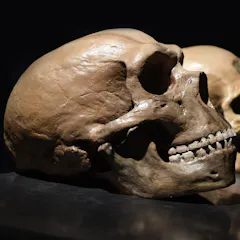
The two human species had many similarities but their communication would have been different.

Some anthropologists question how much rare activities like big-game hunting could have affected how our species evolved. Instead they’re looking at daily activities like carrying water or firewood.

The story of human evolution is inextricable from the story of gynaecology.
A new discovery is shedding more light on the overlap between the two species of human, despite the challenges of exploring this distant time

New fossil studies tell us our ancient ancestors enjoyed a diet of soft, sweet fruits. This would have influenced where they lived and spread to – and even the evolution of colour vision.
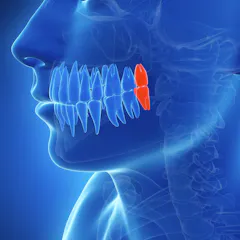
Two dental experts explain that these furthest-back molars may be a not-so-necessary leftover from early human evolution.
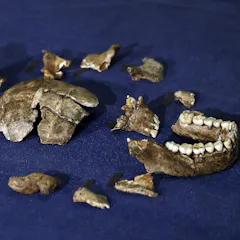
How, when and where did modern humans evolve? Nobody has all the answers, but studying rock and dirt can put the debate on firmer footing.
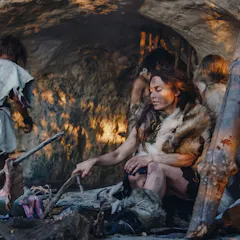
Female bodies have an advantage in endurance ability that means Paleolithic women likely hunted game, not just gathered plants. The story is written in living and ancient human bodies.

The exhibit offers a close look at the problematic history of palaeoanthropology.
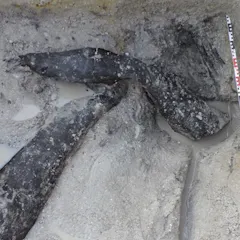
Experts speculated that very early humans worked wood, but previously didn’t have the evidence.

The findings reveal a close association between climatic conditions and early human migrations out of Africa.
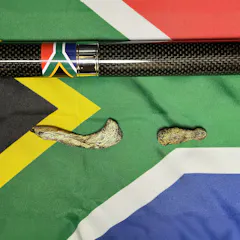
Experts insist there is no scientific reason for allowing these fossils to travel to space.

Ancient humans chose to sleep less, which had evolutionary benefits. For modern humans, sleeping less is futile and detrimental, but fitness may be a powerful ally in today’s epidemic of sleep loss.
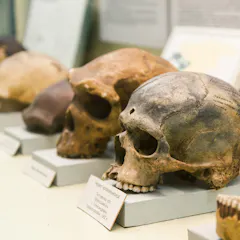
There are areas of biology that may be considered optional at younger year levels, such as botany, entomology and marine ecosystems. Evolution is not one of these.
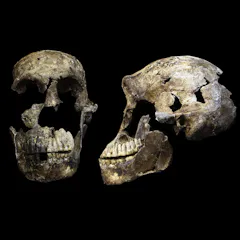
Homo naledi had a brain less than half the size of our own. Yet the new research claims it had cognitive abilities far beyond what we might expect.

Genetic evidence reveals a long, previously unknown period of adaptation to cold climates in the history of ancient human migrations across the globe.

Signs of controlled fire use from Spain are at least 50,000 years older than previous evidence.
Top contributors
-

Honorary Associate Professor, UNSW
-
Professor of Earth System Science, UCL
-
Emeritus Strategic Professor in Palaeontology, Flinders University
-
Professor of Archaeology and Biological Anthropology, School of Social Science, The University of Queensland
-
Director, ARC Centre of Excellence for Australian Biodiversity and Heritage (CABAH), University of Wollongong
-
Associate Professor of Archaeology, Griffith University
-
Director, Australian Research Centre for Human Evolution, Griffith University
-
Professor in Geochronology and Geochemistry, Southern Cross University
-
Wood Jones Professor of Anthropological and Comparative Anatomy, Adelaide University
-
Postdoctoral fellow, Australian National University
-
Group Leader, Genomics and Bioinformatics, Australian Centre for Ancient DNA, Adelaide University
-
Senior Lecturer in Paleontology and Evolutionary Biology, Life Sciences at the University of Bath, University of Bath
-
Research Fellow in Biological Anthropology, Monash University
-
Jenny Graves is a Friend of The Conversation.
Distinguished Professor of Genetics and Vice Chancellor's Fellow, La Trobe University
-
Scientia Professor of Evolution, UNSW