

An archaeological site in India sheds new light on how ancient humans dispersed from Africa across the world.
Articles on Human evolution
Displaying 121 - 140 of 237 articles

Neanderthals living in a cave in southern Siberia made distinctive stone tools that can be traced to their ancestral homeland in eastern Europe — an intercontinental journey of more than 3,000 km.
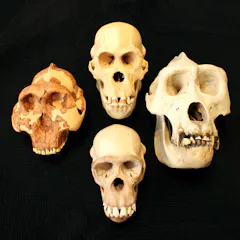
To understand how much thinking a brain can do, look at how much blood - and therefore how much energy - it uses.

Scientists don’t ask how some people evolved to be tall. In the same way, asking how homosexuality evolved is the wrong question. We need to ask how human sexuality evolved in all its forms.

A quirk of psychology that affects the way people learn from others may have helped unlock the complicated technologies and rituals that human culture hinges on.
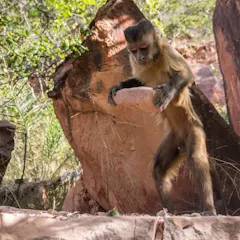
Capuchin monkeys in Brazil use big stones to crush the shells of nuts they want to eat. An experiment in the field investigated how these monkeys prepare to use new, unfamiliar tools.
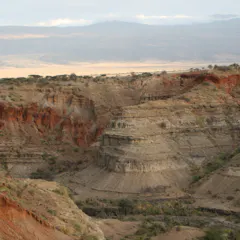
20 years ago, who could predict how much more researchers would know today about the human past – let alone what they could learn from a thimble of dirt, a scrape of dental plaque, or satellites in space.

Our extinct, distant cousins still lived in Indonesia 110,000 years ago.
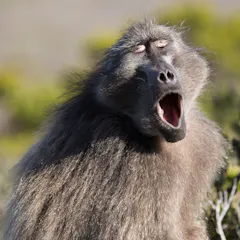
Researchers say it’s time to finally discard a decades-old theory about the origins of human language – and revise the date when human ancestors likely were able to make certain speech noises.
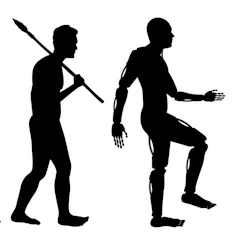
As machine automation and artificial intelligence surge, there’s paranoia our jobs will be overrun by robots. But even if this happens, work won’t disappear, because humans need it.
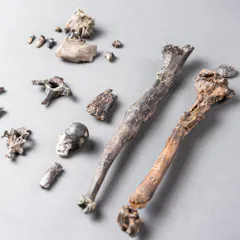
Newly discovered extinct ape Danuvius has some human-like features, but that doesn’t mean it could walk like us.
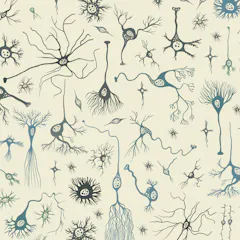
We have more neurons in our cortices than any other species, courtesy of an early technology – and along with them came our long, slow lives, with plenty of chances to gather around the dinner table.
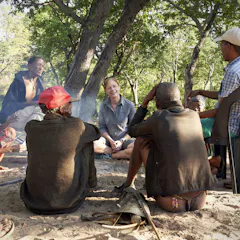
Genetic analysis has traced the evolutionary footsteps of modern humans all the way back to a prehistoric wetland that spanned parts of modern-day Botswana, Namibia and Zimbabwe.

Denisova Cave in Siberia has a rich fossil history of early humans - and deposits of droppings from hyenas, wolves and even bears, according to a new analysis of the cave’s dirt floor.
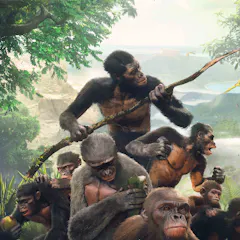
As a human evolution researcher, I was very excited to work with the creator of the Assassin’s Creed games.
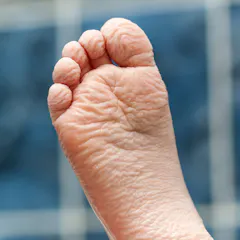
The truth is scientists aren’t exactly sure why our fingers and toes get wrinkly in the bath. But here’s what we know, and what we suspect.

Environmental change can be a slow creep towards disaster for species. We studied how prehistoric humans coped to help make sense of the future using video game technology.

Considering language from a biological perspective led researchers to the idea that new food processing technologies affected neolithic human beings’ jaws – and allowed new language sounds to emerge.

Ancient DNA allows scientists to learn directly from the remains of people from the past. As this new field takes off, researchers are figuring out how to ethically work with ancient samples and each other.
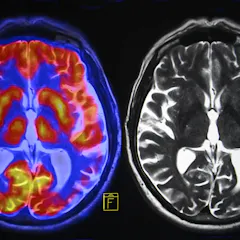
Reading and writing may have evolved thanks to a natural ability of the brain’s visual cortex to process geometrical shapes.
Top contributors
-

Honorary Associate Professor, UNSW
-
Professor of Earth System Science, UCL
-
Emeritus Strategic Professor in Palaeontology, Flinders University
-
Professor of Archaeology and Biological Anthropology, School of Social Science, The University of Queensland
-
Director, ARC Centre of Excellence for Australian Biodiversity and Heritage (CABAH), University of Wollongong
-
Associate Professor of Archaeology, Griffith University
-
Director, Australian Research Centre for Human Evolution, Griffith University
-
Professor in Geochronology and Geochemistry, Southern Cross University
-
Wood Jones Professor of Anthropological and Comparative Anatomy, Adelaide University
-
Postdoctoral fellow, Australian National University
-
Group Leader, Genomics and Bioinformatics, Australian Centre for Ancient DNA, Adelaide University
-
Senior Lecturer in Paleontology and Evolutionary Biology, Life Sciences at the University of Bath, University of Bath
-
Research Fellow in Biological Anthropology, Monash University
-
Jenny Graves is a Friend of The Conversation.
Distinguished Professor of Genetics and Vice Chancellor's Fellow, La Trobe University
-
Scientia Professor of Evolution, UNSW