
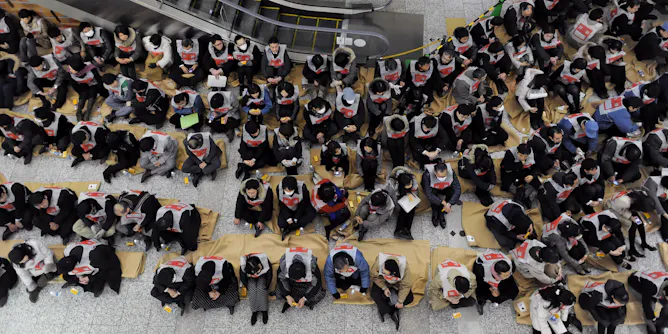
Japan took a fresh approach to ensuring their society was more resilient to the frequent earthquakes they experience. We could learn from its experience.
Articles on Earthquakes
Displaying 161 - 180 of 336 articles

Puerto Rico was once home to about 110,000 Taínos, an indigenous people decimated by the Spanish conquest. Their ancient homeland was located in the area hit hard by recent earthquakes.
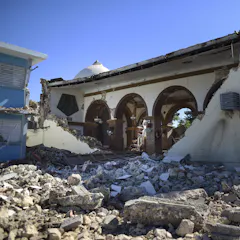
Puerto Rico’s January earthquakes came after many foreshocks and have been followed by numerous aftershocks. Scientists are studying these sequences to improve earthquake forecasting.
A tricky kind of earthquake that happens in the soft rock of the ocean floor causes much larger tsunamis than their magnitude would predict. New research pinpoints a way to identify the danger fast.

Simulations help prepare students for challenges outside the classroom.
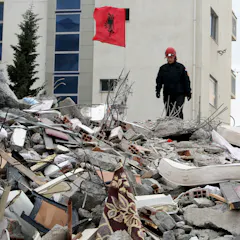
Post-earthquake aftershocks are often assumed to be less violent, but that’s not always the case.
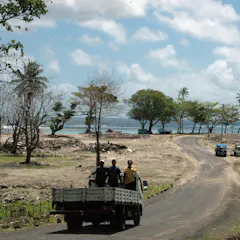
A devastating quake and tsunami in the Pacific Ocean prompted a new kind of post-disaster research. Ten years on, we need these lessons to prepare for a precarious future.
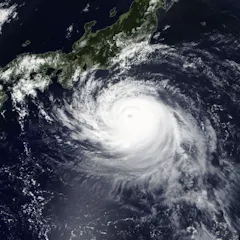
Talk of moving people out of Japan’s cities into rural areas is changing after the recent cyclone hit near Tokyo. Smarter, more connected cities may be a safer way to go.
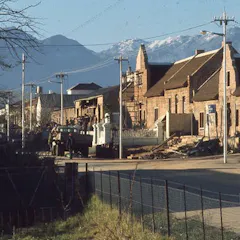
There are three important issues to consider when thinking about quakes: what causes them; how to prepare and plan for them; and, how to move on after a damaging quake.
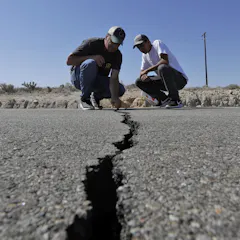
Engineers know how and where to build to minimize earthquake damage. But laws don’t always reflect that wisdom. A new study suggests it’s because of a mismatch between risk perceptions and reality.
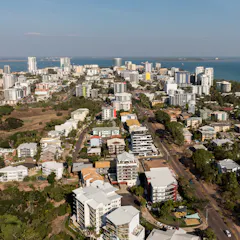
Because it happened within the Australian Plate rather than at a plate boundary, shockwaves from the quake travelled more efficiently to Darwin than to cities closer to the epicentre.
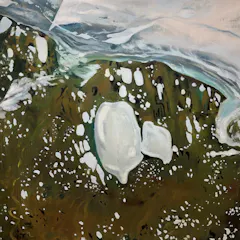
What do earthquakes, wealthy Italian families and your circulatory system have in common? Scientists use fractals, self-similarity and power laws to translate from local to global scales.
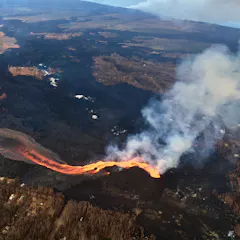
Scientists say they’ve found a new method to help predict when volcanoes will erupt, based on data crunched from an eruption last year in Hawaii.
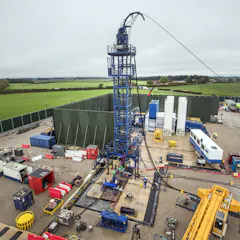
Pumping high-pressure fluid into fault lines causes them to slowly slip, increasing the pressure on more distant rock and inducing earthquakes far away.
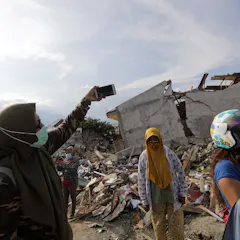
Earthquakes and tsunami in Indonesia this year did not only leave a deep sorrow. It made us rethink the relationship between humans, technology and nature in Indonesia.
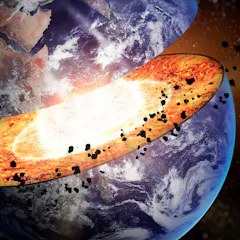
The Earth’s core is cooling down, and one day it will be completely solid – when that happens, Earth might look a lot like Mars.
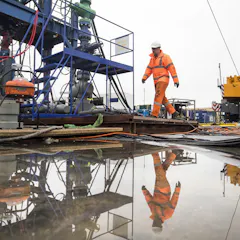
Although fracking has been given the green light it’s still not known how common felt earthquakes may become and if communities are willing to accept them

Last month’s earthquake in Sulawesi, Indonesia was large, but not huge. It was the aftereffects that made it so devastating.
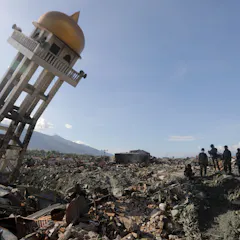
Developed countries focus on technology, but lullabies can sometimes have a greater effect.
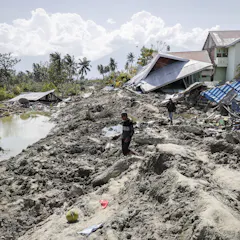
While the term liquafaction has only been widely discussed in Indonesia and the world in the past week, Palu’s susceptibility to liquefy had already been studied.
Top contributors
-

Professor of Earthquake Science, The University of Melbourne
-
Earthquake Scientist, Monash University
-
Professor in Earth Sciences, Nanyang Technological University, Singapore, and Emeritus Professor of Mineral Physics, University of Cambridge
-
Adjunct Research Fellow, Curtin University
-
Reader in Physical Geography and Natural Hazards, Coventry University
-
Professor of Geophysics, Durham University
-
Professor, Australian National University
-
Honorary Professor of Tsunami Research, PANGEA Research Centre, UNSW Australia, UNSW
-
Honorary Fellow in Structural Geology and Tectonics, The University of Melbourne
-
Senior Scientist in Disaster and Climate Risk at Earth Sciences NZ & Senior Research Fellow (adjunct), Humanitarian Emergency and Disaster Management, Charles Darwin University
-
Professor of Geophysics and Department Head, Colorado State University
-
Redmond Barry Distinguished Professor Emeritus, The University of Melbourne
-
PhD Candidate & Researcher, School of Architecture, Université de Montréal
-
Honorary Professor of Hazards and Disaster Risk Sciences, University of Sydney
-
PhD Candidate in the Department of Earth Sciences, Durham University