
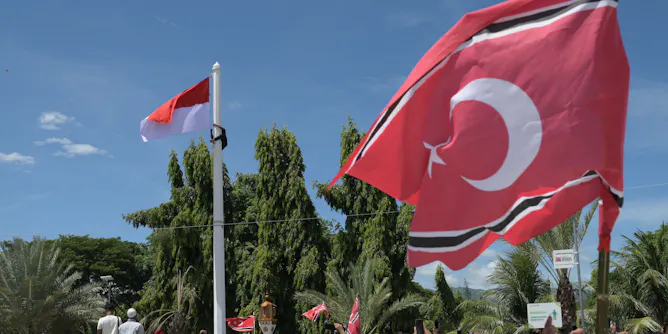
A decades-long insurgency in the Indonesian province ended after 2004’s devastating tsunami. But pro-independence talk is on the rise again.
Articles on Tsunami
Displaying 1 - 20 of 102 articles

Underwater sound signals created by 2022’s enormous Hunga eruption have pointed scientists to a new way to warn people of unpredictable volcanic tsunamis.

The tsunami struck just 12 hours after a cruise ship had left the fjord, rattling the tourism industry.

Understanding why some faults creep rather than sticking and causing massive earthquakes is important for gauging the future risk of both earthquakes and tsunamis.
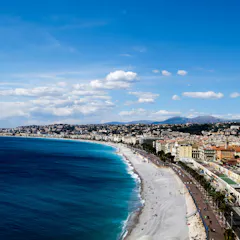
A tsunami risk in the Mediterranean is real. Coastal towns like Nice can get “Tsunami ready” by coordinating fast, effective preventive and awareness-raising efforts.

Memorials, monuments, preserved school buildings and found objects form part of a memory culture that keeps conversations about risk reduction going.
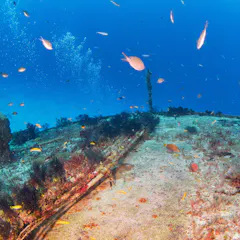
Existing underwater fibre optic cables could help monitor tectonic movement on the ocean floor.
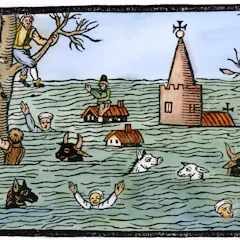
Four centuries on, scientists are still debating whether the catastrophic flood of 1607 was driven by a storm surge or a tsunami.
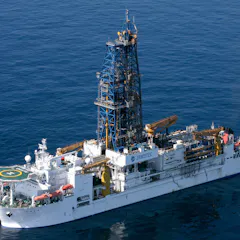
IODP Expedition 405 drilled deep underwater in Japan’s subduction zone to uncover why this region generates some of the world’s most powerful and destructive earthquakes.

One of the largest earthquakes on record struck far eastern Russia this week. The last time the region was hit by a such a huge quake, the Soviets hushed it up.
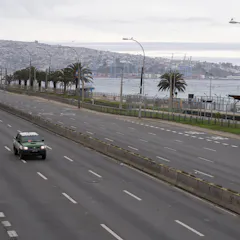
Despite recording one of the strongest earthquakes in a century, the Pacific escaped major damage.
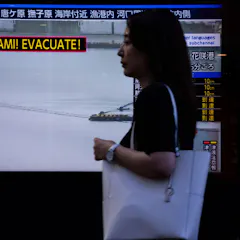
It is not easy to calculate the risk of a tsunami.
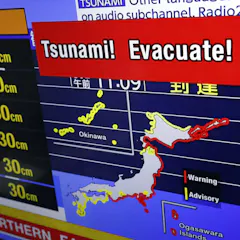
The tsunami warning triggered evacuations in the US and Japan.
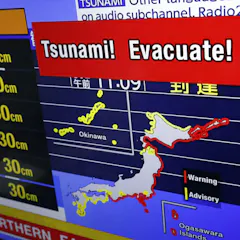
It’s far better to evacuate early and orderly than do it late in a panic. That’s why authorities around the Pacific are taking no chances as a tsunami threat looms.

A million tourists visit Milford Sound every year, including on cruise ships. What is the level of risk from natural disaster New Zealand is prepared to accept?
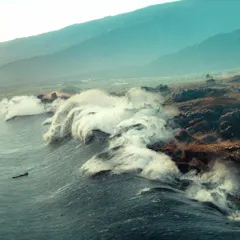
The show ends in a disaster that scientists just aren’t worried about.
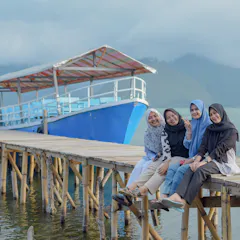
Two decades of post-disaster and conflict learning should be enough to remind us of the importance of meaningful access and participation for Acehnese women. The facts are yet to reflect this.
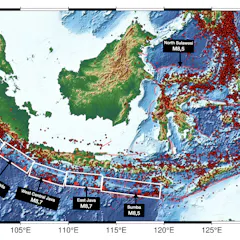
The 2004 Aceh Earthquake and Tsunami was one of the biggest natural disasters in history. This tragedy provided important lessons for improving disaster risk mitigation.
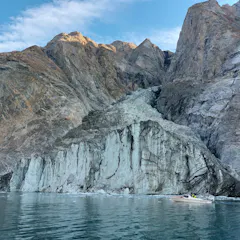
This tsunami, triggered by a melting glacier in Greenland, is a sign of things to come.
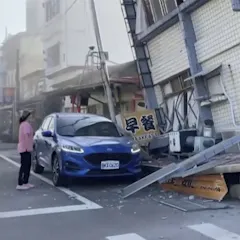
We can’t rule out the possibility today’s earthquake was not even the biggest event in this sequence, although as time passes the likelihood of a larger associated event decreases.
Top contributors
-

Honorary Professor of Tsunami Research, PANGEA Research Centre, UNSW Australia, UNSW
-
Adjunct Research Fellow, Curtin University
-
Associate Professor in Coastal and Marine Science, University of Newcastle
-
Reader in Coastal Engineering, University of East London
-
Reader in Physical Geography and Natural Hazards, Coventry University
-
PhD, University of Newcastle
-
Honorary Professor of Hazards and Disaster Risk Sciences, University of Sydney
-
Professor of Earth Sciences, University of Auckland, Waipapa Taumata Rau
-
Senior Scientist in Disaster and Climate Risk at Earth Sciences NZ & Senior Research Fellow (adjunct), Humanitarian Emergency and Disaster Management, Charles Darwin University
-
Professor, School of Geography, Environment and Earth Sciences, Te Herenga Waka — Victoria University of Wellington
-
Associate Professor, International Research Institute of Disaster Science, Tohoku University
-
Professor and Deputy Vice-Chancellor (Research), University of Sydney
-
Professor of Philosophy, University of Pretoria
-
Postdoctoral research associate, University of Edinburgh
-
Lecturer in Global Health, UCL