
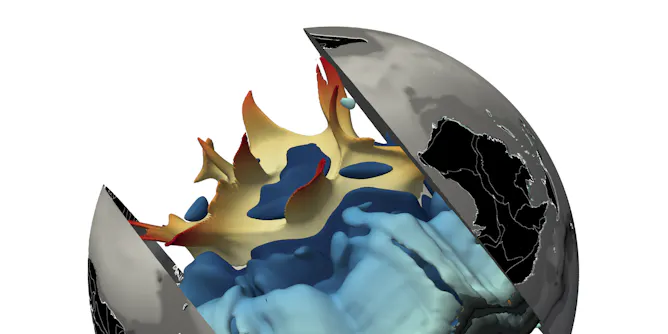
Ancient blobs deep inside the Earth gather together and break apart like continents, according to new research.
Articles on Earthquakes
Displaying 121 - 140 of 336 articles

When researchers look at CCTV footage of how people really react during earthquakes – as opposed to what they report after the fact – it looks like alerts aren’t yet inspiring protective action.
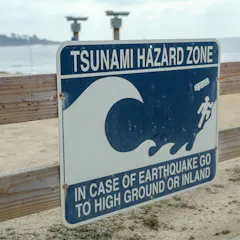
Tsunamis aren’t just bigger-than-average waves. Triggered by undersea earthquakes or volcanic eruptions like the one in Tonga, they are fast, massive and potentially destructive. Here’s why.
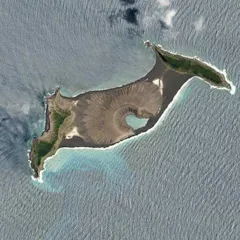
Future events could damage the critical portion of the undersea network which links to Australia.

Canada’s emergency management system is poorly funded and lacks consistent attention between disasters. This chronic underfunding has undermined public confidence and trust in emergency management.
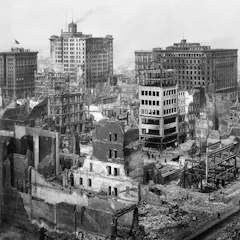
Today’s building codes were implemented as a result of devastating natural disasters that resulted in the loss of human lives and billions of dollars. But they aren’t retroactively applied.
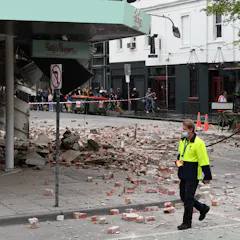
In 1989, Newcastle was hit by Australia’s deadliest earthquake, but high-rise development in the city’s CBD has continued nonetheless. Australia needs a consistent planning code for earthquake risk.

Many Victorians claim their cat or dog was acting strangely before yesterday’s earthquake. And while there’s no real evidence animals can predict a quake, they may be more sensitive to very tiny ones.

When will the next earthquake come? We don’t know, but that doesn’t mean we can’t get our cities ready.

If building regulations required cheap fixes such as ensuring chimneys and parapets were structurally attached to the building, we could save lives during earthquakes.
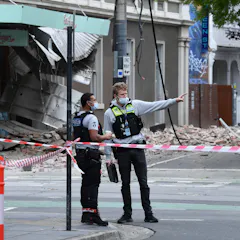
A largely hidden fault beneath the Victorian Alps has triggered a magnitude 5.8 quake that was felt as far afield as Sydney, Adelaide and Launceston. Here’s what we know so far.
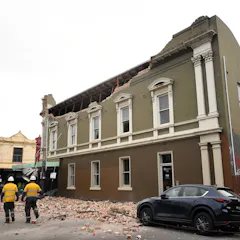
The geological record tells us we have had earthquakes in Australia’s deeper past much larger — possibly up to and bigger than magnitude 7.0.
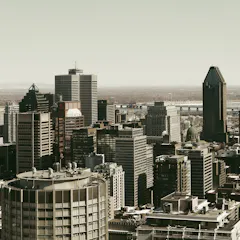
Some of the worst risks of earthquakes are in a zone running from the Great Lakes to the St. Lawrence River that includes major cities like Toronto, Ottawa and Québec City.
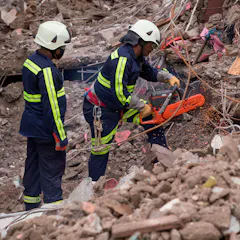
A seismic network was put in place after the 2010 quake but, despite recording two ‘strong motions’ before August 14, no alerts went out.
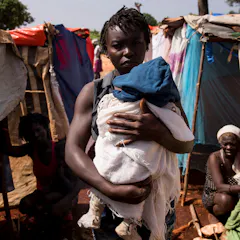
Aid workers are struggling to help Haitians with the latest devastating earthquake. A professor of disaster reduction assesses lessons learnt from the last one in 2010.
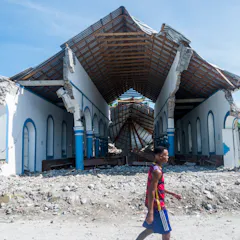
Devastating quake came weeks after the assassination of Haiti’s president. A scholar of disaster preparedness explains the concept of ‘cascading crises’ and how other countries can help stabilize Haiti.

A new study highlights disparities and proposes research priorities for advancing the use of small aerial drones in disaster management.
Japan has a long experience of hazards and disasters. Yet it does not seem like all lessons have been applied when it comes to COVID.
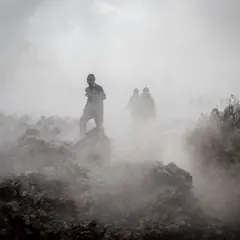
Nyiragongo is one of the most dangerous volcanoes in the world because of its fast-moving lava. It can flow at a speed of about 100km per hour.
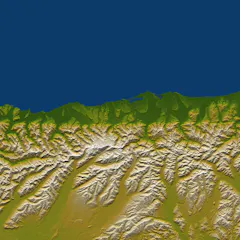
New Zealand’s Alpine Fault has ruptured in a major earthquake on average every 250 years. New research shows a 75% chance of the next one within 50 years, and it’s likely to be magnitude 8 or more.
Top contributors
-

Professor of Earthquake Science, The University of Melbourne
-
Earthquake Scientist, Monash University
-
Professor in Earth Sciences, Nanyang Technological University, Singapore, and Emeritus Professor of Mineral Physics, University of Cambridge
-
Adjunct Research Fellow, Curtin University
-
Reader in Physical Geography and Natural Hazards, Coventry University
-
Professor of Geophysics, Durham University
-
Professor, Australian National University
-
Honorary Professor of Tsunami Research, PANGEA Research Centre, UNSW Australia, UNSW
-
Honorary Fellow in Structural Geology and Tectonics, The University of Melbourne
-
Senior Scientist in Disaster and Climate Risk at Earth Sciences NZ & Senior Research Fellow (adjunct), Humanitarian Emergency and Disaster Management, Charles Darwin University
-
Professor of Geophysics and Department Head, Colorado State University
-
Redmond Barry Distinguished Professor Emeritus, The University of Melbourne
-
PhD Candidate & Researcher, School of Architecture, Université de Montréal
-
Honorary Professor of Hazards and Disaster Risk Sciences, University of Sydney
-
PhD Candidate in the Department of Earth Sciences, Durham University